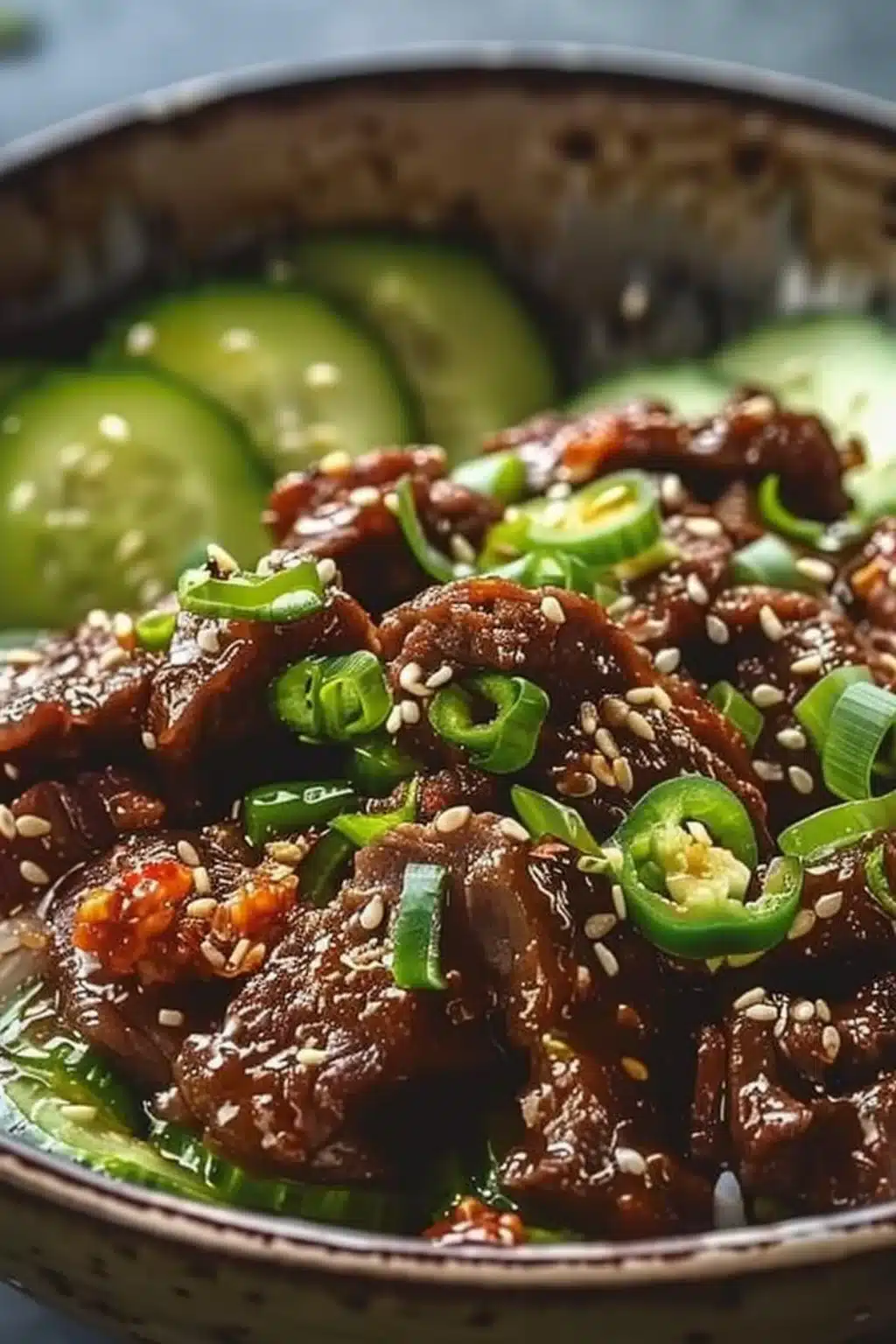
Spicy Keto Korean Beef with Cucumber Salad is a bold, low-carb dinner that balances savory, spicy beef with a crisp, cooling cucumber salad. This dish brings together classic Korean flavors—garlic, ginger, gochujang, and sesame—while keeping carbs low and flavor high. If you enjoy crunchy, refreshing sides with a keto meal, try this inspired keto cucumber side alongside it for another simple, low-carb salad option.
Why make this recipe
This Spicy Keto Korean Beef with Cucumber Salad is an ideal weeknight crowd-pleaser. It cooks quickly, packs bold flavors, and stays friendly to keto and low-carb diets. Using ground beef keeps the dish economical and accessible, while gochujang (or a milder substitute) provides that deep, slightly sweet heat typical of Korean cuisine. The cucumber salad does more than decorate the plate—it counterbalances richness and spice with crunch and acidity, making each bite bright and satisfying.
The recipe is adaptable. If you’re cooking for one or stretching portions for a family, it scales well and reheats cleanly. It also offers room for substitutions—gluten-free soy sauce and erythritol keep it keto and inclusive for those with dietary constraints. Because it’s fast to assemble and stores nicely, it’s great for meal prep, packed lunches, or a quick weeknight celebration that feels special without hours in the kitchen.
How to make Spicy Keto Korean Beef with Cucumber Salad
This section walks through the full process, from prepping ingredients to plating. The method is straightforward: cook and season the beef, toss together the cucumber salad, and combine or serve alongside. Plan on about 20–30 minutes from start to finish.
Ingredients first—lay them out and have measuring spoons ready, because the flavors come together quickly once the pan heats up.
Ingredients :
- 1 pound Ground Beef (Opt for an 80/20 blend for robust flavor.)
- 2 tablespoons Soy Sauce (Gluten-free varieties work well for sensitive diets.)
- 1 tablespoon Sesame Oil (Adds a rich, nutty flavor.)
- 1 tablespoon Gochujang (Infuses heat and complexity; substitute with sriracha for milder kick.)
- 1 tablespoon Minced Garlic (Fresh is best but powdered can suffice.)
- 1 teaspoon Grated Ginger (Fresh ginger elevates the flavor.)
- 1 tablespoon Erythritol (A keto-friendly sweetener.)
- 1 teaspoon Rice Vinegar (Apple cider vinegar can be used if needed.)
- Salt and Pepper (Adjust to taste.)
- 1 cucumber Cucumber (Thinly sliced.)
- 1 tablespoon Green Onions (Chopped.)
- 1 tablespoon Sesame Seeds (Optional but enhances presentation.)
Ingredient notes and substitutions: choose an 80/20 ground beef for juiciness and a satisfying fat profile that suits keto macros. If you avoid soy, use coconut aminos as a lower-sodium alternative. Gochujang brings authentic Korea-style depth, but if you’re watching sugar closely or want less heat, use sriracha or reduce the amount of gochujang and add a touch more erythritol. For a vegetarian swap, replace ground beef with crumbled tempeh or a firm-textured tofu that’s been pan-crisped.
Directions :
Cooking Instructions
- Prep your mise en place. Thinly slice the cucumber and toss the slices into a bowl. Chop the green onions, grate the ginger, and mince the garlic if you haven’t already.
- Make the quick cucumber salad. Toss cucumber slices with 1 teaspoon rice vinegar, a pinch of salt, and half of the chopped green onions. Let this sit in the fridge while you cook the beef; the vinegar draws out a little moisture and keeps the salad crisp.
- Heat a large nonstick skillet over medium-high heat. Add the sesame oil and allow it to shimmer for a few seconds—don’t let it smoke.
- Add the ground beef to the pan. Break it up with a spatula and spread it into an even layer so it browns nicely. Cook for 3–4 minutes without disturbing, then stir and continue to cook until it’s mostly browned.
- Reduce heat to medium. Push the beef to one side of the pan, add the minced garlic and grated ginger to the hot oil, and sauté for about 30 seconds until aromatic. Mix them into the beef.
- Season and sweeten. Add 2 tablespoons soy sauce, 1 tablespoon gochujang, and 1 tablespoon erythritol to the skillet. Stir well so the beef is evenly coated. Simmer for 2–3 minutes to allow the sauce to thicken slightly and flavors to meld.
- Taste and adjust. Add salt and pepper to taste. If the mix is too spicy, stir in a small splash of rice vinegar or another teaspoon of erythritol to balance heat and sweetness.
- Finish with sesame. Remove the pan from heat and stir in a small sprinkle of sesame seeds and the remaining green onions.
- Plate and combine. Spoon the hot beef over or beside the chilled cucumber salad. For a composed serving, place a heap of beef on warm plates and top with the cucumbers, or keep them separate so diners can combine as they wish.
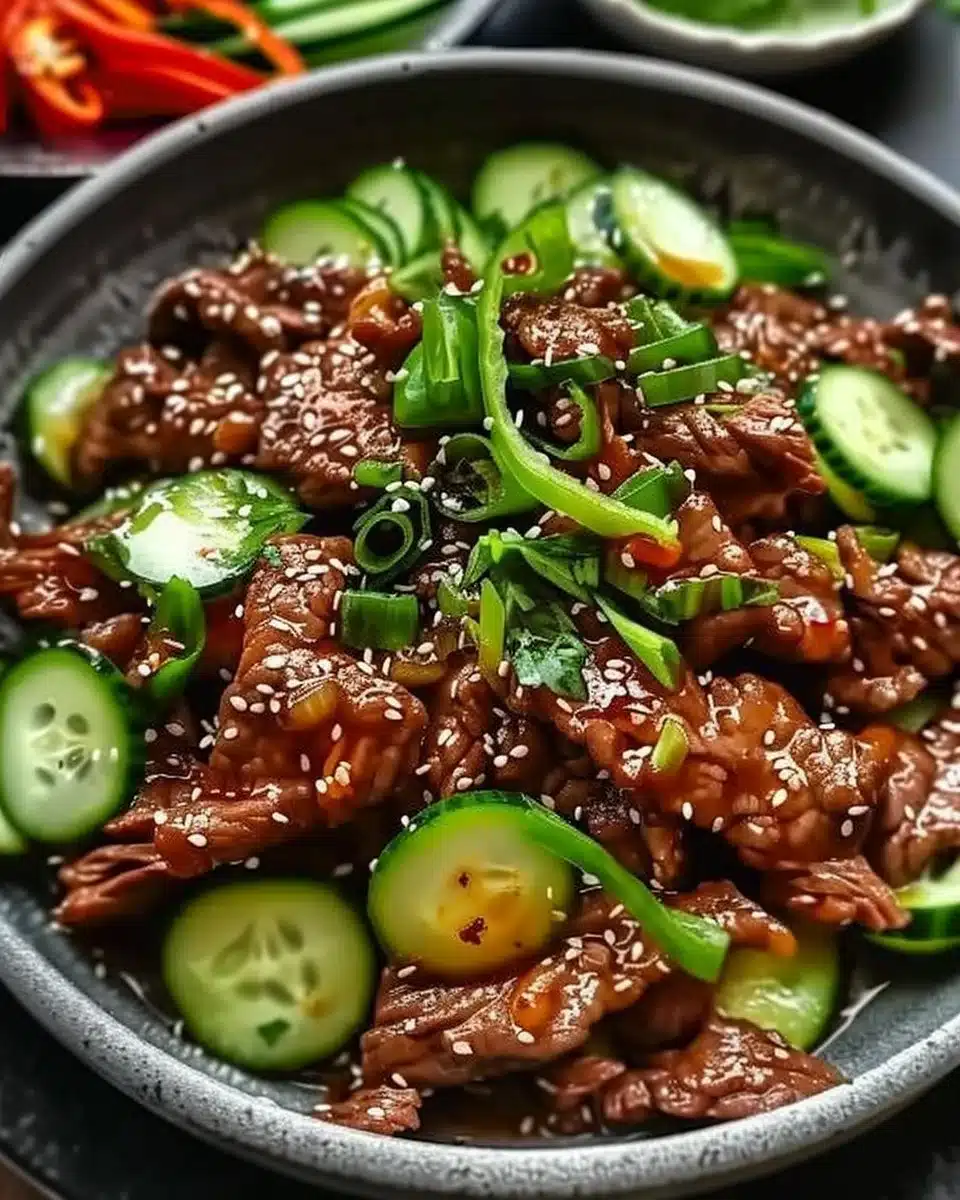
Pro Tips for Success Spicy Keto Korean Beef with Cucumber Salad
- Brown the beef in batches if your pan is crowded: crowding steams the meat instead of browning it, and you’ll lose flavor.
- Toast sesame seeds briefly in a dry pan before sprinkling to release extra aroma.
- Taste as you go: gochujang varies in heat and sweetness between brands. Add it gradually and adjust with erythritol or rice vinegar to balance.
- Remove excess cucumber moisture if you plan to store the salad with the beef—pat slices dry or lightly salt and drain for a few minutes.
- For a crisper texture, seed the cucumber before slicing; the center holds most of the moisture.
- Let the finished beef rest for a minute off the heat before serving; flavors settle and the sauce clings better to the meat.
Flavor Variations Spicy Keto Korean Beef with Cucumber Salad
- Milder version: swap gochujang for an equal amount of sriracha and cut erythritol slightly if you prefer less sweetness.
- Extra umami: stir in 1 teaspoon of fish sauce at the end of cooking for depth, then taste for saltiness and adjust soy sauce.
- Veg-forward: add thinly sliced bell pepper or shredded cabbage in the last few minutes of cooking for color and texture while keeping carbs reasonable.
- Sesame crunch: fold in a handful of toasted sliced almonds or crushed roasted seaweed for crunch and an Asian-inspired twist.
- Heat boost: if you love fiery dishes, add a pinch of Korean chili flakes (gochugaru) when you add the gochujang for layered chili flavor.
Serving Suggestions Spicy Keto Korean Beef with Cucumber Salad
This dish shines when served simply and intentionally. For a classic presentation, serve the warm beef over a bed of steamed cauliflower rice for a full keto meal without the carbs. If you’re sharing, make lettuce cups with Bibb or butter lettuce so guests can build savory wraps topped with the cucumber salad and a sprinkle of sesame seeds. The cool cucumber salad also pairs well with other low-carb Korean-style sides like quick pickled radish or a sesame spinach salad. For a light lunch, plate a moderate portion of beef with a larger cucumber salad portion to keep the meal crisp and refreshing.
Add small bowls of sliced green onions, extra sesame seeds, and lime wedges so people can customize brightness and heat. If you’re hosting, set out a jar of extra gochujang or chili oil for diners who want an extra kick.
Storage and Freezing Instructions Spicy Keto Korean Beef with Cucumber Salad
Short-term refrigeration: Store leftover beef and cucumber salad separately in airtight containers in the refrigerator. Properly stored, the beef will last 3–4 days and the cucumber salad best for 1–2 days to preserve crispness.
Reheating: Gently reheat the beef in a skillet over medium-low heat so the sauce warms without drying out the meat. If needed, add a splash of water or a teaspoon of sesame oil to restore moisture. Avoid microwaving cucumber slices; they become limp quickly.
Freezing: Ground beef cooked in this sauce freezes well, but the cucumber salad does not freeze well because it loses texture. Portion the beef into freezer-safe containers or vacuum-seal bags, leaving some headspace. Freeze for up to 3 months. Thaw overnight in the fridge before reheating. If you’ve added sesame seeds and green onions, you can reserve fresh ones at the time of reheating for a fresher finish.
Meal prep tip: If planning weekly lunches, make multiple batches of the cooked beef and pack fresh cucumber slices separately. Keep dressings in small containers to prevent sogginess.
Nutrition Facts (Per Serving) — approximate (serves 4)
- Calories: ~350 kcal
- Protein: ~22 g
- Carbs: ~4 g
- Fat: ~28 g
- Fiber: ~0.5–1 g
- Sodium: ~550 mg
Notes on nutrition: These values are estimates and will vary by brand and exact ingredient amounts. Using a leaner ground beef will lower calories and fat; choosing low-sodium soy sauce will reduce sodium significantly. Erythritol is counted as a sugar alcohol with negligible net carbs, which helps keep this recipe keto-friendly.
FAQ About Spicy Keto Korean Beef with Cucumber Salad
What if I don’t have gochujang—what is the best substitute?
If you don’t have gochujang, combine 1 tablespoon of sriracha with 1 teaspoon of miso paste or a small pinch of brown erythritol to mimic the sweet-umami balance. Miso adds that fermented depth and sriracha brings the chile heat. Start with a conservative amount and adjust to taste; gochujang brands vary widely in sweetness and spice, so substitutions may need tweaks.
Is this recipe keto-friendly and how many net carbs does it have?
Yes, this recipe is designed to be keto-friendly. The main carbohydrate sources come from gochujang, garlic, and cucumber. Net carbs are approximately 3–4 grams per serving when divided into four portions, depending on the specific brands and sizes used. Using erythritol instead of sugar keeps added sugars out of the carb total, which helps the recipe stay low-carb.
Can I use a different type of meat or a vegetarian protein instead?
Absolutely. Ground chicken or turkey can be used for a leaner version, though they may need a touch more sesame oil or a small pat of butter to increase richness. For vegetarian options, crumbled tempeh or firm tofu that’s been pressed and pan-crisped works well—season it similarly and consider adding a splash of mushroom or soy-based umami to boost savory depth.
How spicy will this dish be and how can I adjust the heat?
Spiciness depends mostly on the gochujang brand and how much you add. Gochujang ranges from mild to quite hot. To reduce heat, use less gochujang and substitute part of it with sriracha or add extra erythritol and rice vinegar to balance flavors. If you want to tone down heat after cooking, add a squeeze of lime or a spoonful of plain yogurt on the side for guests to cool their bites.
Can I prepare this ahead of time for meal prep?
Yes—prepare the beef and cucumber salad separately and combine them when ready to eat. The cooked beef refrigerates well for up to four days, and the cucumber salad should be kept separate and added just before serving to keep it crisp. If you’re packing lunches, put the cucumber salad in a separate small container or icebox compartment.
Are there any allergy-friendly swaps for sesame and soy?
For a sesame-free version, omit sesame oil and seeds and use a neutral oil like avocado oil, then finish with a squeeze of lemon for brightness. For soy-free options, substitute soy sauce with coconut aminos, which offer a similar salty-sweet profile with lower sodium. These swaps keep the recipe accessible while preserving the balance of flavors.
What’s the best way to keep the cucumber salad from getting soggy?
Lightly salting the cucumber and letting it drain in a colander for 5–10 minutes helps draw excess moisture. Pat dry with paper towels before dressing. Dress the cucumbers just before serving rather than marinating them for long periods. If you must prepare ahead, keep the dressing separate and toss right before eating.
Can I serve this as part of a larger Korean-inspired dinner?
Yes—this beef pairs nicely with cauliflower rice, kimchi, blanched greens, or quick-pickled vegetables for a broader Korean-inspired spread. Lettuce wraps are another popular option. Keep the cucumber salad on the side to offer a palate-cleansing counterpoint to other rich or fermented flavors.
Final Thoughts
Spicy Keto Korean Beef with Cucumber Salad is a dependable weeknight star: fast, flavorful, and friendly to low-carb diets. It showcases how simple ingredients—ground beef, garlic, ginger, sesame, and a touch of gochujang—can create a restaurant-quality meal at home. The crisp cucumber salad is more than a garnish; it’s the cooling foil that lets the beef’s spicy-sweet edges shine. Try the basic recipe first, then tweak heat, sweetness, or texture to fit your taste—the dish rewards experimentation and holds up well as leftovers or a prepared meal.
Print
Spicy Keto Korean Beef with Cucumber Salad
- Total Time: 30 minutes
- Yield: 4 servings 1x
- Diet: Keto
Description
A bold, low-carb dinner balancing savory, spicy beef with a crisp cucumber salad, featuring classic Korean flavors.
Ingredients
- 1 pound Ground Beef (80/20 blend)
- 2 tablespoons Soy Sauce (gluten-free if needed)
- 1 tablespoon Sesame Oil
- 1 tablespoon Gochujang (or sriracha for milder kick)
- 1 tablespoon Minced Garlic
- 1 teaspoon Grated Ginger
- 1 tablespoon Erythritol
- 1 teaspoon Rice Vinegar
- Salt and Pepper (to taste)
- 1 Cucumber (thinly sliced)
- 1 tablespoon Green Onions (chopped)
- 1 tablespoon Sesame Seeds (optional)
Instructions
- Prep your mise en place. Thinly slice the cucumber and toss the slices into a bowl. Chop the green onions, grate the ginger, and mince the garlic if you haven’t already.
- Toss cucumber slices with 1 teaspoon rice vinegar, a pinch of salt, and half of the chopped green onions. Let this sit in the fridge while you cook the beef.
- Heat a large nonstick skillet over medium-high heat. Add the sesame oil and allow it to shimmer.
- Add the ground beef and cook for 3–4 minutes without stirring. Stir and continue to cook until browned.
- Reduce heat to medium, push the beef to one side, and add minced garlic and grated ginger. Sauté for about 30 seconds.
- Season with 2 tablespoons soy sauce, 1 tablespoon gochujang, and 1 tablespoon erythritol. Stir well and simmer for 2–3 minutes.
- Taste and adjust seasoning with salt and pepper, adding rice vinegar or erythritol to balance heat.
- Finish by removing from heat and stirring in sesame seeds and remaining green onions.
- Plate the hot beef over or beside the chilled cucumber salad.
Notes
For added depth, consider using coconut aminos and adjusting gochujang to taste. Great for meal prep and can be easily scaled.
- Prep Time: 10 minutes
- Cook Time: 20 minutes
- Category: Main Course
- Method: Stovetop
- Cuisine: Korean
Nutrition
- Serving Size: 1 serving
- Calories: 350
- Sugar: 1g
- Sodium: 550mg
- Fat: 28g
- Saturated Fat: 8g
- Unsaturated Fat: 20g
- Trans Fat: 0g
- Carbohydrates: 4g
- Fiber: 1g
- Protein: 22g
- Cholesterol: 80mg