Easy Baked Salmon Sushi Cups: a fun, tasty bite your family will love
Easy Baked Salmon Sushi Cups are a playful way to enjoy sushi flavors without rolling rice or needing specialized tools. They combine tender, seasoned salmon with vinegared sushi rice tucked into crisp nori-lined muffin cups for handheld bites that look impressive but are actually very simple to make. If you enjoy portable salmon snacks, you might also like this take on baked salmon meatballs with creamy avocado sauce, which carries similar bright, savory flavors in a different format.
These cups are ideal for weeknight dinners, casual entertaining, packed lunches, or an easy appetizer for parties. The recipe balances the richness of salmon and mayonnaise with the tang of rice vinegar and the crisp umami of nori and furikake. In the sections that follow, you’ll find everything you need to prepare the dish, practical tips to get consistent results, safe ingredient swaps, and ideas to tweak the flavor to match your cravings.
why make this recipe
There are plenty of reasons to make Easy Baked Salmon Sushi Cups. First, they take the core elements of sushi—seasoned rice, fresh seafood, and nori—and present them in an approachable, oven-baked format that’s beginner-friendly. You don’t need a bamboo mat or rolling skills; a muffin tin is all you need to turn simple ingredients into an elegant looking bite.
Second, the recipe is flexible. If you’re feeding kids, you can dial down the spice and increase the mayo for a creamy finish. If you’re feeding a crowd, the cups are inherently portion-controlled and easy to pass around. They also rehearse well and make a great next-day lunch.
Third, the method is time-efficient. While sushi rice does require a bit of hands-off time to cook and cool with seasoning, the assembly and bake come together quickly. The hands-on time is minimal and predictable, making this an excellent recipe to add to your regular rotation.
Finally, this format introduces balanced textures in every bite: soft cooked salmon, sticky yet firm sushi rice, and an outer nori wrapper that becomes pleasantly crisp after a short bake. If you like dishes that feel special without taking special skills, this is one to try.
how to make Easy Baked Salmon Sushi Cups
The following section walks through the stages of preparation and assembly so you know what to expect at each step. Read through entirely once, set out your ingredients, and follow the timeline to make the process smooth.
- Prepare the Sushi Rice: Cook sushi rice according to package instructions and set aside to cool.
- Make the Vinegar Mixture: Mix rice vinegar and white sugar in a microwave-safe bowl and microwave until sugar dissolves. Pour over the rice and mix well.
- Preheat the Oven: Set the oven to 400°F (200°C).
- Prepare the Salmon Mixture: In a bowl, combine cubed salmon with soy sauce, Kewpie mayo, Sriracha, and sesame oil. Mix well.
- Prepare the Nori Sheets: Cut nori sheets into squares to fit muffin tins.
- Assemble the Sushi Cups: Grease muffin tin, place sushi rice in nori squares, then add salmon mixture on top.
- Bake the Sushi Cups: Bake for about 15 minutes or until salmon is cooked and tops are golden.
- Garnish and Serve: Cool slightly, garnish with furikake and green onions, and serve immediately.
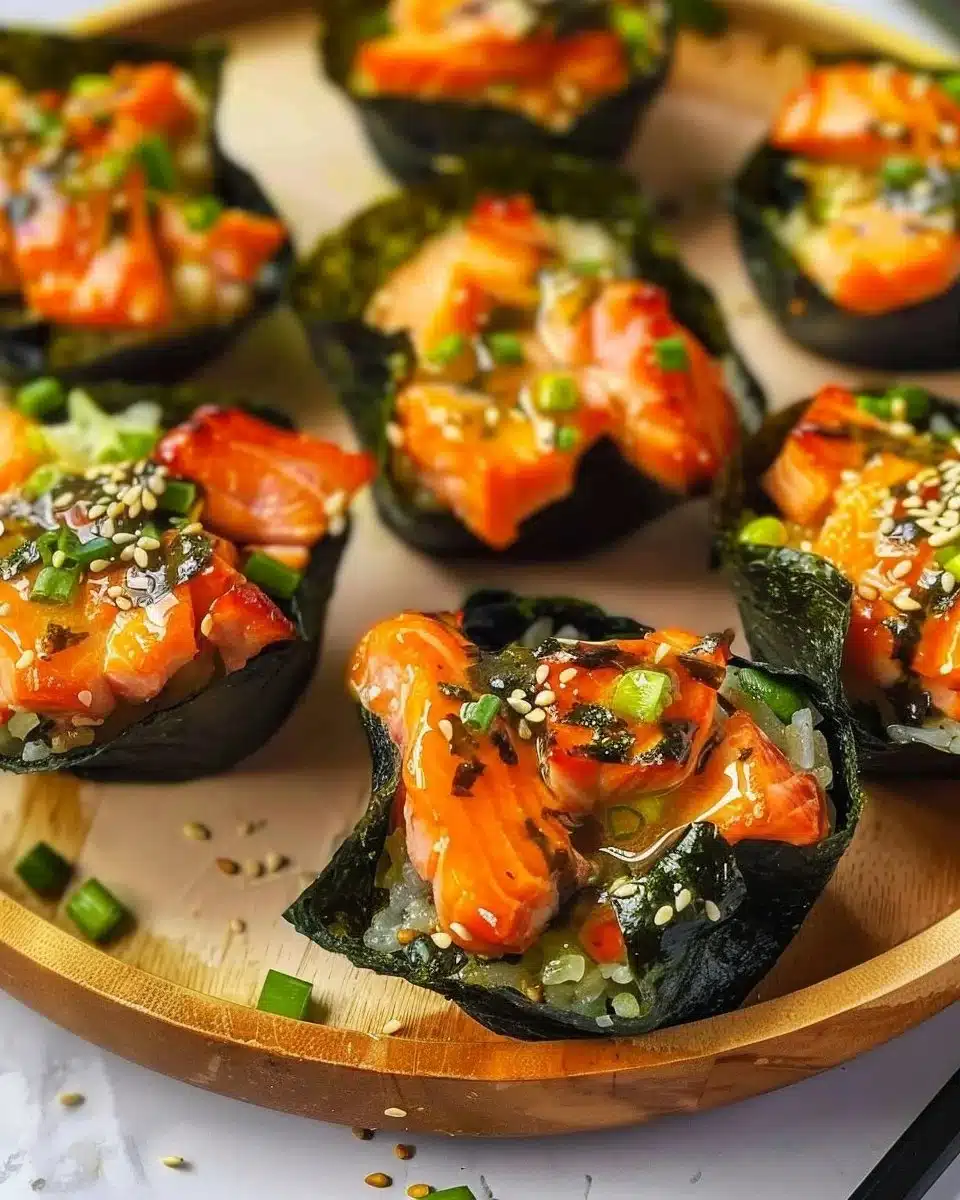
Below is more detail and helpful pointers for each stage so you get great results even the first time.

Ingredients :
- 1 lb salmon, cubed
- 1 tbsp light soy sauce
- 1 tbsp Kewpie Mayo
- 1 tbsp Sriracha
- 1 tsp sesame oil
- 1 ½ cups uncooked sushi rice
- 1 tbsp rice vinegar
- 2 tsp white sugar
- 3 large nori sheets
- Furikake, for garnish
- 1 green onion, for garnish
- Cooking spray
Ingredient notes and substitutions
- Salmon: Use skinless salmon fillets cut into roughly ½-inch cubes. If you prefer a lower-fat or different protein, substitute smoked turkey, cooked tofu, or cooked mushrooms; just adjust baking time so the filling stays moist but cooked through.
- Kewpie Mayo: This Japanese-style mayo is slightly sweeter and richer than standard mayonnaise. You can substitute regular mayonnaise or use a light mayo to reduce calories; Greek yogurt thinned with a little olive oil is another option for a tangier, lower-fat mix.
- Sriracha: For less heat, cut the amount in half or substitute a milder chili sauce. For a sweeter note, try a touch of sweet chili sauce.
- Nori sheets: If you’re short on sheets, you can use rice paper or thinly toasted seaweed snacks as a creative alternative—just check how they handle baking.
- Rice vinegar & sugar: The seasoning gives sushi rice its characteristic balance. If you’re avoiding sugar, use a bit of honey or a sugar substitute, and always taste and adjust to your preference.
Directions (step-by-step explanation and tips)
The numbered directions above are the core steps; below are expanded instructions and practical cues to make each step effortless.
- Prepare the Sushi Rice: Cook sushi rice according to package instructions and set aside to cool.
- Use a rice cooker or a pot with a tight-fitting lid. Rinse the rice under cold water until the water runs clear to remove excess starch; this prevents the rice from becoming gummy. After cooking, spread rice in a shallow dish to cool a bit before adding the vinegar mixture.
- Make the Vinegar Mixture: Mix rice vinegar and white sugar in a microwave-safe bowl and microwave until sugar dissolves. Pour over the rice and mix well.
- Warm the vinegar and sugar just enough to dissolve the sugar; this helps it distribute evenly and season the grains. Fold the mixture gently into the rice with a wooden paddle or spatula—cut and fold, don’t stir aggressively—to preserve rice texture.
- Preheat the Oven: Set the oven to 400°F (200°C).
- While the rice cools and the salmon marinates, preheat the oven so it’s ready when you assemble. A hot oven gives the salmon a little roasting edge and helps the nori crisp.
- Prepare the Salmon Mixture: In a bowl, combine cubed salmon with soy sauce, Kewpie mayo, Sriracha, and sesame oil. Mix well.
- Toss gently to coat the salmon evenly. If you like more pronounced mayonnaise flavor, let the salmon sit for 10–15 minutes in the fridge so the seasoning absorbs. If you’re concerned about raw seafood safety, you can briefly sear the cubes in a hot skillet for 1–2 minutes per side before combining with mayo and sriracha—this adds flavor and reduces rawness.
- Prepare the Nori Sheets: Cut nori sheets into squares to fit muffin tins.
- A standard 12-cup muffin tin will take nori squares cut roughly into quarters of a full sheet. Lightly spray the muffin cups with cooking spray so the nori doesn’t stick and lifts out easier after baking.
- Assemble the Sushi Cups: Grease muffin tin, place sushi rice in nori squares, then add salmon mixture on top.
- Press the rice gently into the base of each nori square, creating a compact base that will hold the salmon. Don’t overpack; the rice should hold shape but still allow some room for the salmon topping.
- Bake the Sushi Cups: Bake for about 15 minutes or until salmon is cooked and tops are golden.
- Cooking time can vary depending on your oven and the size of the salmon cubes. The salmon should be opaque and flake easily with a fork. If you prefer a bit more browning, switch the oven to broil for the last 1–2 minutes—watch closely to avoid burning.
- Garnish and Serve: Cool slightly, garnish with furikake and green onions, and serve immediately.
- A sprinkle of furikake adds savory, toasty notes and a bit of crunch. Thinly sliced green onion provides a fresh, oniony lift. Serve warm or at just-warm temperature—these cups are best enjoyed the day they’re baked for the crispest nori.
Pro Tips for Success Easy Baked Salmon Sushi Cups
- Rinse the rice thoroughly: Properly rinsing sushi rice until the runoff is clear removes excess surface starch and helps the grains stay separate after cooking. This yields a better texture in each cup.
- Cool rice slightly before seasoning: If rice is piping hot, the vinegar mixture will evaporate and the rice can become too soft. Spread it out briefly to let steam escape before folding in the seasoned vinegar.
- Cut nori to fit but don’t overstuff: When lining the muffin tin, let the nori extend a little above the rim if possible; this makes it easier to lift the cups out after baking and provides extra crisp edges.
- Keep salmon pieces uniform: Cut the salmon into evenly sized cubes so they cook at the same rate. Small, consistent pieces will bake evenly and create a pleasing texture.
- Watch baking time carefully: Oven temperatures vary. Start checking at 12 minutes and adjust up to 18 if needed. The salmon is done when it flakes and reaches an internal temperature of 145°F (63°C) if you use a thermometer.
- Serve soon after baking: Nori will soften as it absorbs moisture from rice if left too long. For crunchier cups, serve within 30 minutes of baking.
Flavor Variations Easy Baked Salmon Sushi Cups
- Spicy-Sesame Crunch: Add toasted sesame seeds to the salmon mixture and swap regular furikake for a crunchy chili sesame mix. Increase sesame oil slightly for nuttier notes.
- Teriyaki-Glazed Salmon Cups: Replace soy sauce and sriracha with a tablespoon of teriyaki sauce and a teaspoon of honey. Brush lightly with extra teriyaki in the last 1–2 minutes of baking for a glossy finish.
- Citrus-Scallion Lift: Mix a teaspoon of yuzu or lemon zest into the rice seasoning and finish the cups with thinly sliced scallions and a squeeze of fresh lemon when serving for a bright contrast.
- Cream Cheese & Avocado: For richer cups, add a small dollop of softened cream cheese between the rice and salmon, and top with a thin slice of avocado after baking—this creates a sushi-inspired, creamy mouthfeel.
Serving Suggestions Easy Baked Salmon Sushi Cups
These cups are naturally versatile and fit many occasions. Pair them with a small side salad of shredded cabbage, cucumber ribbons, and a sesame dressing for a light lunch. For a party platter, place a dozen cups on a large board with pickled ginger, wasabi, extra furikake, and a bowl of soy sauce for dipping.
They also work well alongside simple sides like edamame, miso soup, or a quick seaweed salad to create a full Japanese-inspired meal. If serving to kids, present them with small dipping bowls of low-sodium soy sauce or a yogurt-based dip—kids often love the hand-held format and the mild mayo-sriracha flavor.
For a bento-box approach, pack two or three cups with sliced fruit, a few steamed broccolini, and some pickled vegetables for a balanced lunch. When serving at a buffet or party, keep a stack of napkins nearby—these are best eaten warm and can be a delightful finger food.
Storage and Freezing Instructions Easy Baked Salmon Sushi Cups
Short-term storage (refrigerator)
- Cool the cups completely before storing. Place them in an airtight container lined with paper towels to absorb excess moisture. Stored this way, they keep for up to 2 days in the refrigerator. Reheat in a 350°F (175°C) oven for 8–10 minutes to restore some crispness, but expect the nori to be softer than freshly baked.
Freezing (not ideal, but possible)
- Freezing will change the texture of nori and rice, but if you must freeze, place cooled cups on a tray and flash-freeze until firm (about 1–2 hours). Transfer to a freezer-safe bag or container with parchment paper between layers. Freeze for up to 1 month.
- Reheating from frozen: Thaw in the refrigerator overnight, then reheat in a 350°F oven for 12–15 minutes. Do not microwave from frozen; this will make the rice mushy. Keep in mind the nori will not crisp back to its original state after freezing.
Best practice
- For the best texture and flavor, make the rice and salmon mixture ahead (up to a day), but assemble and bake on the day you plan to serve. That keeps nori crisp and flavors bright.
Nutrition Facts (Per Serving) —
The following nutrition facts are estimates based on the ingredient quantities provided and assuming the recipe yields 12 sushi cups. These are approximate values for guidance only.
- Calories: 173 kcal
- Protein: 11 g
- Carbohydrates: 18 g
- Fat: 6 g
- Fiber: 0.6 g
- Sodium: 110 mg
Notes about the nutrition estimates
- Salmon is the major source of protein and healthy fats, including omega-3s. The mayo and sesame oil add a portion of the fats and calories, while the rice contributes most of the carbohydrates.
- If you increase the amount of mayo, add avocado, or serve with extra sauces, calories and fat will increase. For lower sodium, use a low-sodium soy sauce and reduce or omit furikake.
- These values are intended as a rough guide. If you follow strict dietary needs, consider calculating using your preferred nutrition calculator and the exact product labels you use.
FAQ About Easy Baked Salmon Sushi Cups
Can I use leftover cooked salmon for these sushi cups?
Yes. Leftover cooked salmon is a great shortcut. When using pre-cooked salmon, flake it gently and fold in the mayo, soy sauce, and sriracha. Since the salmon is already cooked, your baking time only needs to warm the filling and crisp the nori—check after 8–10 minutes to avoid overcooking.
Is it safe to bake raw salmon in the muffin tin?
Yes, baking raw salmon in the muffin tin is safe as long as you cook it to a safe internal temperature. The USDA recommends salmon be cooked to 145°F (63°C), at which point it should be opaque and flake easily. Use a quick-read thermometer if you want to be precise. For very small cubes, the bake time might be shorter; check frequently so pieces don’t dry out.
How do I keep the nori from getting soggy?
Nori softens when exposed to moisture. To minimize sogginess, make sure the rice is not overly wet when you pack it into the nori. Cool the rice slightly after cooking and avoid over-pressing. A short bake at a hot temperature helps the nori crisp at the edges; serve soon after baking for the best texture. If making ahead, store the rice and salmon separately and assemble/bake right before serving.
Can I make these gluten-free?
Yes. Replace light soy sauce with a gluten-free tamari or coconut aminos to make the recipe gluten-free. Verify that the furikake and Kewpie mayo contain no gluten—some brands of furikake include soy sauce or wheat-containing ingredients, so check labels.
What’s the best way to reheat leftovers?
Reheat in a preheated oven at 350°F (175°C) for about 8–10 minutes to warm through and slightly restore crispness. A toaster oven works well for single servings. Avoid microwaving if you want to keep the nori from getting overly chewy; microwaving heats quickly but causes the nori to soften and the rice to get dense.
Can I make a vegetarian version of these cups?
Absolutely. Replace the salmon with firm tofu cubes marinated in soy sauce, sesame oil, and a touch of honey or maple syrup, then dress with mayo and sriracha. Another option is seasoned, roasted mushrooms (shiitake or oyster mushrooms work well) tossed with the mayo-sriracha mix—these provide umami and a meaty texture.
How can I make these less spicy for kids?
Reduce the Sriracha by half or omit it entirely and replace with a small amount of ketchup for a familiar sweet-tangy flavor. Alternatively, add more mayo to mellow the heat and serve sauces on the side so kids can choose how much to add.
Are there any safety tips for working with raw fish at home?
Work with fresh, high-quality salmon from a reputable source. Keep it cold until you’re ready to cut it and maintain clean surfaces and knives to avoid cross-contamination. If serving to people with compromised immune systems, elderly guests, pregnant women, or very young children, consider pre-cooking the salmon or using fully cooked alternatives to reduce any food-safety concerns.
Final Thoughts
Easy Baked Salmon Sushi Cups are a delightful way to bring sushi flavors into an approachable, bake-and-serve format that’s perfect for families and casual entertaining. They balance rice, salmon, and seaweed in a handheld bite that looks special but is simple to prepare. With a few ingredient swaps and the tips above, you can tailor them to a variety of tastes and dietary needs. Try the recipe once as written, then experiment with one or two of the flavor variations to make the dish your own—these cups are as adaptable as they are tasty.
Print
Easy Baked Salmon Sushi Cups
- Total Time: 35 minutes
- Yield: 12 sushi cups 1x
- Diet: Pescatarian
Description
A playful way to enjoy sushi flavors without rolling rice, combining seasoned salmon and vinegared sushi rice in crisp nori-lined cups.
Ingredients
- 1 lb salmon, cubed
- 1 tbsp light soy sauce
- 1 tbsp Kewpie mayo
- 1 tbsp Sriracha
- 1 tsp sesame oil
- 1 ½ cups uncooked sushi rice
- 1 tbsp rice vinegar
- 2 tsp white sugar
- 3 large nori sheets
- Furikake, for garnish
- 1 green onion, for garnish
- Cooking spray
Instructions
- Prepare the Sushi Rice: Cook sushi rice according to package instructions and set aside to cool.
- Make the Vinegar Mixture: Mix rice vinegar and white sugar in a microwave-safe bowl and microwave until sugar dissolves. Pour over the rice and mix well.
- Preheat the Oven: Set the oven to 400°F (200°C).
- Prepare the Salmon Mixture: In a bowl, combine cubed salmon with soy sauce, Kewpie mayo, Sriracha, and sesame oil. Mix well.
- Prepare the Nori Sheets: Cut nori sheets into squares to fit muffin tins.
- Assemble the Sushi Cups: Grease muffin tin, place sushi rice in nori squares, then add salmon mixture on top.
- Bake the Sushi Cups: Bake for about 15 minutes or until salmon is cooked and tops are golden.
- Garnish and Serve: Cool slightly, garnish with furikake and green onions, and serve immediately.
Notes
For best texture, consume soon after baking. Store leftovers in an airtight container for up to 2 days.
- Prep Time: 20 minutes
- Cook Time: 15 minutes
- Category: Appetizer
- Method: Baking
- Cuisine: Japanese
Nutrition
- Serving Size: 1 cup
- Calories: 173
- Sugar: 2g
- Sodium: 110mg
- Fat: 6g
- Saturated Fat: 1g
- Unsaturated Fat: 5g
- Trans Fat: 0g
- Carbohydrates: 18g
- Fiber: 0.6g
- Protein: 11g
- Cholesterol: 35mg