introduction:
Pineapple Glazed Salmon is a bright, flavorful dish that balances sweet tropical fruit with savory, caramelized salmon. This easy recipe turns simple ingredients into a weeknight winner and pairs beautifully with light sides; if you enjoy pairing fruit-forward glazes with protein, you might also like this glazed pineapple kielbasa bites recipe for a quick appetizer. In the paragraphs that follow you’ll find clear steps, tips, and variations to make this salmon your go-to dinner option.
why make this recipe
There are plenty of reasons to add Pineapple Glazed Salmon to your rotation. First, it’s fast: from prep to plate in about 25 minutes, which makes it ideal for busy weeknights. Second, the glaze uses pantry-friendly ingredients—brown sugar, soy sauce, rice vinegar, and garlic—so you can make it without a special trip to the store. Third, the bright pineapple flavor cuts through the richness of the salmon, giving every bite a refreshing contrast. Finally, it’s flexible: you can make it mild for kids or bump up the aromatics and heat for grown-up palates. This recipe gives you a restaurant-style finish with minimal fuss.
how to make Pineapple Glazed Salmon
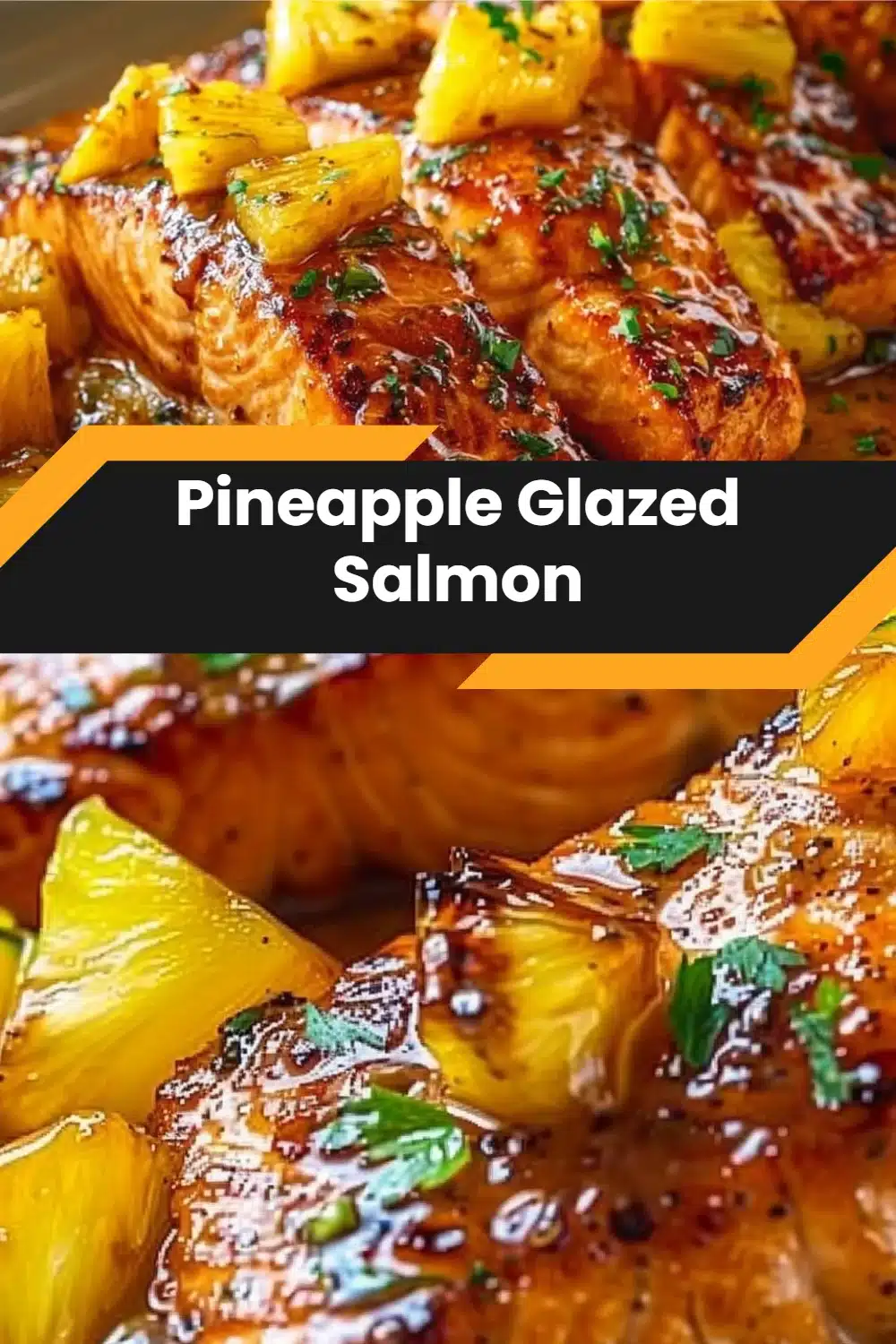
This method keeps things simple and reliable so you get moist, flaky salmon topped with a glossy pineapple glaze. You’ll mix a quick glaze, season the fish, spoon on most of the glaze before baking, and finish with a broil for a caramelized top if you like. The diced pineapple keeps the dish fresh and textural while the glaze layers on that sweet-savory punch.
Ingredients :
4 salmon fillets, approximately 6 ounces each
1 tablespoon olive oil
1/2 teaspoon salt
1/4 teaspoon black pepper
1 cup fresh or canned pineapple, diced and well drained
1/4 cup packed light brown sugar
2 tablespoons soy sauce
1 tablespoon rice vinegar
1 teaspoon minced garlic
1/2 teaspoon grated fresh ginger (optional)
1 tablespoon fresh parsley, chopped (for garnish)
Directions :
- Preheat your oven to 400 degrees Fahrenheit (200 degrees Celsius). Lightly grease a baking dish.
- In a small bowl, whisk together brown sugar, soy sauce, rice vinegar, minced garlic, and grated ginger to create the glaze.
- Pat the salmon fillets dry, rub with olive oil, and season with salt and pepper.
- Place the seasoned salmon skin-side down in the baking dish.
- Spoon two-thirds of the glaze over the salmon and scatter diced pineapple around.
- Bake for 12 to 15 minutes until cooked through.
- Optionally, broil for 1 to 2 minutes for a caramelized finish.
- Let rest for 5 minutes, garnish with parsley, and serve warm.
Pro Tips for Success Pineapple Glazed Salmon
- Dry the salmon well: Patting the fillets dry before seasoning helps the glaze stick and encourages even browning. Excess moisture steams the fish instead of letting it caramelize.
- Reserve some glaze: Spoon most of the glaze onto the salmon before baking, and save a small portion to brush on after broiling for extra shine and flavor.
- Check doneness with confidence: Salmon is done when it flakes easily with a fork and is opaque through the thickest part. If using an instant-read thermometer, aim for 125–130°F (52–54°C) for moist, medium doneness (it will rise a few degrees while resting).
- Use drained pineapple: If you use canned pineapple, drain it thoroughly so the baking environment doesn’t get soggy. Fresh pineapple works best for texture and brightness.
- Don’t over-bake: Because the glaze contains sugar, it can go from caramelized to burned quickly under high heat. Keep a close eye if you broil for the final minute or two.
- Rest before serving: Letting the salmon rest for five minutes helps the juices redistribute and prevents them from pouring out when you cut into the fillet.
Flavor Variations Pineapple Glazed Salmon
- Spicy Pineapple Glaze: Add 1/2 teaspoon crushed red pepper flakes to the glaze or a finely minced fresh jalapeño for heat. A small amount goes a long way; taste the glaze before adding it to the salmon.
- Citrus-Honey Twist: Swap half the brown sugar for 1 tablespoon honey and add 1 tablespoon fresh lime juice to the glaze. Lime brightens the pineapple and pairs well with salmon’s richness.
- Teriyaki-Style Glaze: Replace the brown sugar with 2 tablespoons mirin (substitute with an extra tablespoon of rice vinegar and 1 tablespoon of simple syrup if you prefer non-alcoholic) and add 1 teaspoon toasted sesame oil for a more classic teriyaki flavor.
- Tropical Herb Mix: Stir 1 tablespoon chopped fresh cilantro and 1 teaspoon lime zest into the remaining glaze before serving to emphasize tropical notes.
Serving Suggestions Pineapple Glazed Salmon
- Light grain bowls: Serve the salmon over a bed of jasmine rice, quinoa, or farro with steamed edamame and shredded cabbage for a balanced bowl.
- Simple sides: Pair with roasted asparagus, oven-roasted Brussels sprouts, or a bright arugula salad dressed with lemon vinaigrette.
- Tropical pairing: Add mango salsa or grilled pineapple rings for a fruit-forward plate that leans into the recipe’s tropical theme.
- Family-style: Break the salmon into large flakes and serve with tortillas, shredded cabbage, and a lime crema for fish tacos with a sweet glaze twist.
Ingredient Notes and Substitutions
- Salmon: Choose center-cut fillets that are roughly the same size so they cook evenly. If you prefer skinless salmon, adjust cooking time slightly—skinless fillets may bake a minute or two faster.
- Brown sugar: Light brown sugar gives a moist, caramelized flavor. If you only have granulated sugar, use it but consider adding a teaspoon of molasses if you want that deeper brown-sugar profile.
- Soy sauce: Provides savory umami and salt. For a lower-sodium option, use reduced-sodium soy sauce or tamari. If gluten-free is needed, tamari or coconut aminos work well (remember coconut aminos are sweeter and less salty).
- Rice vinegar: Adds acidity and balance; apple cider vinegar can be a mild substitute in a pinch, though rice vinegar is preferred for its sweeter, subtler taste.
- Garlic and ginger: Fresh is best for both. If you only have powdered garlic or ground ginger, reduce the amount (start with 1/4 teaspoon powdered garlic and 1/8 teaspoon ground ginger) and taste the glaze before applying.
- Pineapple: Fresh pineapple gives a brighter flavor and firmer texture. If using canned, drain well and pat dry. Frozen pineapple can be used if thawed and patted dry.
Storage and Freezing Instructions Pineapple Glazed Salmon
- Refrigerator: Store leftovers in an airtight container in the fridge for up to 3 days. Keep the glaze and fish together in the container—reheating together helps retain flavor. Reheat gently in a low oven (300°F / 150°C) for about 10 minutes or until warmed through to avoid drying the fish.
- Freeze cooked salmon: Cooked salmon freezes best when wrapped well. Place cooled salmon in a single layer on a baking sheet to flash-freeze for 30–60 minutes, then transfer to a freezer-safe bag or container with the glaze. Freeze for up to 2 months. Thaw overnight in the refrigerator before reheating.
- Freeze glaze separately: If you want fresher texture after reheating, freeze the glaze (without pineapple chunks) in an airtight container for up to 3 months. Thaw and warm the glaze to drizzle over gently reheated salmon.
- Reheating tips: Avoid the microwave when possible because it can make salmon rubbery. Use a low oven or a skillet over low heat with a splash of water or oil to gently reheat and revive the glaze.
Nutrition Facts (Per Serving) — approximate
- Calories: 460 kcal
- Protein: 34 g
- Carbohydrates: 18 g
- Fat: 25 g
- Fiber: 1 g
- Sodium: 820 mg
Notes on nutrition: These values are estimates based on a 6-ounce salmon fillet, the glaze divided among four servings, and typical values for the listed ingredients. Use specific product labels for precise numbers, especially if you choose low-sodium soy sauce or different portion sizes.
FAQ About Pineapple Glazed Salmon
What kind of salmon is best for this recipe?
For this recipe, center-cut fillets of Atlantic, sockeye, or coho salmon work well. Choose fillets that are similar in size so they cook evenly. If you prefer farmed versus wild, note that farmed salmon is often fattier and may be more forgiving during cooking, while wild salmon tends to be leaner and cooks slightly faster.
Can I make this recipe on the grill instead of baking?
Yes—grilling works beautifully. Oil the grill grates well to prevent sticking, then place salmon skin-side down over indirect heat. Cook for about 6–8 minutes, brush on most of the glaze, and move briefly to direct heat or a hotter zone for 1–2 minutes to get a caramelized finish. Watch closely because the sugar in the glaze can burn quickly over high heat.
How do I prevent the glaze from burning during broiling?
Because the glaze contains sugar, it can burn during broiling. Keep the oven rack a bit lower than the top (so the fish is not directly under the broiler) and broil for very short bursts—30 seconds to 2 minutes—while watching constantly. Alternatively, finish without broiling and rely on the baked glaze for a safer, evenly caramelized result.
Can I use canned pineapple juice instead of diced pineapple?
You can use canned pineapple juice to add flavor to the glaze, but you’ll miss the texture and little bursts of fruit from diced pineapple. If using juice, reduce other liquids slightly and consider adding a tablespoon of cornstarch dissolved in water if you want a thicker glaze. Make sure not to add excess juice to avoid making the baking dish soggy.
Is there a vegetarian or vegan version of this dish?
To make a plant-based version, substitute firm tofu, tempeh, or large portobello mushrooms for the salmon. Press extra-firm tofu to remove liquid, then pan-sear or bake with the same glaze, adjusting cooking time: tofu usually needs less time in the oven (about 10–12 minutes) and benefits from a brief broil for caramelization. For tempeh, steam first to remove bitterness, then marinate and bake.
How can I make this recipe less salty?
To lower the sodium, use reduced-sodium soy sauce or tamari and reduce added salt by half. You can also balance the flavor with a touch more rice vinegar or fresh lime juice to brighten the glaze without adding salt. Taste the glaze before applying it to the salmon so you can adjust the seasoning.
Recipe timing and practical troubleshooting
Timing matters when you’re juggling multiple dishes. The bake time is short, so begin preparing sides before you season the salmon. If your fillets are thicker than average, allow for an additional 2–3 minutes of bake time. Conversely, if your fillets are on the thin side (1/2 inch or less), check at 8–10 minutes to avoid overcooking.
If the glaze separates or seems too watery after mixing, a brief simmer in a small saucepan for 1–2 minutes will thicken it and concentrate flavors. Cool it slightly before spooning over the salmon so it doesn’t immediately thin out the flesh from heat.
Making this recipe for guests
If you’re hosting, Pineapple Glazed Salmon scales well for a crowd. Bake salmon on a large sheet pan in a single layer, spacing fillets slightly apart. Use a larger batch of glaze and reserve some to brush on just before serving so the fish looks glossy. Serve family-style with bowls of rice, roasted vegetables, and fresh citrus wedges. The glaze’s sweet-savory profile tends to be crowd-pleasing, and the dish looks impressive with minimal last-minute effort.
Pairing drinks and non-alcoholic options
Pineapple and salmon pair nicely with bright, acidic beverages. For a non-alcoholic option, serve sparkling water with lime, iced green tea with lemon, or a virgin mojito with mint and lime. If guests prefer wine, choose a crisp Sauvignon Blanc, an unoaked Chardonnay, or a light Rosé—wines that offer acidity to cut the salmon’s richness and complement the pineapple’s sweetness.
Sustainability and sourcing tips
When buying salmon, look for responsibly sourced options if possible. Certified sustainably harvested labels or recommendations from trusted seafood guides can help you choose fish that’s better for the environment. Fresh pineapple is widely available and often has a smaller environmental footprint than canned if shipped locally. If you use canned pineapple, check for no-sugar-added or juice-packed options for better control over sweetness.
Common mistakes and how to fix them
- Overcooking: Remove salmon earlier and allow carryover cooking to finish it. Use an instant-read thermometer to check.
- Soggy pineapple: Drain canned pineapple well and pat dry, or use fresh diced pineapple to avoid excess liquid.
- Bland glaze: Taste the glaze before applying—if it’s flat, add a pinch of salt or a splash more rice vinegar to lift the flavor.
- Burned glaze: Broil only briefly and watch carefully; alternatively, skip broiling and finish in the oven.
A final note on presentation
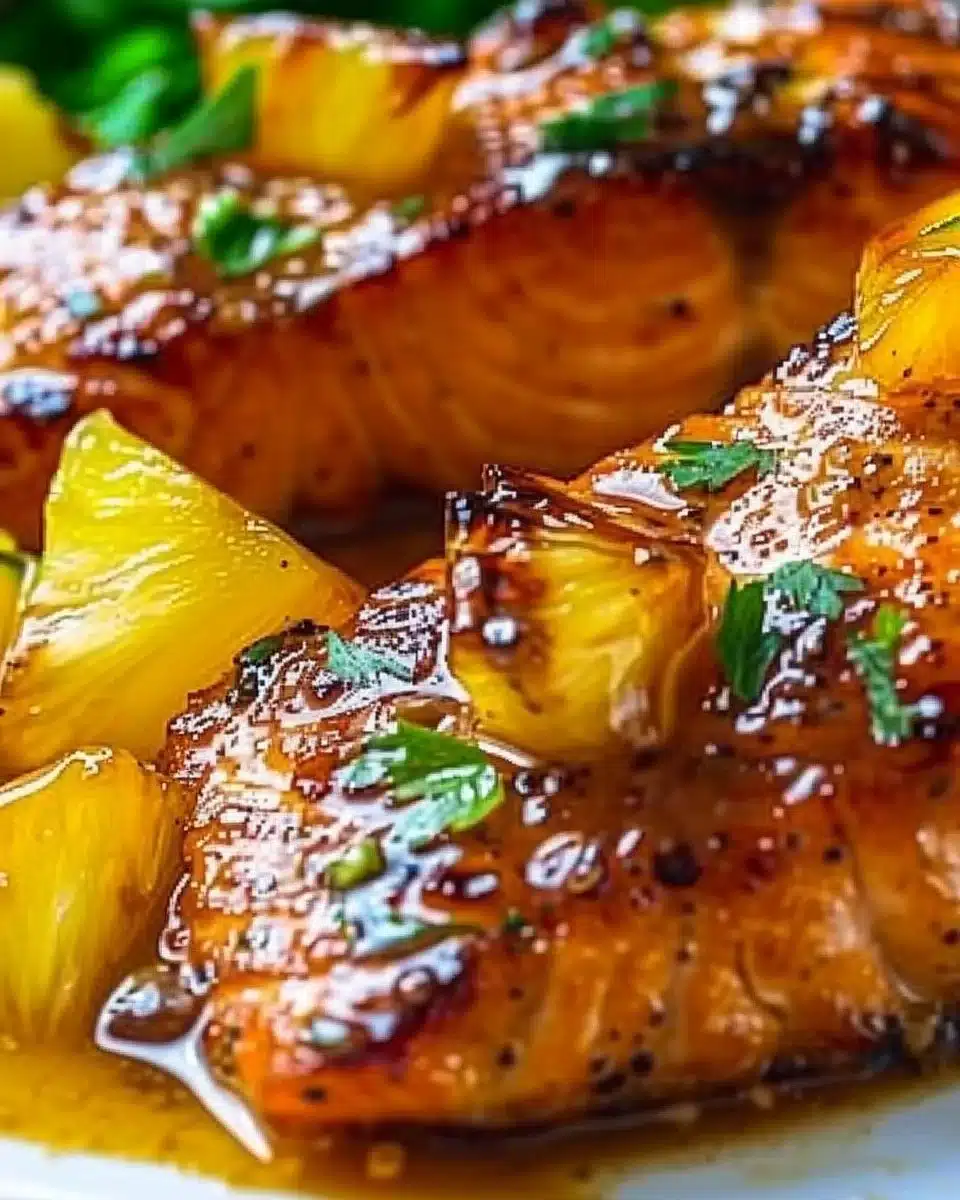
Garnishes make a big difference. Sprinkle chopped parsley or cilantro right before serving for a fresh pop of color. A wedge of lime or lemon on the side brightens the plate and lets diners add a custom citrus lift. For a restaurant-style finish, spoon a little warm glaze over the plated fillet and add a few diced pineapple pieces on top for visual appeal.
H2: Final Thoughts
Pineapple Glazed Salmon is an approachable, delicious dish that combines tropical sweetness with savory depth for a satisfying meal. It’s fast enough for weeknights but beautiful enough for company, and its flavor profile is easy to tweak to suit your taste. With a few simple steps—drying the fish, reserving glaze, and keeping an eye during broiling—you’ll get a glossy, caramelized finish and tender salmon every time. Try the variations to keep the recipe fresh, and don’t hesitate to pair it with bright sides to complete the plate.

Pineapple Glazed Salmon
- Total Time: 25 minutes
- Yield: 4 servings 1x
- Diet: Gluten-Free
Description
A bright and flavorful salmon dish topped with a sweet and savory pineapple glaze, perfect for busy weeknights.
Ingredients
- 4 salmon fillets, approximately 6 ounces each
- 1 tablespoon olive oil
- 1/2 teaspoon salt
- 1/4 teaspoon black pepper
- 1 cup fresh or canned pineapple, diced and well drained
- 1/4 cup packed light brown sugar
- 2 tablespoons soy sauce
- 1 tablespoon rice vinegar
- 1 teaspoon minced garlic
- 1/2 teaspoon grated fresh ginger (optional)
- 1 tablespoon fresh parsley, chopped (for garnish)
Instructions
- Preheat your oven to 400°F (200°C). Lightly grease a baking dish.
- Whisk together brown sugar, soy sauce, rice vinegar, minced garlic, and grated ginger to create the glaze.
- Pat the salmon fillets dry, rub with olive oil, and season with salt and pepper.
- Place the seasoned salmon skin-side down in the baking dish.
- Spoon two-thirds of the glaze over the salmon and scatter diced pineapple around.
- Bake for 12 to 15 minutes until cooked through.
- Optionally, broil for 1 to 2 minutes for a caramelized finish.
- Let rest for 5 minutes, garnish with parsley, and serve warm.
Notes
For best results, dry the salmon well before seasoning and watch closely while broiling to prevent burning. Use fresh pineapple for better texture and flavor.
- Prep Time: 10 minutes
- Cook Time: 15 minutes
- Category: Main Course
- Method: Baking
- Cuisine: American
Nutrition
- Serving Size: 1 serving
- Calories: 460
- Sugar: 16g
- Sodium: 820mg
- Fat: 25g
- Saturated Fat: 3g
- Unsaturated Fat: 22g
- Trans Fat: 0g
- Carbohydrates: 18g
- Fiber: 1g
- Protein: 34g
- Cholesterol: 70mg