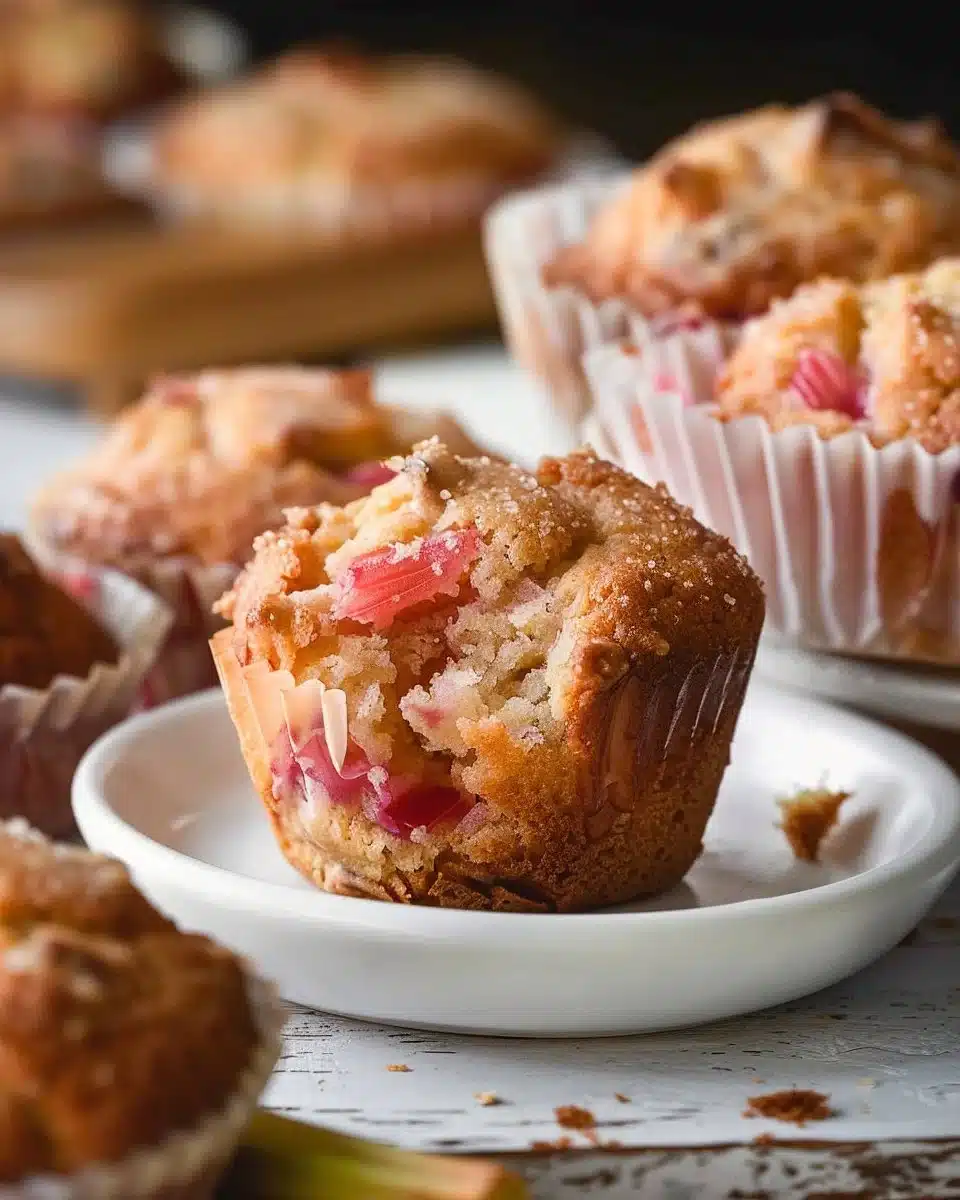
Rhubarb Muffins are a bright, tangy treat that bring a pop of spring to any breakfast or snack table. If you love muffins with fruit-forward flavor and a crumbly topping, you might also enjoy a simpler sweet option like banana chocolate muffins with just three ingredients, which shows how versatile home baking can be. These rhubarb muffins balance tart stalks with warm sugar and a little crunch on top; they’re easy to make, freeze well, and pair beautifully with coffee or tea.
why make this recipe
Rhubarb muffins are a fantastic way to use a seasonal crop that can be intimidating for first-time cooks. The fruit’s natural tartness cuts through sweetness in baked goods so you don’t need an overly sweet batter to get flavor. Because these muffins contain both granulated and brown sugar, they finish with depth and a slightly caramel note that complements the rhubarb.
This recipe makes 24 muffins, so it’s great for batch baking, brunches, school lunches, or popping in the freezer for later. The method is straightforward: mix wet ingredients, fold in dry ingredients, disperse the rhubarb, and top each muffin with a little cinnamon-sugar and butter. If you’re trying to use up a spring harvest or simply want a refreshing baked good, these Rhubarb Muffins deliver bright flavor with minimal fuss.

Ingredients :
3/4 cup sugar, 3/4 cup brown sugar, 1/2 cup vegetable oil, 1 cup buttermilk, 1 egg, 1 teaspoon vanilla, 2 3/4 cup flour, 1 teaspoon baking soda, 3 cups diced rhubarb, 1/2 cup sugar (for topping), 1/2 teaspoon cinnamon, 1 tablespoon butter (softened)
Ingredient notes:
- Buttermilk adds a gentle tang and tender crumb. If you don’t have buttermilk, make a quick substitute by stirring 1 tablespoon lemon juice or white vinegar into 1 cup milk and letting it sit 5 minutes; this gives the acidity needed for lift and flavor.
- Vegetable oil keeps the muffins moist. For a lower-fat alternative, you can replace up to half the oil with unsweetened applesauce, but expect slightly denser muffins.
- If fresh rhubarb isn’t available, frozen rhubarb that’s been thawed and drained works. Toss it in a tablespoon of flour before folding it in so it doesn’t sink or overly wet the batter.
- If you avoid refined sugar, try replacing the granulated sugars with coconut sugar in a 1:1 swap for a different flavor profile, keeping an eye on moisture since some swaps affect texture.
- Vanilla is small but important—don’t skip it. Use pure vanilla extract if possible for the cleanest flavor.
Directions :
Preheat oven to 350 degrees F and add muffin liners to 24 muffin cups. In a large bowl, stir together the sugar, brown sugar, oil, buttermilk, egg and vanilla. Next, add the flour and baking soda and stir until just combined. Add the rhubarb and stir until well dispersed throughout the batter; set aside. In a small bowl, mix the topping ingredients with a fork until combined. Fill each muffin cup 2/3 full and top each muffin with about 1 teaspoon of the topping. Bake for 18-22 minutes. Let cool for 15 minutes and remove from the muffin tin to cool completely.
how to make Rhubarb Muffins
Making Rhubarb Muffins is a simple, rewarding process even if you’re new to baking. Gather your ingredients, preheat the oven, and line a 24-cup muffin pan—this assures even baking and easy removal.
Step-by-step strategy:
- Measure carefully. Baking is chemistry; use the cup measurements as listed, leveling flour with a flat edge rather than packing it.
- Stir the wet ingredients first. Mixing the sugar, brown sugar, oil, buttermilk, egg, and vanilla until smooth ensures the batter is uniform and the sugars begin to dissolve.
- Add dry ingredients gently. Combine the flour and baking soda with the wet mix until just combined. Overmixing activates gluten and makes muffins tough; a few streaks of flour are fine.
- Fold in the rhubarb at the end. This keeps the fruit pieces intact and evenly spread through the batter without overworking it.
- Make the topping simple. The cinnamon-sugar with softened butter is a small step that adds texture and a classic muffin finish.
- Fill and bake. Two-thirds full is the right height for a well-domed top. Bake at 350°F for 18–22 minutes; rotate pans if your oven has hot spots.
When the timer dings, test with a toothpick in the center of a muffin. If it comes out with a few moist crumbs, the muffins are done; if batter remains, give them 2–3 more minutes. Allow cooling in the pan for 10–15 minutes so the muffins set, then transfer to a rack to cool completely.
Pro Tips for Success Rhubarb Muffins
- Use cold ingredients at room temperature for better incorporation: let the egg and buttermilk sit out for 10–15 minutes so they aren’t fridge-cold when you mix.
- Dice the rhubarb into uniform pieces (about 1/2-inch) so every muffin gets an even distribution of fruit and you avoid pockets of tartness.
- Toss rhubarb in a tablespoon of flour before adding to the batter to prevent sinking and to reduce extra moisture in pockets.
- Don’t overmix the batter after adding flour; stir until just combined to keep muffins tender and light.
- Check early for doneness. Begin checking at 18 minutes to avoid drying out the muffins—oven temperatures vary.
- If baking in a dark or nonstick pan, reduce the baking time slightly; these pans run hotter and brown quicker.
Flavor Variations Rhubarb Muffins
- Rhubarb-Strawberry: Fold in 1 cup diced strawberries with the rhubarb for a classic duo; strawberries add sweetness and balance the tart stalks.
- Orange-Rhubarb: Add 1 tablespoon grated orange zest to the batter and swap vanilla for orange extract if you like a citrus lift.
- Ginger-Rhubarb: Stir 1/2–1 teaspoon ground ginger into the batter or add 1/4 cup crystallized ginger chopped fine to give warm spice notes that pair beautifully with rhubarb.
- Almond-Rhubarb: Replace 1/2 cup of the flour with almond flour and add 1/2 teaspoon almond extract for a nutty layer of flavor. Note: almond flour changes texture, so muffins will be slightly denser.
- Oat Streusel Topping: Swap the cinnamon-sugar topping for a quick oat-based streusel (rolled oats, brown sugar, butter) for extra crunch and a rustic feel.
Serving Suggestions Rhubarb Muffins
Rhubarb Muffins are lovely warm from the oven with a pat of butter or a light smear of cream cheese for tang. For a breakfast spread, serve alongside scrambled eggs and fresh fruit for a mix of savory and sweet. These muffins also shine as a sweet snack with a cup of milky tea or a bright Americano.
If you’re hosting a brunch and want playful variety, offer a plate of mixed muffins—these rhubarb muffins sit well next to sweeter options like birthday cake mini muffins, giving guests a choice between tart and sweet. For an afternoon treat, split a muffin and layer with Greek yogurt and a drizzle of honey for a quick parfait-style snack.
Storage and Freezing Instructions Rhubarb Muffins
Room temperature: Store cooled muffins in an airtight container at room temperature for up to 2 days. Keep a paper towel in the container to absorb extra moisture and help them retain texture.
Refrigeration: If you prefer a longer life, refrigerate muffins in an airtight container for up to 5 days. Bring to room temperature before serving or warm briefly in a low oven or microwave.
Freezing: To freeze, cool muffins completely, wrap individually in plastic wrap or parchment, then place in a labeled freezer bag or airtight container. They keep well for up to 3 months. Thaw overnight in the refrigerator or at room temperature for a couple of hours. Warm in a 325°F oven for 8–12 minutes if you want them freshly baked.
Tip: Freeze without the topping if you plan to reheat in a microwave; reapply a small smear of butter or a fresh sprinkle of cinnamon sugar after warming for best texture.
Nutrition Facts (Per Serving)
Serving size: 1 muffin (recipe makes 24)
- Calories: 172 kcal
- Protein: 2 g
- Carbohydrates: 28 g
- Fat: 5 g
- Fiber: 1 g
- Sodium: 68 mg
Nutrition note: These values are estimates and can vary depending on specific brands and substitutions (for example, using applesauce instead of oil or low-fat buttermilk will change the totals). The muffins are moderately calorie-light per serving compared to many bakery muffins because this recipe yields 24 portions.
FAQ About Rhubarb Muffins
What makes rhubarb a good ingredient for muffins?
Rhubarb brings a tart, slightly sour flavor that brightens baked goods without needing excessive sugar. In muffins, that tartness contrasts with brown sugar and a buttery topping to create depth. Because rhubarb holds its shape when baked, it distributes well through the batter and gives recognizable pockets of flavor in every bite.
Can I use frozen rhubarb instead of fresh?
Yes. Thaw frozen rhubarb fully and drain off excess liquid before folding it into the batter. Tossing the thawed rhubarb with a tablespoon of flour helps keep it from sinking and reduces extra moisture in the batter. Using frozen rhubarb is a convenient year-round option and generally yields very similar texture and flavor.
How do I prevent the muffins from becoming soggy in the middle?
Soggy middles usually mean either under-baking or too-wet batter. Check oven temperature with an oven thermometer; if your oven runs cool, muffins can remain underbaked. Avoid overmixing, and if your rhubarb is very juicy, toss it with a spoonful of flour before adding it to the batter to absorb extra moisture. Finally, ensure muffin cups are only filled two-thirds full so centers bake through properly.
Can I make these muffins dairy-free?
Yes. Replace buttermilk with a dairy-free milk (almond, soy, oat) mixed with 1 tablespoon lemon juice or vinegar to mimic buttermilk’s acidity. Substitute the tablespoon of butter in the topping with a nondairy spread or coconut oil that’s softened. The texture will be close to the original, though some dairy-free milks are thinner and may slightly change batter viscosity.
Is it possible to reduce the sugar in this recipe without ruining texture?
You can reduce the sugar by 10–25% without dramatic texture changes, but rhubarb is tart, so lowering sugar too much will affect overall balance. Consider replacing half the granulated sugar with a less sweet natural sweetener that keeps moisture, like applesauce, to cut refined sugar but retain bake quality. Keep in mind that sugar contributes to browning and tenderness, so muffins will be paler and firmer if you cut too much.
Why did my rhubarb turn mushy?
If rhubarb pieces cook too long or are very thinly sliced, they can become soft. Use evenly sized 1/2-inch pieces and avoid overbaking the muffins. Also, very ripe rhubarb or previously frozen and thawed rhubarb can be softer; in that case, reduce baking time slightly and toss pieces in flour to help them maintain structure during baking.
What can I do if my muffins stick to the liners?
Make sure liners are placed evenly in the muffin tin and use good-quality nonstick liners. Lightly spray liners with a bit of baking spray if sticking is an issue, or use a slightly greased tin without liners and allow muffins to cool before removing. Cooling the muffins for 10–15 minutes helps them set and release cleanly.
How do I make mini or jumbo rhubarb muffins from this recipe?
For mini muffins, reduce baking time to about 10–12 minutes and use a mini muffin tin, filling cups about two-thirds full. For jumbo muffins, fill jumbo cups two-thirds full and bake about 25–30 minutes, but start checking at 20 minutes for doneness. Adjusting bake time is straightforward—the rule is shorter time for smaller muffins and longer for larger ones, always checking with a toothpick.
Final Thoughts
Rhubarb Muffins are a bright, homey treat that celebrate a seasonal ingredient in easy-to-love fashion. They’re approachable for beginners, flexible for variations, and friendly to make-ahead plans. Whether you bake a full batch for a brunch, freeze a dozen for weekday breakfasts, or play with flavor add-ins like strawberry or ginger, these muffins give a reliable balance of tartness, sweetness, and comforting muffin texture. Enjoy the process and the warm, tangy result—fresh rhubarb has a way of making a kitchen smell like spring.
Print
Rhubarb Muffins
- Total Time: 37 minutes
- Yield: 24 servings 1x
- Diet: Vegetarian
Description
Rhubarb Muffins are a bright, tangy treat that bring a pop of spring to any breakfast or snack table. They feature a balance of tart rhubarb, warm sugars, and a crumbly topping.
Ingredients
- 3/4 cup sugar
- 3/4 cup brown sugar
- 1/2 cup vegetable oil
- 1 cup buttermilk
- 1 egg
- 1 teaspoon vanilla
- 2 3/4 cup flour
- 1 teaspoon baking soda
- 3 cups diced rhubarb
- 1/2 cup sugar (for topping)
- 1/2 teaspoon cinnamon
- 1 tablespoon butter (softened)
Instructions
- Preheat oven to 350°F and add muffin liners to 24 muffin cups.
- Stir together the sugar, brown sugar, oil, buttermilk, egg, and vanilla in a large bowl.
- Add flour and baking soda, stir until just combined.
- Fold in the rhubarb until well dispersed.
- Mix topping ingredients in a small bowl until combined.
- Fill each muffin cup 2/3 full and add about 1 teaspoon of the topping on each muffin.
- Bake for 18-22 minutes.
- Cool for 15 minutes and then remove muffins from the tin to cool completely.
Notes
For a lighter option, replace half the vegetable oil with unsweetened applesauce. To avoid soggy muffins, ensure your rhubarb is well-drained and toss it in flour before adding to the batter.
- Prep Time: 15 minutes
- Cook Time: 22 minutes
- Category: Baked Goods
- Method: Baking
- Cuisine: American
Nutrition
- Serving Size: 1 muffin
- Calories: 172
- Sugar: 12g
- Sodium: 68mg
- Fat: 5g
- Saturated Fat: 1g
- Unsaturated Fat: 4g
- Trans Fat: 0g
- Carbohydrates: 28g
- Fiber: 1g
- Protein: 2g
- Cholesterol: 30mg