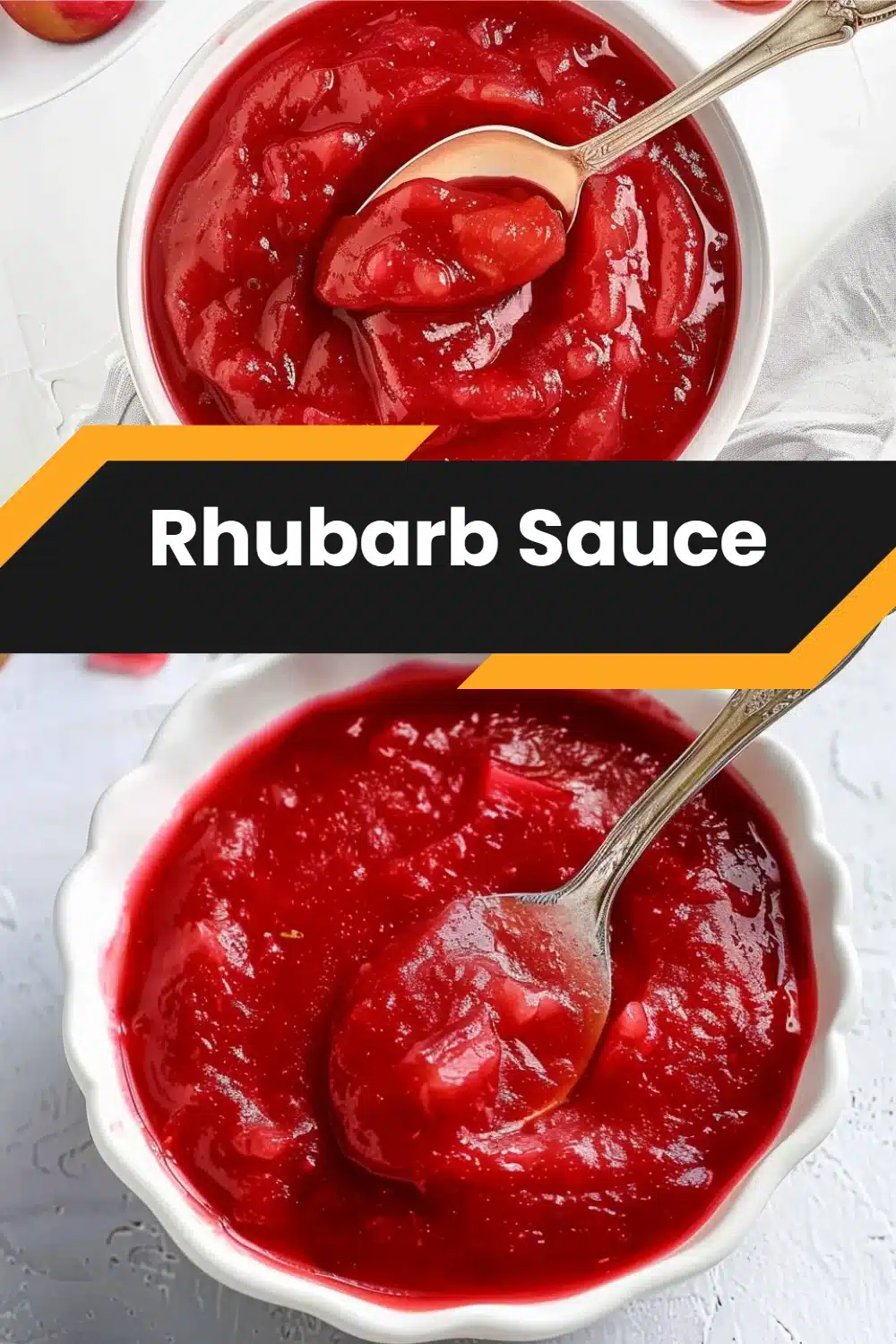
Rhubarb Sauce is a bright, tangy condiment that brings a refreshing lift to breakfasts, desserts, and even savory dishes. If you love sauces with a balance of sweet and tart, you might also enjoy the creamy contrast of an spinach-parmesan cream sauce for artichoke pizza as another way to explore flavor pairings in the kitchen.
Why make this recipe
Rhubarb sauce is one of those simple kitchen wins: it takes very little hands-on time, uses just a few pantry ingredients, and produces a versatile result you can use in many ways. When rhubarb is in season (generally spring through early summer), the stalks are inexpensive and full of flavor. Cooking rhubarb down with water and a touch of sugar concentrates its tartness into something silky and spoonable.
This recipe is especially appealing because it’s flexible. Want a spoonable compote to top yogurt? Use a bit more sugar. Need a runnier sauce for pancakes or ice cream? Add more water while simmering. The optional red food coloring lets you boost the visual appeal without changing the taste. And because the ingredients are straightforward, it’s easy to adapt for dietary needs or to experiment with flavor additions like ginger, citrus, or vanilla.
Rhubarb sauce is also a great way to preserve a seasonal flavor: make a batch and freeze it for off-season desserts or to brighten up winter breakfasts.
How to make Rhubarb Sauce
This rhubarb sauce recipe is concise and flexible. It cooks on the stovetop, and you control the sweetness and thickness as it simmers. The following Ingredients and Directions are what you need to get started.
Ingredients
- 2 pounds tender red rhubarb, cut into 1/2 inch pieces
- 1/2 cup water (or more for a looser sauce)
- 2/3 cup sugar (use less for a tart sauce, more for a sweeter sauce)
- 1 drop red food coloring (optional)
Ingredient notes
- If you prefer to avoid refined sugar, try substituting coconut sugar, maple syrup, or honey. Start with a smaller amount and taste as it cooks; liquid sweeteners will change the texture slightly and may require less water adjustment.
- For a slightly fruitier background, replace part of the water with apple juice or orange juice—these add sweetness and complexity.
- The red food coloring is purely optional. If you want a natural boost in color, stir in a small spoonful of strawberry or raspberry puree near the end of cooking.
- If fresh rhubarb is not available, frozen rhubarb works well. Thaw slightly and drain any excess liquid before cooking, then reduce the added water a bit.
Directions
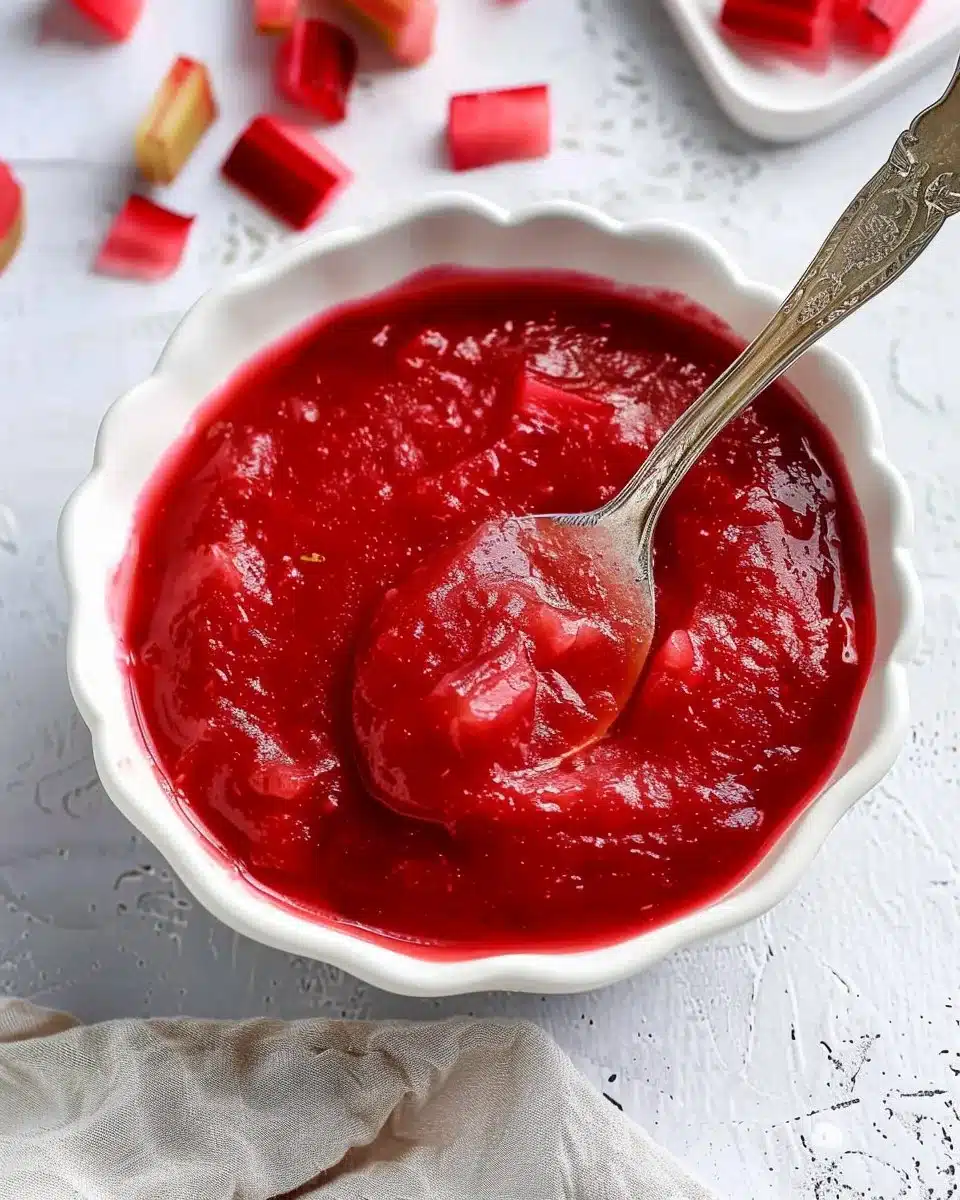
In a medium saucepan over medium to medium high heat, stir together all sauce ingredients. Let mixture come to a boil, then turn heat down to medium low and let simmer until rhubarb is broken down but chunks still remain, about 10 to 15 minutes. Taste test the sauce while it is simmering; add more sugar for a sweeter sauce or more water for a thinner sauce. For added color, stir in a drop or two of red food coloring. Remove pan from heat and let cool completely. Store in an airtight container in the fridge for up to 1 week or in a freezer safe container in the freezer for up to 6 months.
Pro Tips for Success Rhubarb Sauce
- Start with tender stalks: Choose younger, bright-red rhubarb stalks when possible. Older, thicker stalks may be woodier and take longer to break down.
- Taste as you go: The sugar amount is flexible—taste the sauce after about 8 minutes of simmering and adjust. Rhubarb varies in tartness by season and variety.
- Control texture with heat and time: A gently simmering sauce keeps some chunks intact; if you want a smoother sauce, simmer a little longer or briefly mash with a potato masher. For a silky texture, pulse with an immersion blender after cooking.
- Keep an eye on the pot: As the sauce reduces, it can bubble and splatter. Use a lid slightly ajar to reduce splatter while letting steam escape.
- Cool before storing: Let the sauce cool to room temperature before sealing it in a container. This helps avoid condensation and sogginess.
- Add flavor late: If you’re adding delicate flavors like vanilla or citrus zest, stir them in at the end of cooking so they don’t fade.
Flavor Variations Rhubarb Sauce
- Ginger Rhubarb: Add 1 teaspoon of freshly grated ginger during simmering to give the sauce warm, spicy notes that pair beautifully with roasted meats or ginger cookies.
- Citrus Rhubarb: Stir in 1 tablespoon of lemon or orange zest near the end of cooking for vibrant brightness. A splash of juice at the end will also lift the flavor.
- Berry Blend: Mix in 1 cup of chopped strawberries or raspberries in the last 5–7 minutes of simmering to deepen color and add sweet-fruity complexity.
- Vanilla Honey: Replace half the sugar with honey and add 1 teaspoon of vanilla extract at the end for a smoother, richer-tasting sauce that’s excellent on ice cream.
- Spiced Compote: Simmer with a cinnamon stick or a pinch of cardamom for a warmth that complements breakfast dishes and baked goods.
Serving Suggestions Rhubarb Sauce
Rhubarb sauce is surprisingly versatile. Here are lots of ideas to use it across meals and courses:
- Brighten yogurt or cottage cheese: Spoon rhubarb sauce over plain or vanilla yogurt for a tangy fruit topping.
- Top pancakes, waffles, or French toast: Use it like you would a fruit compote; thin slightly with warm water if you prefer a pourable syrup.
- Ice cream companion: Warm a little rhubarb sauce and drizzle over vanilla ice cream for a simple sundae with a tart kick.
- Cheesecake or pound cake topping: The sauce adds acidity that balances rich cakes and creamy cheesecakes.
- Breakfast oatmeal or porridge: Stir a tablespoon or two into your bowl for a fruity switch-up.
- Savory glaze for poultry: Brush warmed rhubarb sauce on roasted chicken or turkey in the last 10 minutes of roasting for a glossy, tangy finish.
- Cheese board accent: Serve a small bowl alongside soft cheeses like goat cheese or brie; the tartness contrasts beautifully.
- Use as a base for other sauces: If you want to experiment with pairing fruity and meaty flavors, consult a hearty recipe idea such as an authentic bolognese sauce for inspiration on balancing savory depth—rhubarb can act as a bright counterpoint in creative kitchen mashups.
Storage and Freezing Instructions Rhubarb Sauce
- Refrigerator: Cool the sauce to room temperature and store in an airtight container in the refrigerator for up to 1 week. Give it a good stir before using; if it has thickened, you can thin it with a tablespoon or two of water and warm gently.
- Freezing: Portion the sauce into freezer-safe containers or heavy-duty zip-top bags. Leave some headspace for expansion. The sauce will keep well for up to 6 months. Thaw overnight in the fridge and gently reheat on the stove or in the microwave.
- Freezer tips: Freeze in small portions (2–4 tablespoons each) if you plan to use the sauce for single servings or to top desserts. Flattened, sealed bags save space and thaw quickly.
- Reheating: Gently reheat on the stovetop over low heat, stirring occasionally. If the sauce smells off or shows any signs of mold, discard it.
- Canning note: This recipe is not formulated for water-bath canning safety—if you want to preserve rhubarb long-term without freezing, follow a tested canning recipe that includes appropriate acidification and processing times.
Nutrition Facts (Per Serving)
These are approximate values for one serving, assuming the batch yields about 12 servings (roughly 1/4 cup or 60 grams per serving). Nutritional content can vary with exact rhubarb size, cooking losses, and substitutions.
- Calories: ~60 kcal
- Protein: ~0.7 g
- Carbohydrates: ~14 g
- Fat: ~0.0–0.2 g
- Fiber: ~1.3 g
- Sodium: ~5 mg
Notes on the numbers: Most calories come from the sugar you add; using less sugar or a lower-calorie sweetener will reduce calories and carbs. Rhubarb itself is low in calories and supplies a modest amount of fiber, vitamin K, and vitamin C.
FAQ About Rhubarb Sauce
What kind of rhubarb should I use for this sauce?
Use tender, firm stalks for the best texture and flavor—those are usually the younger, thinner, and bright-red varieties. Greenish or very thick stalks from older plants can be tougher and more fibrous; they’ll still work, but you may need to cook them a bit longer to break them down. If color matters for presentation, red-streaked stalks look great, but taste is the primary factor.
Can I make this without added sugar?
Yes. You can reduce the sugar or replace it with natural alternatives like honey, maple syrup, or erythritol-based sweeteners. Keep in mind liquid sweeteners may make the sauce slightly thinner, so reduce water accordingly. Taste as you cook to get the balance you like—rhubarb can be quite tart, so some sweetener helps round out the flavor for many palates.
How can I get a smoother consistency if I prefer it?
If you want a velvety sauce, simmer a little longer to fully break down the rhubarb, then use an immersion blender or pulse it in a stand blender until smooth. For the silkiest result, strain the blended sauce through a fine-mesh sieve to remove bits of fiber. Remember that thinner sauces can be thickened by simmering to reduce, while thicker sauces can be loosened with a splash of water or juice.
Can rhubarb sauce pair with savory dishes?
Absolutely. Rhubarb’s natural tartness cuts through rich flavors, so it can work as a glaze for poultry, a condiment for pork substitutes like smoked turkey, or even stirred into pan sauces for roasted vegetables. Consider adding warm spices or mustard to the rhubarb sauce to help it marry with savory proteins. Keep an open mind—acidic fruit sauces often make excellent partners for savory mains.
Is it safe to use red food coloring?
Red food coloring is safe in small amounts and is optional for appearance only. If you prefer to avoid artificial dyes, boost color naturally with a handful of strawberries or raspberries added during the last few minutes of cooking. Those berries add color and complementary sweetness without altering the fundamental rhubarb character.
How long will rhubarb sauce keep in the freezer and refrigerator?
Stored in an airtight container, rhubarb sauce will keep in the refrigerator for up to 1 week and in the freezer for up to 6 months. Thaw frozen portions overnight in the fridge before reheating gently on the stove. For best quality, use frozen sauce within three months if you notice any decline in color or flavor after longer storage.
Can I can rhubarb sauce for shelf stability?
This simple stovetop recipe is intended for refrigeration or freezing; it has not been tested for safe shelf-stable canning. If you want to preserve rhubarb for room-temperature storage, follow a tested, USDA-approved canning recipe that includes correct acidity and processing times. Improper canning can pose safety risks.
What dishes are classic pairings for rhubarb sauce?
Classic pairings include vanilla ice cream, pound cake, yogurt, and oatmeal. Rhubarb also shines with creamy elements like custard or ricotta, where its acidity balances richness. For savory experimentation, try it with roasted poultry or as a component in a pan glaze—its tart character is surprisingly adaptable.
Final Thoughts
Rhubarb sauce is an easy, adaptable way to capture seasonal flavor and keep it on hand for everything from breakfasts to elegant desserts. The recipe is forgiving: adjust the sweetness, thickness, and flavor additions to suit your pantry and taste. Make a big batch while rhubarb is plentiful, freeze individual portions for quick use, and don’t be afraid to experiment with spices or fruit blends. Once you have this simple technique down, it becomes a go-to for brightening many dishes all year long. Enjoy exploring the tart-sweet possibilities of homemade rhubarb sauce.
Print
Rhubarb Sauce
- Total Time: 25 minutes
- Yield: 12 servings 1x
- Diet: Vegan
Description
A bright, tangy condiment perfect for breakfasts, desserts, and savory dishes that balances sweet and tart flavors.
Ingredients
- 2 pounds tender red rhubarb, cut into 1/2 inch pieces
- 1/2 cup water (or more for a looser sauce)
- 2/3 cup sugar (use less for a tart sauce, more for a sweeter sauce)
- 1 drop red food coloring (optional)
Instructions
- In a medium saucepan over medium to medium high heat, stir together all sauce ingredients.
- Let mixture come to a boil.
- Turn heat down to medium low and let simmer until rhubarb is broken down but chunks still remain, about 10 to 15 minutes.
- Taste test the sauce while it is simmering; add more sugar for a sweeter sauce or more water for a thinner sauce.
- Remove pan from heat and let cool completely.
- Store in an airtight container in the fridge for up to 1 week or in a freezer safe container in the freezer for up to 6 months.
Notes
For a fruitier flavor, replace part of the water with apple or orange juice. If you want a smoother consistency, use an immersion blender after cooking.
- Prep Time: 10 minutes
- Cook Time: 15 minutes
- Category: Condiment
- Method: Stovetop
- Cuisine: American
Nutrition
- Serving Size: 1/4 cup
- Calories: 60
- Sugar: 14g
- Sodium: 5mg
- Fat: 0.0g
- Saturated Fat: 0g
- Unsaturated Fat: 0g
- Trans Fat: 0g
- Carbohydrates: 14g
- Fiber: 1g
- Protein: 0.7g
- Cholesterol: 0mg