A Sweet-Tart Start
Strawberry Rhubarb Jam brings together bright, tangy rhubarb and fragrant, sun-warmed strawberries in a spread that tastes like late spring in a jar. This jam is an easy way to capture seasonal flavors and turn a few simple ingredients into something deliciously versatile. If you enjoy pairing sweet pastries with a fruity spread, you might also love our easy strawberry cheesecake cinnabon rolls, which feature complementary strawberry notes and make a memorable breakfast or brunch.
Making jam at home feels rewarding: it preserves a snapshot of the season, reduces processed additives, and gives you full control over texture and sweetness. Read on for a warm, clear guide on how to make Strawberry Rhubarb Jam from scratch, plus tips, variations, and answers to common questions.
Why make this recipe
Homemade Strawberry Rhubarb Jam is a small labor of love that returns generous rewards. Here are a few reasons to try it:
- Flavor balance: Rhubarb’s natural tartness keeps the jam from tasting cloying, while strawberries add body and fresh fruit aroma.
- Seasonal use: When rhubarb stalks and early strawberries appear at the market, this jam captures the brightness of spring and early summer.
- Simple ingredients: The recipe uses just four pantry-friendly items—fruit, sugar, and lemon—so you get pure, recognizable flavors.
- Versatility: This jam works on toast, stirred into yogurt, baked into tarts, or as a glaze for grilled fruit or chicken.
- Great gift: A jar of homemade jam feels personal and thoughtful; it’s a classic homemade present for neighbors and friends.
Because the recipe is straightforward and forgiving, it’s also a great project for cooks of any skill level who want to try small-batch preserving without specialized equipment.
How to make Strawberry Rhubarb Jam
This recipe is made on the stovetop and thickens through gentle simmering until it reaches the right consistency. The method is forgiving but requires some attention during the cooking stage so the jam doesn’t boil over or scorch.
-
Prepare the fruit. Trim and wash rhubarb stalks, then cut them into roughly 1/2" cubes so they cook evenly. Hull and halve the strawberries so pieces are about the same size as the rhubarb. Measuring by volume keeps the balance of tart and sweet consistent.
-
Combine ingredients in a saucepan. Place the cut rhubarb (5 cups), hulled and halved strawberries (2 cups), sugar (2 1/4 cups), and fresh lemon juice (1 tablespoon) in a medium to large saucepan over medium heat. Stir gently to coat the fruit with sugar and lemon juice.
-
Bring to a gentle boil, then reduce. Once the mixture starts to bubble, reduce the heat to medium-low. Adjust the heat so the jam continues to bubble but not violently—stir occasionally and watch for splatters where bubbles can pop out of the center. Gentle simmering helps the fruit break down evenly.
-
Cook until thickened. Continue to cook, stirring occasionally, until the jam has thickened and the pieces of fruit are soft and glossy. Plan on cooking the jam for about an hour, and if you use a candy thermometer, the mixture should reach over 220°F (104°C) to set properly. Small-batch jams sometimes take longer depending on pot size, heat, and humidity—don’t rush this step.
-
Test for set. To test the set without a thermometer, place a small spoonful of hot jam on a chilled plate and return it to the freezer for 30–60 seconds. Push the jam with your finger or the back of a spoon—if it wrinkles and doesn’t flood back together, it’s ready.
-
Decide how to store. If you plan to refrigerate or freeze the jam, ladle it into clean jars or containers and allow it to cool, then close lids and chill or freeze according to the storage guidelines below. If you plan to water-bath can the jam for shelf stability, process jars in a boiling water canner for the time appropriate to your altitude and jar size—typically 10–15 minutes—then cool undisturbed for 12–24 hours and check seals before storage.
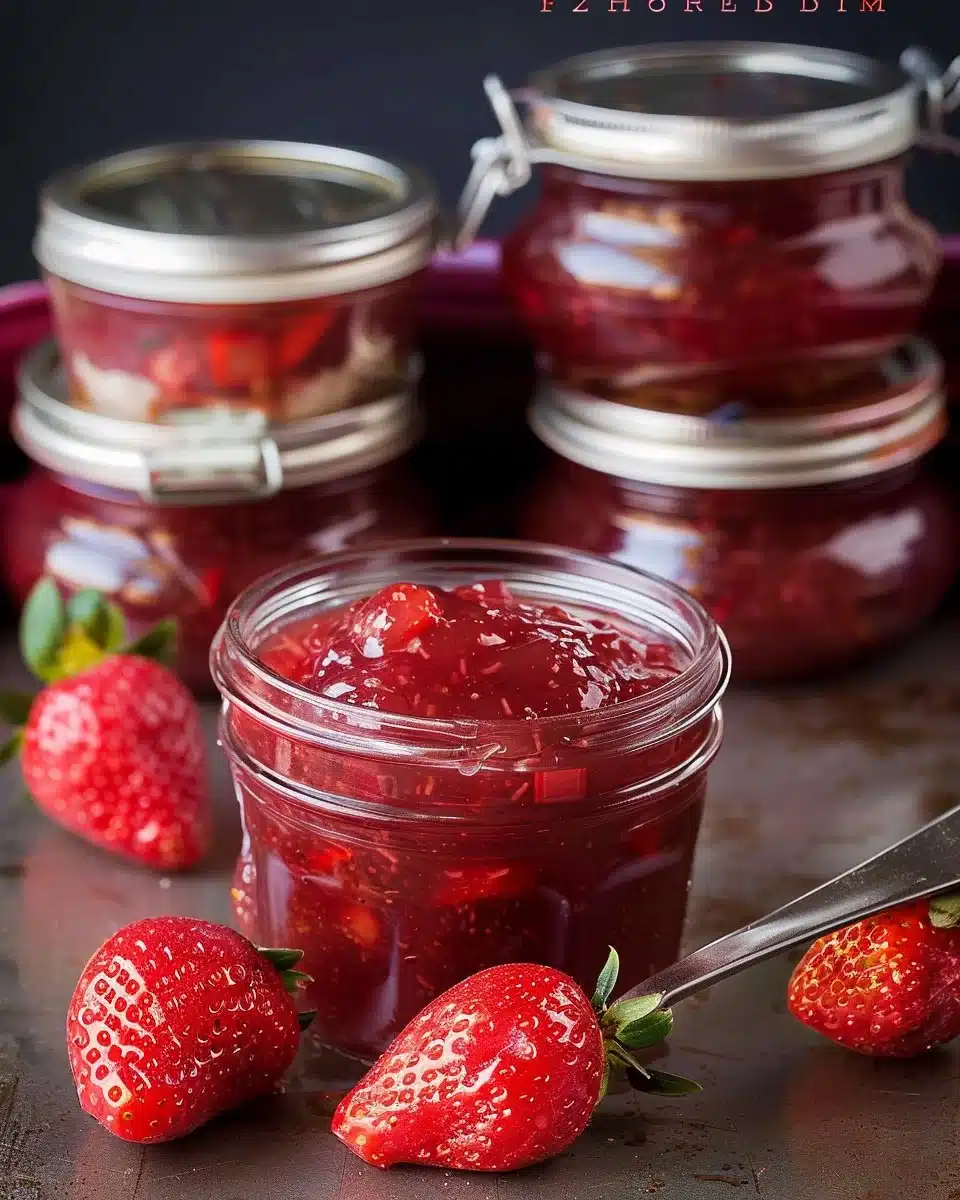

Ingredients :
- 5 cups rhubarb (about 3 large stalks, cut into 1⁄2" cubes)
- 2 cups hulled and halved strawberries (about 1 pint)
- 2 1/4 cups sugar
- 1 tablespoon fresh lemon juice (from about half of a large lemon)
Ingredient notes and substitutions:
- Sugar: The recipe uses granulated sugar to both sweeten and help the jam set. If you want a less sweet jam, reduce sugar modestly (for example, 1 3/4 to 2 cups), but expect a softer set and a tarter flavor. If you prefer a lower-calorie option, consider substituting part of the sugar with a liquid pectin designed for low-sugar jams and follow the pectin manufacturer’s directions.
- Fruit: If strawberries are small, use more to reach the 2-cup measure. Frozen strawberries can be used in a pinch—thaw and drain excess liquid before mixing—but fresh fruit gives the best texture.
- Lemon juice: Provides acidity to help the jam set and to brighten flavor. You can substitute a mild vinegar (apple cider or white) if you need a non-citrus option, but use a smaller amount—start with 1 teaspoon and adjust to taste.
- Pectin: This recipe relies on natural fruit pectin and the sugar-lemon balance to set. If you prefer a firmer set, add powdered pectin according to package instructions and reduce cooking time accordingly.
- Safety note: This recipe contains no alcohol or pork products. If you want to add a smoky or savory twist later, consider finishing with a splash of broth-based glaze or herbs for pairings—see Serving Suggestions.
Pro Tips for Success Strawberry Rhubarb Jam
- Use an even heat and a wide, heavy-bottomed pot: A wider pot increases surface area so the jam cooks down faster and reduces the risk of scorching.
- Stir gently but regularly: Especially during the last 20–30 minutes, stir more frequently to prevent fruit from sticking to the bottom and burning.
- Keep an eye on bubbling: Jam bubbles can leap out when boiling too hard. Reduce heat to maintain a steady, controlled simmer.
- Cool-test the set: Always check the set on a chilled plate—visual cues and temperature readings together will give the most reliable result.
- Clean jar hygiene: For refrigeration or immediate use, hot jars are fine. If you are canning for shelf stability, use sterilized jars and follow a tested water bath canning schedule to ensure safe preservation.
- Label jars: Date and include a small note about the sugar level if you adjusted it—this helps with future meal planning and gift-giving.
Flavor Variations Strawberry Rhubarb Jam
- Ginger and Orange: Stir in 1–2 teaspoons of freshly grated ginger and a teaspoon of orange zest during cooking for a bright, warming note.
- Vanilla Bean: Split a vanilla bean and scrape the seeds into the pot during the last 10 minutes of cooking. The vanilla mellows the tartness and adds a bakery-like aroma.
- Balsamic-Roasted Twist: Add a tablespoon of balsamic reduction at the end of cooking for a rich, slightly savory depth—great for pairing with cheeses.
- Mixed Berry Boost: Replace a half cup of strawberries with raspberries or blueberries for a more complex berry profile; reduce sugar by 1–2 tablespoons if you prefer less sweetness.
- Herb-Infused: Add a few sprigs of thyme or rosemary to the pot during simmering and remove before canning for a subtle herbal backdrop that pairs well with savory dishes.
Serving Suggestions Strawberry Rhubarb Jam
This jam is incredibly flexible—sweet, tart, and bright. Here are favorite ways to serve it:
- Classic toast: Spread on buttered sourdough, flaky croissants, or traditional white toast for a nostalgic breakfast.
- Yogurt and granola: Swirl a spoonful into plain Greek yogurt and top with toasted nuts and granola for a quick breakfast or snack.
- Cheese board companion: The jam pairs wonderfully with soft cheeses like brie or chèvre and contrasts nicely with aged cheddar.
- Glaze or finishing sauce: Warm a few spoonfuls and brush over grilled or roasted chicken, pork substitutes, or roasted root vegetables for a sweet-tart glaze.
- Bakes and pastries: Use as a filling for thumbprint cookies, danishes, or tarts. The jam’s texture holds up well in oven applications.
If you’re assembling a brunch spread that blends sweet and savory, the jam is a lovely counterpoint to hearty mains; for a bold pairing with Creole flavors, consider a main like Classic Mardi Gras Jambalaya on the savory side while offering jars of jam for guests who prefer sweeter accoutrements.
Storage and Freezing Instructions Strawberry Rhubarb Jam
Short-term and long-term storage each have straightforward methods.
Refrigeration:
- Allow jam to cool to room temperature. Seal in clean jars or airtight containers and refrigerate up to 3–4 weeks. The flavor often deepens after a day or two in the fridge.
Freezing:
- For longer storage, leave some headspace and freeze the jam in freezer-safe jars or containers for up to 12 months. Thaw in the refrigerator before use. Note that freezing may slightly change the texture, making it less gelled; a quick stir or brief reheat can restore spreadable consistency.
Water-bath canning (shelf-stable):
- If you intend to can the jam for pantry storage, sterilize jars and lids, ladle hot jam into hot jars leaving 1/4" headspace, wipe rims, apply lids, and process in a boiling water bath for 10–15 minutes (adjust for altitude). After processing, remove jars and cool undisturbed for 12–24 hours. Check seals—the lids should be concave and not pop when pressed. Properly sealed jars store in a cool, dark place for up to a year. Discard any jars that show signs of spoilage.
Label each jar with the date and any notes about sugar reduction or added flavors so you and gift recipients know what to expect.
Nutrition Facts (Per Serving)
These values are estimates and will vary based on exact fruit sizes, sugar adjustments, and final yield. The serving size used here is 1 tablespoon (about 20 grams).
- Calories: ~36 kcal
- Protein: ~0.1 g
- Carbohydrates: ~9 g
- Fat: ~0.0–0.1 g
- Fiber: ~0.3 g
- Sodium: ~1–3 mg
Notes: The majority of calories and carbohydrates come from added sugar. If you reduce sugar or use low-sugar pectin products, calories per serving will decrease. For precise tracking, weigh your final yield and recalculate using nutrition software or labels.
FAQ About Strawberry Rhubarb Jam
What’s the best ratio of strawberries to rhubarb for flavor balance?
A 2:5 ratio by cups, as in this recipe (2 cups strawberries to 5 cups rhubarb), creates a jam where rhubarb’s bright tartness is clearly present while strawberries provide body and natural pectin. If you prefer a sweeter, more strawberry-forward jam, increase strawberries or reduce sugar slightly, but keep an eye on set—more fruit acidity or less sugar can yield a softer gel.
Can I use frozen fruit instead of fresh?
Yes—frozen strawberries or rhubarb can be used, but thaw and drain excess water before cooking to avoid watering down the jam. Frozen fruit releases more liquid as it thaws, so removing some of that excess keeps cooking time reasonable and preserves the intended fruit-to-sugar balance. Expect slight texture changes compared to using all fresh fruit.
How can I tell when the jam has reached the proper set without a thermometer?
Use the chilled plate test: place a small plate in the freezer before cooking, then drop a spoonful of hot jam onto the chilled plate and return it to the freezer for about 30–60 seconds. Push the jam with your finger; if the surface wrinkles and stays separated rather than flowing back together, the jam has set. Visual thickness, syrup clarity, and the jam pulling away from the sides of the pot are also helpful cues.
Is it safe to can jam at home without special equipment?
Yes, jam can safely be water-bath canned using a large pot with a rack and following tested times and procedures. Sterilize equipment, ensure jars are filled properly and lids are sealed after processing, and adjust processing times for altitude. For beginners, consult a trusted canning guide or local extension service for step-by-step safety instructions and precise times.
Why did my jam not set; what can I do to fix it?
If the jam remains runny, possible reasons include insufficient cooking time, not reaching 220°F (104°C), too much liquid from fruit, or reduced sugar interfering with pectin setting. To fix runny jam, you can return it to the pot and boil it down further, or add commercial pectin designed for low-sugar jams following the manufacturer’s instructions. Another option is to repurpose runny jam as a sauce or refrigerator spread—heat and reduce into a glaze for meats or desserts.
Can I reduce the sugar in this recipe and still have it taste good?
Yes, you can reduce sugar, but this impacts set, preservation, and flavor balance. Reducing sugar will make the jam tarter and softer unless you use low-sugar pectin to help it gel. If you cut sugar substantially, plan to refrigerate or freeze the jam rather than water-bath can for long-term shelf storage. Taste as you go and remember that sugar also acts as a preservative.
How long will homemade jam last in the pantry if canned?
Properly processed, sealed, and stored jars of jam can last up to a year in a cool, dark pantry. After opening, refrigerate and use within a month for best quality. Always check jars for signs of spoilage—off smells, bubbling, or mold—and discard if you suspect contamination.
Can I make small adjustments like adding spices or herbs directly into the cooked jam?
Yes, add delicate herbs (like thyme or rosemary) during the last 10–15 minutes of cooking so their flavors don’t become overly bitter. Spices like cinnamon or ginger can be added at the start or middle of cooking; taste and adjust gradually. If you’re experimenting for the first time, make a small test batch or flavor only a portion of the jam so you can compare.
Final Thoughts
Strawberry Rhubarb Jam is an approachable, satisfying project that captures the bright, nostalgic flavors of the growing season. With a handful of ingredients, some patience at the stovetop, and a few helpful tips, you’ll have jars of glossy, tangy jam ready for toast, baking, gifting, or glazing. Whether you follow the recipe exactly or experiment with vanilla, ginger, or balsamic accents, this jam offers a delicious way to celebrate seasonal produce and simple, homemade goodness.
Print
Strawberry Rhubarb Jam
- Total Time: 70 minutes
- Yield: 4 servings 1x
- Diet: Vegetarian
Description
A sweet and tart homemade jam that captures the bright flavors of strawberry and rhubarb, perfect for toast, yogurt, or as a gift.
Ingredients
- 5 cups rhubarb (cut into 1/2″ cubes)
- 2 cups hulled and halved strawberries
- 2 1/4 cups granulated sugar
- 1 tablespoon fresh lemon juice
Instructions
- Prepare the fruit: Trim and wash rhubarb stalks, then cut them into roughly 1/2″ cubes. Hull and halve the strawberries.
- Combine ingredients in a saucepan: Place the cut rhubarb, hulled strawberries, sugar, and lemon juice in a medium to large saucepan over medium heat.
- Bring to a gentle boil, then reduce the heat to medium-low.
- Cook until thickened: Stir occasionally for about an hour until the jam thickens and the fruit softens.
- Test for set: Use a chilled plate to check the consistency after approximately 30-60 seconds in the freezer.
- Decide how to store: Ladle the jam into clean jars or containers for refrigerating, freezing, or canning.
Notes
The jam can be adjusted for sweetness by modifying the amount of sugar used. It’s ideal for toast, yogurt, and pastries.
- Prep Time: 10 minutes
- Cook Time: 60 minutes
- Category: Condiment
- Method: Stovetop
- Cuisine: American
Nutrition
- Serving Size: 1 tablespoon
- Calories: 36
- Sugar: 9g
- Sodium: 3mg
- Fat: 0g
- Saturated Fat: 0g
- Unsaturated Fat: 0g
- Trans Fat: 0g
- Carbohydrates: 9g
- Fiber: 0.3g
- Protein: 0.1g
- Cholesterol: 0mg