The BEST Homemade Cherry Pie is the kind of dessert that tastes like summer memories and cozy kitchens in every bite. If you love wholesome, fruit-forward pies, you might also enjoy pairing this with a savory dinner — try adding a comforting main like this comforting chicken and rice recipe to make a full, satisfying meal. This guide walks you through everything from choosing cherries to serving and storing, so you’ll feel confident baking this pie for weeknights, holidays, or backyard get-togethers.
why make this recipe
A homemade cherry pie is a winner for so many reasons. First, it’s straightforward: with just a few pantry staples and fresh or frozen cherries, you can make a stunning dessert that looks like it took hours. Second, the flavor is timeless — the tartness of the cherries brightens the sweet filling and buttery crust, making each slice both rich and refreshing. Third, it’s versatile: you can scale it up or down, swap toppings, or adapt the filling to your sweetness preference.
Baking this pie at home also gives you control over ingredients. You can use less sugar, choose a butter-rich crust, or make it gluten-free with a suitable crust swap. Finally, there’s a satisfaction to serving a pie hot from your oven that no store-bought option can match. Invite friends, slice it with vanilla ice cream, and enjoy the simple pleasures of homemade baking.
how to make The BEST Homemade Cherry Pie
Making this pie is easier than it might seem. The key steps are picking good cherries, thickening the filling correctly so it’s not runny, and building a sturdy crust that bakes to a golden, flaky finish. Start by making sure your cherries are pitted and, if using frozen, thawed and well-drained so excess liquid doesn’t dilute the filling.
Prepare your workspace: have a rolling pin, a 9-inch pie dish, a mixing bowl, measuring cups, and a small sieve for draining juices if needed. Work the dough as little as necessary to keep it tender — cold butter and minimal handling are your friends. When filling the crust, scatter the fruit evenly and dot with small pieces of butter to enrich the filling as it bakes. Vent the top crust to let steam escape so the filling sets properly.
Ingredient Notes and Substitutions:
- Cherries: Fresh is ideal in season; frozen cherries work well too. If using frozen, thaw and drain them, reserving any cherry juices for a potential glaze or flavor booster.
- Sugar: You can reduce the sugar by up to 25% for a more tart pie, but note the filling will be less set because sugar helps jam the mixture.
- Cornstarch: This is the thickener called for here; arrowroot makes a good gluten-free substitute with a similar effect.
- Butter: Use unsalted butter for better salt control. If you need a dairy-free option, a vegan butter or coconut oil can be used, though the flavor will change.
- Pie crust: The recipe lists “1 pie crust (flaky butter crust).” Many store-bought crusts come as a double crust package; if yours only has one layer, use two crusts to cover top and bottom. For gluten-free, use a store-bought gluten-free double crust or a homemade mix.
Timing and temperature tips:
- Bring the oven fully to temperature before putting the pie in to ensure a good oven spring and even browning.
- If the crust browns too quickly, tent the edges with foil for the last portion of baking.
- Allow the pie to cool enough to let the filling set; serving too hot can mean a runny slice.

Ingredients :
- 2 cups cherries (fresh or frozen)
- 1 cup sugar
- 1/4 cup cornstarch
- 1/4 teaspoon salt
- 1 tablespoon lemon juice
- 1 tablespoon butter
- 1 pie crust (flaky butter crust)
Directions :
- Preheat the oven to 425°F (220°C).
- In a large bowl, combine the cherries, sugar, cornstarch, salt, and lemon juice.
- Pour the cherry mixture into the prepared pie crust and dot with butter.
- Cover with a second pie crust, seal the edges, and cut small slits to allow steam to escape.
- Bake for 40-45 minutes, or until the crust is golden brown and the filling is bubbly.
- Allow to cool before serving.

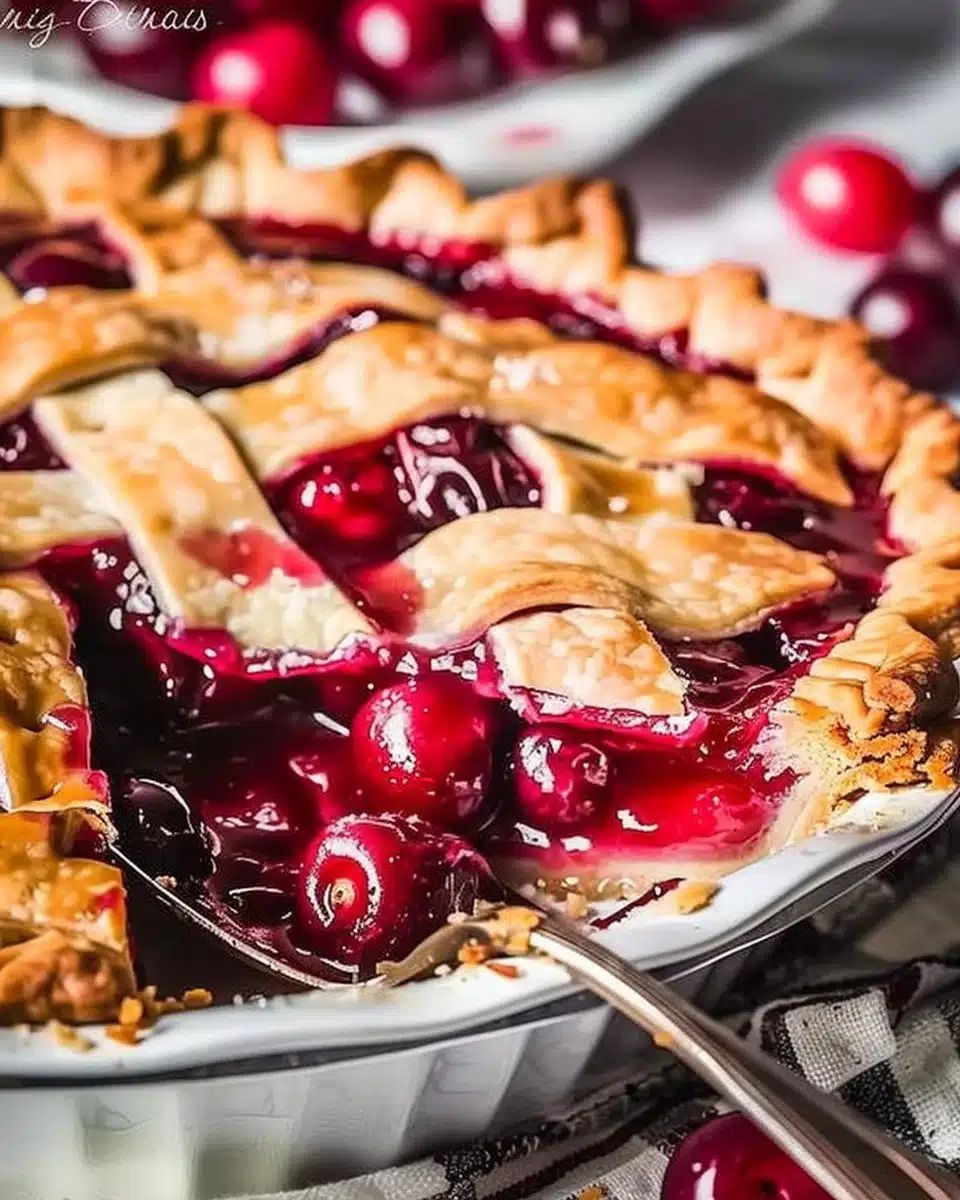
Pro Tips for Success The BEST Homemade Cherry Pie
- Use both tart and sweet cherries: Mixing varieties like tart Montmorency with sweet Bing cherries balances flavor and reduces the need for excess sugar.
- Thoroughly drain frozen cherries: Any extra ice crystals or juice can thin the filling. Thaw in a sieve set over a bowl and drain for 30–60 minutes, pressing lightly to remove liquid.
- Chill the crust between steps: Keep your pie dough cold before rolling and again after assembling the pie for a flakier bake. Pop it into the fridge for 15–20 minutes if it becomes too soft while you work.
- Protect the crust edges: Use a pie shield or tent foil around the rim after 20–25 minutes in the oven so edges don’t burn while the center finishes baking.
- Test the set: Look for bubbling filling through the vents; that’s a sign the cornstarch has activated. If the filling still seems loose after baking, let the pie cool longer — it will continue to set as it cools.
- Patch small leaks early: If juices start seeping out before the crust firms up, gently blot around the rim with a paper towel to reduce spatter and keep the crust neat.
Flavor Variations The BEST Homemade Cherry Pie
- Almond Cherry: Add 1 teaspoon almond extract to the filling and sprinkle sliced almonds on the top crust before baking. Almonds pair beautifully with cherries and add a delicate nutty note.
- Spiced Cherry Pie: Stir in 1/2 teaspoon cinnamon and a pinch of ground cloves or cardamom to the filling for warming spice that makes this pie cozy through fall and winter.
- Bourbon-Free Cherry Glaze: Warm 2 tablespoons reserved cherry juice with 1 tablespoon sugar and a squeeze of lemon to brush over the baked top crust for a glossy finish (no alcohol required).
- Mixed Berry Cherry Pie: Add 1 cup blueberries or raspberries to the cherries for a burst of color and extra tart-sweet complexity.
- Streusel-Topped Cherry Pie: Replace the top crust with a buttery streusel (butter, flour, brown sugar, and oats) for a crumb-topped pie that contrasts the juicy filling.
Serving Suggestions The BEST Homemade Cherry Pie
Serve this pie warm or at room temperature. A scoop of vanilla ice cream or a dollop of whipped cream is a classic and irresistible pairing. For a brunch spread, pair slices alongside savory items and mouth-warming casseroles — consider adding an easy homemade chicken pot pie casserole to the table for a hearty complement. Fresh mint leaves or a light dusting of powdered sugar give a pretty finish if you’re serving guests.
For a lighter take, serve smaller slices with a tangy Greek yogurt dollop mixed with a touch of honey and lemon zest. If you’re presenting the pie for a special occasion, arrange it on a cake stand and let guests choose from several toppings: chopped nuts, citrus zest, or a balsamic reduction drizzle for a gourmet twist.
Storage and Freezing Instructions The BEST Homemade Cherry Pie
Short-term storage: Cool the pie completely, then cover loosely with foil or plastic wrap. Keep at room temperature for up to 2 days. If your kitchen is warm or humid, refrigerate it to help the filling stay firm and food-safe.
Refrigeration: Store in the refrigerator for up to 4–5 days. Bring slices to room temperature or reheat gently in a low oven (around 300°F / 150°C) for 10–15 minutes to revive the crust.
Freezing whole pie: To freeze a fully assembled, unbaked or baked pie, wrap it tightly in plastic wrap and a layer of foil. If freezing unbaked, thaw in the fridge overnight before baking and add a few minutes to the bake time. Baked pies freeze well for up to 2 months. Thaw overnight in the fridge, then reheat in a 350°F (175°C) oven until warmed through.
Freezing slices: Place individual slices on a parchment-lined sheet and freeze until solid. Transfer slices to a freezer bag for up to 2 months. Reheat straight from frozen in a 325°F (160°C) oven, covered with foil for 15–25 minutes, then uncover to crisp the crust.
Labeling and tips: Always label frozen pies with the date and whether they were baked or unbaked. For best texture, avoid freezing for longer than 2–3 months; the crust can become slightly dry over very long storage.
Nutrition Facts (Per Serving) —
Estimated values for one slice when pie is cut into 8 servings. These are approximate and will vary with crust brand and exact fruit measurements.
- Calories: 260 kcal
- Protein: 1–2 g
- Carbohydrates: 46–48 g
- Fat: 6–7 g
- Fiber: 1–2 g
- Sodium: 70–140 mg
Notes on nutrition: The bulk of calories comes from sugar and the pie crust. Using a lower-sugar approach, substituting part of the white sugar with a natural sweetener, or choosing a lighter crust can reduce calories and carbs per serving. If you use a store-bought butter crust, check the package for exact nutrition info and adjust totals accordingly.
FAQ About The BEST Homemade Cherry Pie
Can I use frozen cherries instead of fresh?
Yes — frozen cherries are a great option and make this pie accessible year-round. Thaw them completely and drain any excess liquid to avoid a watery filling; you can reserve the drained juice to simmer down into a glaze. Because frozen cherries release more juice, you may need to let the filling sit a bit longer to thicken before baking or add a touch more cornstarch if the mix seems loose.
How do I prevent a soggy bottom crust?
A soggy bottom often comes from excess liquid in the filling or a pie dish that doesn’t conduct heat efficiently. Use a metal or ceramic pie dish and chill the assembled pie before baking to help the crust start firming quickly. Also, make sure to thicken the filling adequately with cornstarch (or arrowroot) and drain frozen fruit well; baking on the lower rack for the first 10–15 minutes can help cook the bottom through.
Can I make this pie ahead of time?
Yes — you can assemble the pie a day ahead, keep it covered in the fridge, and bake it the next day for fresher crust. You can also fully bake the pie and reheat it when needed; warm it gently in a 325°F (160°C) oven to crisp the crust again. For longer prep, freeze an unbaked pie wrapped tightly, then thaw and bake when ready.
How can I tell when the pie is done?
The crust should be a deep golden brown and the filling should be bubbling visibly through vents or lattice. Bubbles indicate the filling has reached boiling temperature and the cornstarch is activating to thicken. If the crust edges brown too quickly, tent them with foil and continue baking until the center bubbles.
Can I reduce the sugar in the filling without losing texture?
You can reduce the sugar by about 20–25% and still have a good texture, but sweetness helps the filling gel and the cherry flavor shine. If you cut sugar significantly, consider increasing cornstarch slightly or adding a natural sweetener like maple syrup at a lower volume to preserve structure. Taste the filling before baking, keeping in mind the flavor concentrates during cooking.
What if the filling is too runny after baking?
If the pie seems too loose after baking, allow it to cool for several hours; the filling will continue to set as it cools. If it’s still very runny, you can carefully transfer the filling to a saucepan, whisk in a bit more cornstarch slurry, bring it to a simmer to thicken, then return it to the cooled crust. For future pies, use a touch more cornstarch or allow more drain time for frozen fruit.
Is it safe to use canned cherries for this recipe?
Canned cherries can be used in a pinch, but they are usually packed in syrup which adds a lot of extra sugar and can make the filling runnier. If using canned cherries, drain well, taste the cherries, and reduce added sugar accordingly. You might need to add a little extra thickener like cornstarch to account for the syrup’s extra liquid.
What crust options work best with cherry pie?
A classic butter-based flaky crust is ideal for flavor and texture; the buttery layers create the best contrast with the juicy filling. If you prefer a more neutral base, a shortening crust yields tender results too. For gluten-free baking, use a tested gluten-free pie crust recipe or a store-bought GF crust that’s rated for double-crust pies.
Final Thoughts
This cherry pie recipe hits a sweet spot between simplicity and deliciousness. With just a handful of ingredients, easy steps, and a few practical tips, you can bake a pie that looks and tastes like a cherished classic. Whether you’re serving it with ice cream for dessert or sharing it at a holiday table, homemade cherry pie brings bright flavor and a warm homemade touch to any occasion. Enjoy the baking, and don’t be afraid to make the recipe your own with the variations and tips above.
Print
The BEST Homemade Cherry Pie
- Total Time: 65 minutes
- Yield: 8 servings 1x
- Diet: Vegetarian
Description
A delightful cherry pie that combines tart and sweet cherries in a buttery crust, perfect for summer and special occasions.
Ingredients
- 2 cups cherries (fresh or frozen)
- 1 cup sugar
- 1/4 cup cornstarch
- 1/4 teaspoon salt
- 1 tablespoon lemon juice
- 1 tablespoon butter
- 1 pie crust (flaky butter crust)
Instructions
- Preheat the oven to 425°F (220°C).
- Combine the cherries, sugar, cornstarch, salt, and lemon juice in a large bowl.
- Pour the cherry mixture into the prepared pie crust and dot with butter.
- Cover with a second pie crust, seal the edges, and cut small slits to allow steam to escape.
- Bake for 40-45 minutes, or until the crust is golden brown and the filling is bubbly.
- Allow to cool before serving.
Notes
Use a mix of tart and sweet cherries for the best flavor. Thaw and thoroughly drain frozen cherries to avoid a runny filling.
- Prep Time: 20 minutes
- Cook Time: 45 minutes
- Category: Dessert
- Method: Baking
- Cuisine: American
Nutrition
- Serving Size: 1 slice
- Calories: 260
- Sugar: 22g
- Sodium: 100mg
- Fat: 7g
- Saturated Fat: 4g
- Unsaturated Fat: 3g
- Trans Fat: 0g
- Carbohydrates: 46g
- Fiber: 2g
- Protein: 2g
- Cholesterol: 15mg