Creating a stunning charcuterie board is an art, and mastering how to fold meat for charcuterie can elevate your presentation. Whether you’re hosting a gathering or enjoying a quiet evening at home, the way you style your meats can significantly impact the overall appeal of the board. In this guide, we’ll explore various meat folding techniques that not only look appealing but also enhance the dining experience.
Why Make This Recipe
Charcuterie boards have gained immense popularity for their variety and visual appeal. By learning how to fold meat for charcuterie, you can impress your guests and add a personal touch to your gatherings. It’s an excellent way to showcase your culinary creativity, make a visually captivating dish, and enjoy delicious flavors. Plus, with just three different types of cured meats, you can create stunning arrangements without spending a lot of time or money.
How to Make Meat for Charcuterie
Folding meat for a charcuterie board requires some simple techniques that can add flair to your presentation. Here, we’ll go over how to create salami roses, prosciutto ribbons, and folded capicola. Let’s dive into the ingredients and directions you’ll need.
Ingredients
- 12 slices salami
- 6 slices prosciutto
- 12 slices capicola
Directions
To start creating your beautiful charcuterie board, follow these simple methods:
- Salami Roses:
To make salami roses, lay slices of Genoa salami over the edge of a shot glass. Allow the edges to drape down in an elegant manner, creating a floral effect. This technique adds a visually appealing element that can brighten your board significantly. - Prosciutto Ribbons:
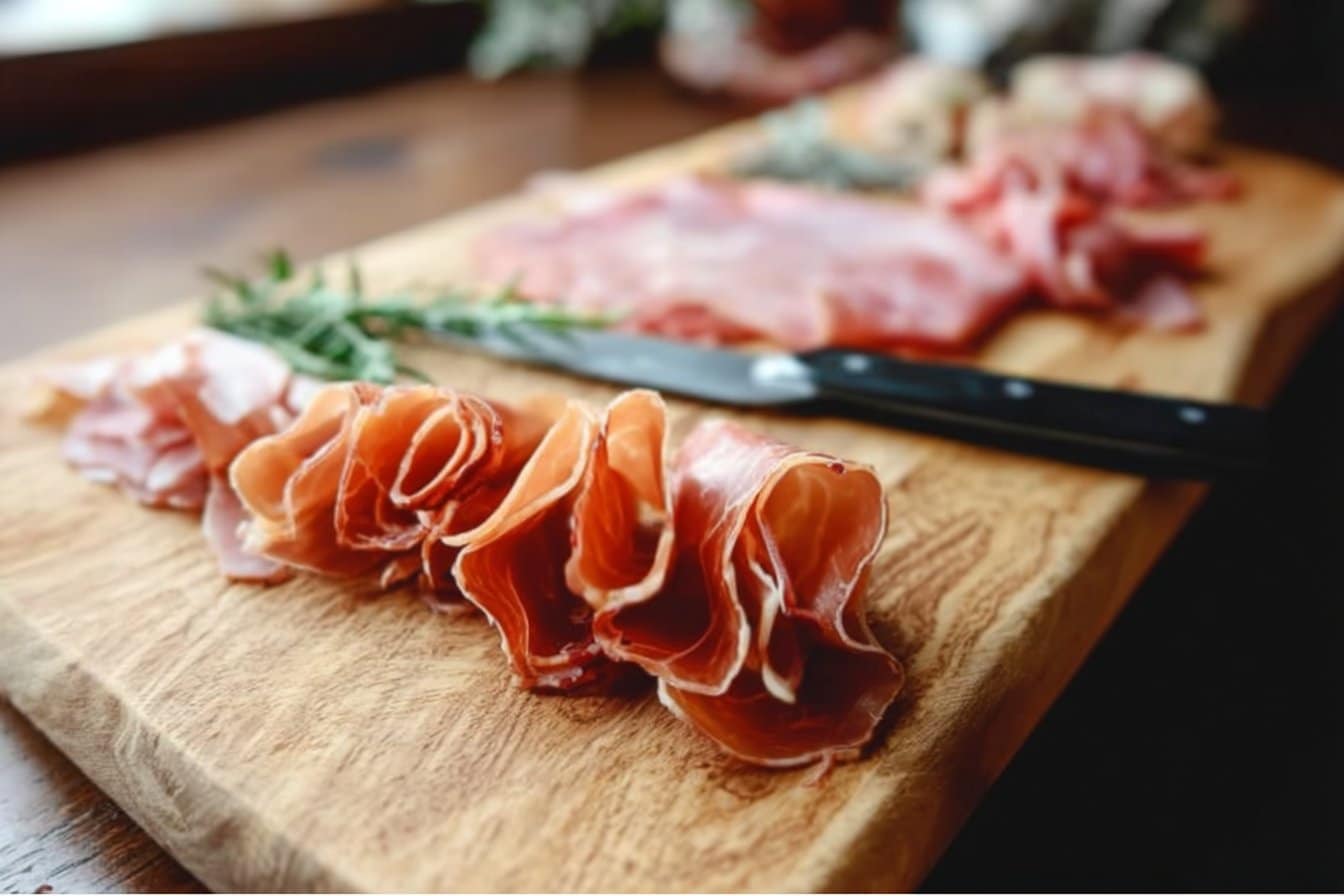
For prosciutto ribbons, take your slices of prosciutto and lay them out flat. Fold each piece about halfway up, ensuring you keep the side with the more pronounced fat marbling at the top. This position highlights the texture. Pinch the folded edge to hold it in place. Next, fold the prosciutto back and forth like a zigzag, keeping it pinched together. This style adds dimension and elegance to your presentation. - Capicola Folds:
Capicola is great for a simple yet stylish presentation. Just fold the pieces in half and roll them into triangles. This creates an interesting design that draws the eye and can be used to build layers on your board. - Salami Chains:
Finally, if you opt for hard salami, begin by separating the slices. Take each slice and fold it in half with the folded edge facing down. Pair two pieces together, curving them toward each other to create a chain. Continue this process to form a delightful chain of salami, making it easy for guests to grab a piece.
Pro Tips for Success with Meat Folding
- Select Quality Meats: Opt for high-quality, fresh cured meats for the best flavor and texture.
- Chill Before Serving: Keeping your meats cold before arrangement makes them easier to handle and fold.
- Practice Your Techniques: Try each folding technique a few times until you feel comfortable. Practice helps ensure a smoother assembly when it’s time to present.
- Mix Textures: Play with different meats and textures for a diverse charcuterie board that adds both aesthetic appeal and flavor variety.
- Keep It Balanced: When placing your meats on the board, balance the colors and shapes to create a harmonious visual experience.
Flavor Variations for Charcuterie Meat
- Spiced Salami: Experiment with spiced varieties of salami, such as peppered or garlic-infused, to evoke different taste sensations.
- Herb-Infused Prosciutto: Choose prosciutto flavored with herbs like rosemary or thyme to incorporate extra flavors.
- Smoked Capicola: For a deeper flavor profile, consider using smoked capicola, which adds a unique twist to the traditional taste.
Serving Suggestions
- Cheese Pairing: Pair your folded meats with cheeses like brie, cheddar, or blue cheese for a delightful contrast.
- Accompaniments: Include fruits like figs or grapes, olives, and nuts alongside your meats for a balanced snacking experience.
- Breads and Crackers: Offer a selection of artisan bread or gourmet crackers to allow guests to make their perfect bite-sized combinations.
Storage and Freezing Instructions
If you prepare your charcuterie meats in advance, storing them properly is essential. Here’s how to keep them fresh:
- Refrigeration: Store unused meats in an airtight container in the refrigerator. Consume within 3-5 days for the best quality.
- Freezing: While it’s best to enjoy cured meats fresh, you can freeze them. Layer the slices between parchment paper to prevent sticking, and store in a freezer-safe bag. Use within 1-2 months for optimal taste and texture.
Nutrition Facts (Per Serving)
| Nutrient | Amount |
|———–|———-|
| Calories | 150 |
| Protein | 10g |
| Carbs | 1g |
| Fat | 12g |
| Fiber | 0g |
| Sodium | 500mg |
FAQ About How to Fold Meat for Charcuterie
What are the best types of meats to use for a charcuterie board?
For a well-rounded charcuterie board, you should consider using an array of cured meats like salami, prosciutto, capicola, and chorizo. Mixing textures and flavors is key to a delightful experience. Additionally, for those avoiding pork, substitute with turkey, chicken or even vegetarian options like smoked tofu.
How can I make my charcuterie board more visually appealing?
Creating an eye-catching charcuterie board involves arranging elements in a balanced way. Use various colored fruits, nuts, and dips, alongside your folded meats and cheeses. Elevating certain items on small dishes or using different board levels can also enhance presentation.
Is it necessary to serve charcuterie meats cold?
While charcuterie meats are commonly served cold for optimal flavor, it’s essential to let them come to room temperature for about 15-30 minutes before serving. This process enhances the flavors and aromas, making your board more inviting to guests.
Can I prepare a charcuterie board in advance?
Yes, you can prepare most components of your charcuterie board in advance. However, it’s best to assemble the meat on the day of serving to ensure freshness. You can prepare the folding techniques and store the meats separately.
What are some good beverage pairings for a charcuterie board?
Consider serving red wines, craft beers, or even cocktails that complement the flavors of the meats and cheeses. Sparkling water or flavored seltzers can also provide a refreshing contrast without overpowering the flavors.
Final Thoughts
Learning how to fold meat for charcuterie is an enjoyable and rewarding skill to develop. With just a few types of cured meats and simple techniques, you can create a visually striking and delicious charcuterie board that is sure to impress. Don’t be afraid to experiment and express your culinary creativity as you design the perfect board for any occasion. Happy folding!
Print
How to Fold Meat for Charcuterie
- Total Time: 10 minutes
- Yield: 4 servings 1x
- Diet: Omnivore
Description
Master the art of folding cured meats to create a stunning charcuterie board that impresses guests and enhances your culinary presentation.
Ingredients
- 12 slices salami
- 6 slices prosciutto
- 12 slices capicola
Instructions
- To create salami roses, lay slices of Genoa salami over the edge of a shot glass, allowing the edges to drape down.
- For prosciutto ribbons, lay slices flat, fold halfway, pinch the edge, and zigzag fold to add dimension.
- For capicola, fold pieces in half and roll into triangles for an interesting design.
- To make salami chains, fold each hard salami slice in half, pair two together, and create a chain.
Notes
Opt for high-quality meats, chill before serving, and practice folding techniques for a smooth assembly.
- Prep Time: 10 minutes
- Cook Time: 0 minutes
- Category: Appetizer
- Method: No cooking
- Cuisine: International
Nutrition
- Serving Size: 1 serving
- Calories: 150
- Sugar: 0g
- Sodium: 500mg
- Fat: 12g
- Saturated Fat: 5g
- Unsaturated Fat: 7g
- Trans Fat: 0g
- Carbohydrates: 1g
- Fiber: 0g
- Protein: 10g
- Cholesterol: 35mg