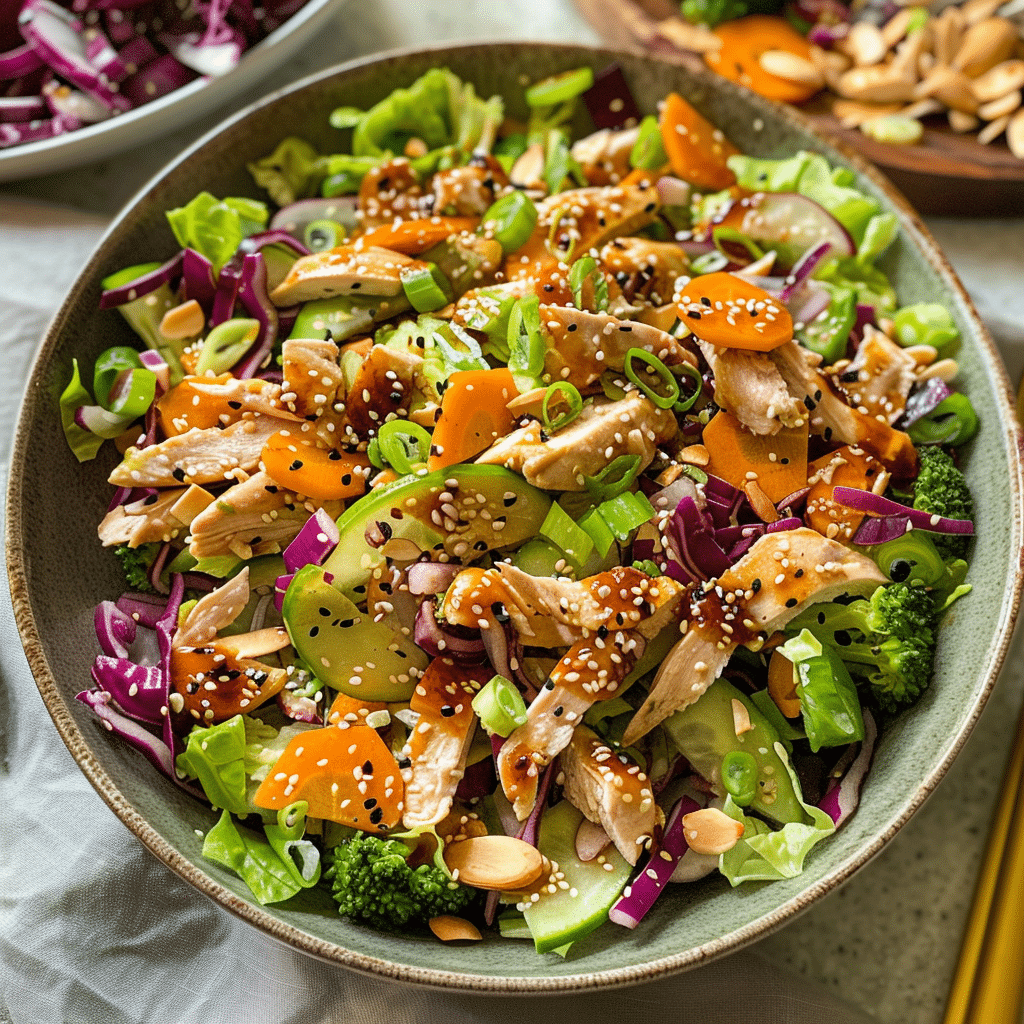
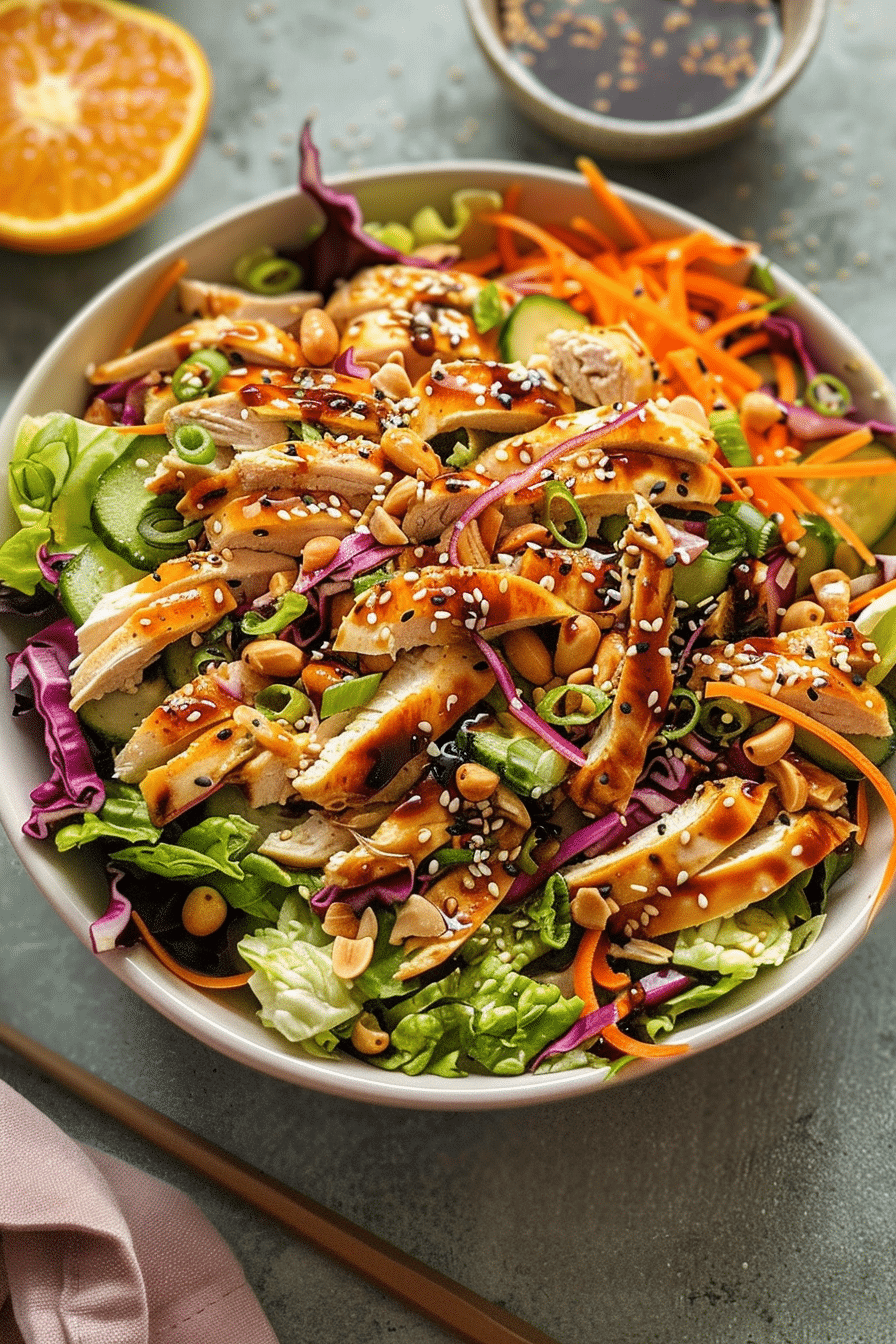
Chopped chicken salad with sesame dressing is a vibrant, nutrient-dense meal that combines tender shredded chicken with crisp vegetables, crunchy toppings, and a savory-sweet Asian-inspired dressing. This recipe delivers bold umami flavors, satisfying textures, and exceptional versatility for lunch, dinner, or meal prep. The combination of romaine, Napa cabbage, red cabbage, edamame, and mandarin oranges creates layers of flavor that complement the rich sesame dressing perfectly. Whether you’re seeking a quick weeknight dinner or an impressive dish for entertaining, this chopped chicken salad satisfies every requirement.
| Detail | Time/Info |
|---|---|
| Prep Time | 25 minutes |
| Cook Time | 20 minutes |
| Total Time | 45 minutes |
| Servings | 4-6 servings |
| Difficulty Level | Easy to Intermediate |
| Cuisine | Asian-Fusion |
Why This Recipe Works
This chopped chicken salad with sesame dressing works because it respects the fundamental principle of balance in composed salads: texture, flavor, and nutrition in perfect harmony. I’ve found that the combination of shredded chicken breast with multiple cabbage varieties creates a substantial base that holds the dressing without becoming soggy. The sesame dressing acts as the binding element that ties all components together, allowing each ingredient to maintain its individual character while contributing to a cohesive whole.
What makes this particular version exceptional is the strategic use of contrasting textures. The crispy wonton strips provide crunch that persists throughout the meal, while the edamame adds protein and a satisfying bite. The mandarin orange slices introduce natural sweetness that balances the umami-rich soy sauce and the subtle heat from chili garlic sauce. This creates a dynamic eating experience where each forkful remains interesting from the first bite to the last.
I’ve also engineered this recipe to be flexible without sacrificing quality. You can prepare components separately for meal prep, store the dressing independently, and assemble the salad fresh each day. The dressing stays emulsified thanks to the balance between oil and acidic elements, meaning you won’t experience the separation issues common in other Asian-style dressings. This reliability makes the recipe ideal for busy professionals and families seeking weeknight solutions.
Ingredients
| Ingredient | Quantity | Notes & Alternatives |
|---|---|---|
| Shredded Romaine Lettuce | 2 cups | Use fresh, crisp heads. Iceberg lettuce works as substitute but offers less nutritional value. |
| Shredded Napa Cabbage | 2 cups | Provides mild, delicate flavor. Green cabbage can replace if Napa unavailable. |
| Shredded Red Cabbage | 2 cups | Adds color and anthocyanin antioxidants. Purple cabbage offers identical benefits. |
| Large Carrots, Julienned | 1 cup (2 large) | Pre-shredded carrots acceptable for convenience. Fresh yields superior crunch. |
| Shelled Edamame | 1 cup | Use frozen, thawed edamame or freshly cooked. Provides plant-based protein boost. |
| Shredded Chicken Breast | 3 cups (1.5 lbs) | Use rotisserie chicken for convenience. Homemade poached or grilled chicken preferred. |
| Crunchy Wonton Strips | 3.5 oz bag | Chow mein noodles or crispy chow chow strips work identically. Add just before serving. |
| Mandarin Orange Slices | 1 cup, drained | Use canned (juice-packed preferred) or fresh orange segments. Pineapple chunks substitute well. |
| Scallions, Chopped | 0.5 cup (1 bunch) | Use white and light green parts. Red onion offers peppery alternative. |
| Sliced Almonds | 0.5 cup | Toasted almonds enhance nutty flavor. Cashews or peanuts substitute successfully. |
| Grapeseed Oil | 0.25 cup | Neutral oil with high smoke point. Canola, vegetable, or light sesame oil acceptable. |
| Sesame Oil | 2 Tbsp | Use toasted sesame oil for maximum flavor. Non-negotiable for authentic taste profile. |
| Rice Wine Vinegar | 2 Tbsp | Provides subtle sweetness. Rice vinegar or apple cider vinegar work as replacements. |
| Soy Sauce | 2 Tbsp | Low-sodium variety recommended. Tamari provides gluten-free alternative. |
| Brown Sugar | 1 Tbsp | Dissolves into dressing for balanced sweetness. Honey or maple syrup substitute. |
| Fresh Ginger, Minced | 1 tsp | Peeled fresh ginger essential. Ground ginger acceptable in 1/3 teaspoon quantity. |
| Fresh Garlic, Minced | 1 tsp | Use freshly minced garlic. Jarred minced garlic acceptable but slightly different flavor profile. |
| Chili Garlic Sauce | 1 tsp | Sriracha or sambal oelek provide identical heat and depth. Adjust quantity per heat tolerance. |
| Salt | 0.25 tsp | Taste before adding additional salt due to soy sauce contribution. Sea salt preferred. |
| Black Pepper | 0.25 tsp | Freshly ground pepper superior. White pepper offers milder alternative. |
Step-by-Step Instructions
Prepare the Chicken Base
- Shred the chicken into bite-sized pieces approximately 0.5 to 0.75 inches. Set aside in a large mixing bowl.
- Measure out 2 cups shredded romaine lettuce. Rinse and pat dry thoroughly to remove excess water.
- Shred 2 cups Napa cabbage using a sharp knife or vegetable mandoline. Cut into uniform, bite-sized pieces.
- Shred 2 cups red cabbage using identical technique. Ensure consistency in size with Napa cabbage.
Prepare the Vegetables and Proteins
- Julienne 2 large carrots into thin matchsticks approximately 2 to 3 inches long. Alternatively, use pre-shredded carrots.
- Measure 1 cup shelled edamame. Thaw if frozen, ensuring room temperature before combining with other ingredients.
- Chop 1 bunch scallions (approximately 0.5 cup) using white and light green parts only. Reserve dark green parts for garnish if desired.
- Measure 0.5 cup sliced almonds. Toast in a dry skillet over medium heat for 3 to 4 minutes until fragrant, stirring frequently to prevent burning.
Make the Sesame Dressing
- Combine 0.25 cup grapeseed oil and 2 tablespoons sesame oil in a small mixing bowl or jar.
- Add 2 tablespoons rice wine vinegar and 2 tablespoons soy sauce to the oil mixture.
- Whisk in 1 tablespoon brown sugar until completely dissolved and incorporated.
- Mince 1 teaspoon fresh ginger and 1 teaspoon fresh garlic. Add to dressing immediately.
- Stir in 1 teaspoon chili garlic sauce, ensuring even distribution throughout the mixture.
- Season with 0.25 teaspoon salt and 0.25 teaspoon freshly ground black pepper.
- Whisk vigorously for 30 seconds until dressing becomes slightly emulsified. Taste and adjust seasonings as needed.
Assemble the Chopped Salad
- Combine shredded chicken, romaine lettuce, Napa cabbage, red cabbage, julienned carrots, edamame, scallions, and mandarin orange slices in a large serving bowl.
- Pour the sesame dressing over the salad ingredients.
- Toss gently but thoroughly using salad servers or two forks, ensuring every component receives dressing coating.
- Add toasted almonds to salad and toss gently to incorporate.
- Top with 3.5 ounces crunchy wonton strips immediately before serving.
- Divide salad among serving plates or bowls.
- Serve immediately while wonton strips maintain crispness and vegetables remain at peak crispness.
Chef Tips for Perfect Results
- Dry your vegetables thoroughly before combining. Excess moisture dilutes the dressing and creates a soggy salad within minutes. Use a salad spinner for romaine lettuce and pat cabbage dry with paper towels after shredding.
- Toast your almonds fresh rather than using pre-toasted nuts. This step takes four minutes but dramatically enhances the nutty flavor profile and improves texture compared to raw or pre-toasted varieties that have lost volatile oils.
- Add wonton strips seconds before serving, not minutes earlier. The dressing immediately begins softening the crunchy strips through osmotic action. This timing preserves textural contrast that defines quality composed salads.
- Use freshly minced ginger and garlic rather than bottled versions. Fresh aromatics deliver bright, clean flavors while bottled varieties impart metallic or musty undertones that muddy the delicate sesame dressing balance.
- Whisk the dressing ingredients thoroughly before adding to salad. Emulsifying the oil, vinegar, and soy sauce creates a uniform coating that adheres to vegetables rather than pooling at the bottom of your serving bowl.
- Prepare components separately for meal prep purposes. Store vegetables, chicken, dressing, and wonton strips in separate sealed containers for up to four days, assembling fresh portions as needed rather than pre-mixing.
Common Mistakes to Avoid
Preventing mistakes elevates your chopped chicken salad from adequate to exceptional, ensuring consistency across multiple preparations.
Mistake 1: Adding Wonton Strips Too Early
The most common error involves adding crunchy wonton strips to the salad more than two minutes before serving. The dressing actively breaks down the crispy exterior through osmotic pressure, leaving you with soggy, chewy noodles instead of satisfying crunch. Fix this by adding wonton strips immediately before plating or serving. If preparing salad for a crowd, keep wonton strips separate and instruct guests to add their own at the table for maximum texture preservation.
Mistake 2: Skipping the Vegetable Drying Step
Wet vegetables introduce water that immediately dilutes your carefully balanced sesame dressing, weakening the flavor profile and creating a watery pooling effect. This happens because excess surface moisture accounts for fifteen to twenty percent of volume on unwashed or insufficiently dried produce. Use a salad spinner for lettuce, pat cabbage dry with clean paper towels, and allow drained mandarin oranges to sit on additional paper towels for five minutes before combining with other salad components.
Mistake 3: Using Pre-Ground Garlic or Ginger
Bottled minced garlic and ground ginger lack the vibrant aromatics present in fresh counterparts, leaving your dressing with a flat, slightly metallic taste. The volatile oils that create aromatic impact oxidize within days of storage, explaining why jarred versions taste noticeably different. This matters tremendously in a simple dressing where sesame, soy, and heat components depend on fresh garlic and ginger for complexity. Invest two minutes to mince fresh garlic and ginger rather than opening a jar, and your palate will register the quality improvement immediately.
Mistake 4: Under-Seasoning the Dressing
The dressing must be assertively seasoned before combining with vegetables because the salad components dilute concentrated flavors through volume distribution. Taste the dressing directly from a spoon before adding to salad, adjusting salt and chili garlic sauce upward slightly beyond your typical preference for dressings served alone. Many home cooks create bland salads simply because they adequately seasoned dressing that becomes under-seasoned once applied to vegetables and chicken.
Mistake 5: Combining Ingredients Too Far Ahead
Composing the chopped chicken salad more than thirty minutes before serving allows vegetables to gradually release water into the dressing, creating a soggy, diluted final dish. The vegetables begin breaking down immediately upon dressing contact, especially delicate lettuces and freshly cut carrots. Assemble your salad within fifteen minutes of serving whenever possible, or follow the meal prep strategy of keeping all components separate until final assembly.
Variations and Substitutions
Creative variations maintain the fundamental character of this chopped chicken salad while accommodating dietary preferences, seasonal availability, and flavor explorations.
| Ingredient | Substitution | Impact on Flavor |
|---|---|---|
| Shredded Chicken Breast | Shredded turkey breast or grilled tofu | Turkey provides identical texture with slightly earthier notes. Tofu offers neutral base that absorbs dressing flavors more prominently. |
| Mandarin Orange Slices | Fresh pineapple chunks or dried cranberries | Pineapple adds tropical brightness and increased sweetness. Cranberries introduce tartness and chewiness, shifting flavor profile toward autumn profile. |
| Edamame | Chickpeas, white beans, or marinated artichoke hearts | Chickpeas add earthiness and protein boost. Beans provide creamier texture. Artichoke hearts introduce tangy, briny complexity. |
| Sliced Almonds | Toasted cashews, peanuts, or sunflower seeds | Cashews provide buttery richness and softer texture. Peanuts deliver stronger roasted flavor. Seeds offer lighter mouthfeel. |
| Sesame Oil | Walnut oil or roasted peanut oil | Walnut oil introduces earthier, more subtle nutty notes. Peanut oil provides similar richness with peanut-forward characteristics. |
| Rice Wine Vinegar | Apple cider vinegar or lime juice | Apple cider provides more assertive tang and slight sweetness. Lime juice adds brightness and citrus forward character. |
| Chili Garlic Sauce | Sriracha, sambal oelek, or gochujang | Sriracha delivers similar profile with slightly more garlic. Sambal offers similar heat intensity. Gochujang adds fermented complexity. |
| Wonton Strips | Crispy rice noodles, panko breadcrumbs, or crushed tortilla chips | Rice noodles provide similar crunch with lighter texture. Panko adds subtle wheat flavor. Tortilla chips introduce saltiness and corn notes. |
| Romaine Lettuce | Butter lettuce, mixed greens, or green cabbage | Butter lettuce offers softer, more delicate character. Mixed greens introduce herb complexity. Cabbage provides firmer texture. |
| Scallions | Red onion, chives, or cilantro | Red onion introduces peppery bite and purple color contrast. Chives offer subtle onion flavor. Cilantro adds herbaceous brightness. |
Serving Suggestions and Pairings
This chopped chicken salad with sesame dressing performs admirably as a standalone meal while pairing excellently with complementary dishes for more elaborate dining occasions. Serve this salad as your main course for casual weeknight dinners, offering a light yet protein-rich option that satisfies without heaviness. Pair it with steamed jasmine rice or brown rice for guests desiring additional carbohydrates and heartier proportions. Complement the Asian-fusion profile with steamed gyoza dumplings or spring rolls as appetizers, creating a cohesive culinary narrative throughout the meal.
For entertaining purposes, present this chopped salad family-style in a large communal platter, allowing guests to customize their portions and adjust wonton strip quantities based on personal preference. Serve alongside grilled shrimp skewers marinated in the same sesame dressing, creating visual appeal and accommodating seafood preferences. Pair with crispy vegetable spring rolls for a light, elegant meal that impresses without requiring extensive cooking skills.
This salad functions perfectly as a component within larger shared plates or tasting menus, providing textural contrast and Asian-inspired elements that bridge cultures and flavor profiles. Accompany with cold jasmine tea or sparkling yuzu lemonade for beverage pairings that complement the sesame dressing without overwhelming delicate flavors. For picnics and outdoor gatherings, pack the salad components separately and assemble on-site to maintain textural integrity and food safety standards.
Storage and Reheating
Proper storage extends this chopped chicken salad’s usability throughout your week while maintaining quality and food safety standards.
| Storage Method | Duration | Instructions |
|---|---|---|
| Assembled Salad (Refrigerator) | 2-3 hours maximum | Store in airtight container without wonton strips. Add crunchy toppings immediately before serving to maintain texture. |
| Shredded Chicken (Refrigerator) | 3-4 days | Store in airtight container. Reheat gently in microwave or skillet with 2 tablespoons water if desired, though this salad serves excellently at room temperature. |
| Vegetable Mix (Refrigerator) | 3-4 days | Combine all vegetables except mandarin oranges in sealed container. Store mandarin oranges separately to prevent flavor transfer. |
| Sesame Dressing (Refrigerator) | 5-7 days | Store in glass jar with tight-fitting lid. Shake vigorously before each use as oils naturally separate from vinegar and soy sauce. |
| Wonton Strips (Pantry) | 1-2 weeks (unopened) | Store in original packaging at room temperature away from humidity. Once opened, use within 2-3 days as strips gradually absorb ambient moisture. |
| Complete Meal Prep (Refrigerator) | 4 days maximum | Prepare individual portions in glass containers with separate compartments for salad, dressing, protein, and wonton strips. Assemble fresh each day. |
This chopped chicken salad responds excellently to meal prep strategies because individual components maintain quality for four to five days when stored separately. Prepare chicken, vegetables, and dressing at the beginning of your week, then assemble fresh portions daily to maximize textural appeal and nutritional integrity. This approach eliminates the soggy salad problem that plagues pre-made versions while requiring only five minutes of assembly per serving.
Nutritional Information
Approximate values per serving (calculated for 4 generous servings, before wonton strips):
| Nutrient | Amount |
|---|---|
| Calories | 385-420 calories |
| Total Fat | 20-22g |
| Saturated Fat | 2.5-3g |
| Unsaturated Fat | 16-18g |
| Protein | 32-35g |
| Total Carbohydrates | 18-20g |
| Dietary Fiber | 4-5g |
| Total Sugar | 8-9g (mostly from mandarin oranges and dressing) |
| Sodium | 650-720mg |
| Potassium | 520-580mg |
| Iron | 2.5-3mg (16-17% Daily Value) |
| Calcium | 180-200mg (14-16% Daily Value) |
| Vitamin A | 6,200-6,800 IU (124-136% Daily Value) |
| Vitamin C | 65-75mg (108-125% Daily Value) |
Approximate values. Wonton strips add approximately 80-100 calories, 5-6g fat, and 1-2g protein per 1 ounce serving. Nutritional content varies based on specific ingredient brands and preparation methods. This analysis assumes using rotisserie chicken with skin removed.
Frequently Asked Questions
Can I Make Chopped Chicken Salad with Sesame Dressing Ahead for Meal Prep?
Yes, you can prepare this salad successfully for meal prep by storing components separately and assembling fresh daily. Store shredded chicken, raw vegetables, dressing, and wonton strips in separate airtight containers for up to four days. This separation strategy maintains the textural contrast and prevents vegetables from becoming soggy through premature dressing contact. Assemble individual portions fresh each morning or afternoon, adding wonton strips immediately before eating for optimal crispness.
What’s the Best Way to Cook Chicken for This Chopped Salad Recipe?
Use rotisserie chicken from your grocery store for convenience and consistent quality, as the meat arrives properly seasoned and fully cooked. If you prefer homemade preparation, gently poach chicken breasts in simmering broth for fifteen to twenty minutes until internal temperature reaches one hundred sixty-five degrees Fahrenheit. Allow cooled chicken to rest for five minutes before shredding, which preserves moisture and prevents stringy textures. Alternatively, grill chicken breasts over medium heat for six to eight minutes per side, creating light char marks that enhance flavor complexity while maintaining tender interior texture.
Can I Substitute the Sesame Oil with Regular Vegetable Oil?
Regular vegetable oil lacks the toasted, nutty flavor profile that defines this dressing’s character, fundamentally altering the final taste. If you cannot access toasted sesame oil, walnut oil or roasted peanut oil provide acceptable alternatives that deliver similar richness and complexity. Consider purchasing a bottle of toasted sesame oil specifically for this recipe rather than substituting completely, as the ingredient cost remains minimal while the flavor impact proves substantial. Store opened sesame oil in the refrigerator to maintain freshness for six months.
How Can I Make This Salad Spicier or Milder?
Adjust heat intensity by modifying the chili garlic sauce quantity from one teaspoon to your preferred level, increasing gradually until reaching desired spice level. For milder versions, reduce chili garlic sauce to one-half teaspoon and skip additional heat entirely if serving to children or guests with heat sensitivity. For spicier preparations, increase chili garlic sauce to one and one-half or two teaspoons, or substitute with gochujang for fermented heat complexity. Add fresh sliced red chilies to the salad itself for additional heat and visual interest.
What Should I Do If My Salad Becomes Soggy Before Serving?
Soggy salads result from premature wonton strip addition or assembling salad too far ahead of service. If your salad has already become soggy, add fresh wonton strips immediately and serve within five minutes for partial recovery of textural contrast. For future preparations, add wonton strips only when serving, keeping them separate during storage and transportation. If vegetables appear waterlogged, drain excess dressing liquid that has accumulated at the bottom of your bowl, then distribute fresh dressing evenly across the salad surface immediately before serving.
Conclusion
This chopped chicken salad with sesame dressing delivers restaurant-quality results through balanced flavor, satisfying textures, and straightforward technique executed with attention to detail. The combination of crisp vegetables, tender chicken, and assertively seasoned dressing creates a complete meal that adapts to meal prep routines, entertaining occasions, or casual weeknight dinners. Master the fundamental steps, respect timing around wonton strip addition, and your table will celebrate a signature dish that rivals steakhouse and upscale restaurant versions. Prepare this chopped chicken salad with sesame dressing confidently, knowing each component serves a purpose while the complete dish delivers memorable dining experiences.