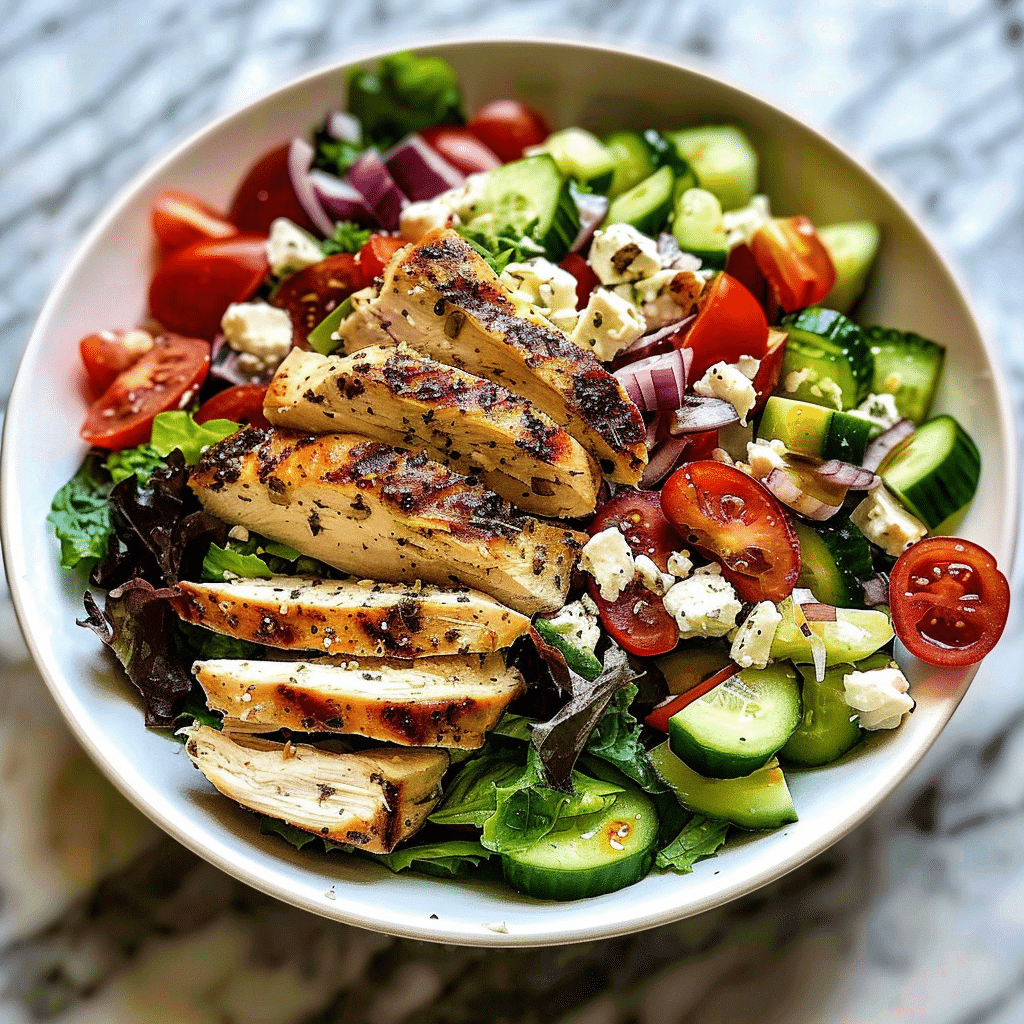
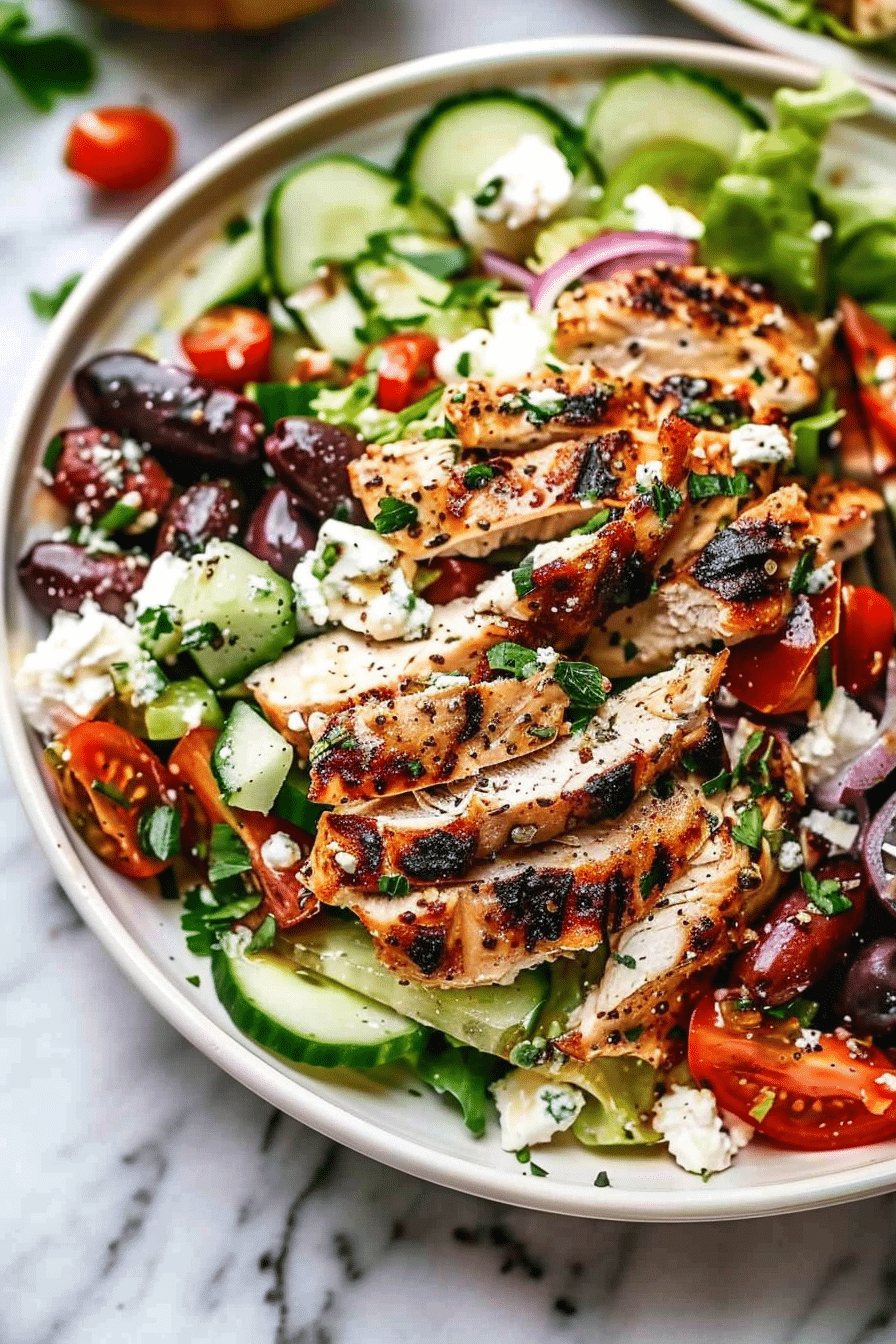
Greek chicken salad is a Mediterranean protein-packed lunch that combines crisp lettuce, marinated chicken breast, fresh tomatoes, cucumbers, Kalamata olives, and creamy feta cheese tossed in a zesty olive oil and red wine vinegar dressing. This nutritious one-bowl meal delivers authentic Greek flavors while keeping preparation simple and quick. The combination of tender chicken, briny olives, and tangy vinaigrette creates a satisfying dish that tastes restaurant-quality yet requires minimal cooking time.
| Metric | Value |
|---|---|
| Prep Time | 15 minutes |
| Cook Time | 0 minutes |
| Total Time | 15 minutes |
| Servings | 4 servings |
| Difficulty | Easy |
| Cuisine | Mediterranean/Greek |
Why This Recipe Works
I developed this Greek chicken salad because I wanted a meal that captures authentic Mediterranean flavors without requiring hours in the kitchen. The pre-marinated chicken breast eliminates guesswork and delivers consistent results every single time you make it. The beauty of this salad lies in its balance: the tender chicken provides lean protein, while the olives and feta contribute salty, umami notes that elevate every bite.
The red wine vinegar and extra virgin olive oil dressing creates an emulsion that coats each ingredient with bold flavor rather than weighing down the fresh vegetables. I’ve tested countless vinegar ratios, and this formula hits the perfect acid-to-oil balance that highlights rather than masks the natural sweetness of the tomatoes and crunch of the cucumber. The dried oregano ties everything together with that unmistakable Greek identity.
What makes this recipe particularly satisfying is its versatility paired with absolute reliability. You can prepare components ahead of time and assemble the salad minutes before eating, making it ideal for meal prep, quick weeknight dinners, or weekend entertaining. The ingredients are readily available year-round, and the assembly requires no special equipment beyond a bowl and knife.
Ingredients
| Ingredient | Quantity | Notes |
|---|---|---|
| Chopped Lettuce | 6 cups | Iceberg or romaine; crisp and fresh |
| Greek Marinated Chicken Breast | 8 ounces | Sliced or chopped; room temperature |
| Mediterranean Tomato Salad | 2 cups | Or sliced fresh tomatoes; room temperature |
| Sliced Cucumber | 1 cup | Persian or hothouse variety; thin slices |
| Kalamata Olives | 1/4 cup | Pitted; or Castelvetrano olives for milder taste |
| Feta Cheese | 1/4 cup | Broken into chunks; crumbled works too |
| Extra Virgin Olive Oil | 1/4 cup | High quality; fruity varieties preferred |
| Red Wine Vinegar | 1/4 cup | Or substitute with aged balsamic for sweetness |
| Garlic, Minced | 1 clove | Peeled; or 1/2 teaspoon garlic powder |
| Dried Oregano | 2 teaspoons | Mediterranean or Greek variety; fresh oregano requires 2 tablespoons |
| Granulated Sugar | 1 teaspoon | Balances acidity; omit if using sweeter vinegar |
| Kosher Salt | 1/2 teaspoon | Adjust to taste; consider feta saltiness |
| Freshly Ground Black Pepper | 1/2 teaspoon | Coarser grind preferred; add just before serving |
Step-by-Step Instructions
Prepare the Dressing Base
- Combine one-quarter cup red wine vinegar, one-quarter cup extra virgin olive oil, one minced garlic clove, two teaspoons dried oregano, one teaspoon granulated sugar, one-half teaspoon kosher salt, and one-half teaspoon freshly ground black pepper in a small bowl.
- Whisk the dressing ingredients together vigorously for 30-45 seconds until the oil and vinegar emulsify slightly and the garlic distributes evenly throughout the mixture.
- Taste the dressing and adjust the seasoning by adding more salt, pepper, or vinegar according to your preference.
- Set the dressing aside at room temperature for at least five minutes to allow the flavors to meld and develop before using.
Assemble the Salad Components
- Place six cups of chopped fresh lettuce (iceberg or romaine varieties work best) into a large mixing bowl or serving platter.
- Add two cups of Mediterranean tomato salad or freshly sliced tomatoes directly onto the bed of lettuce.
- Distribute one cup of thinly sliced cucumber (Persian or hothouse cucumbers preferred) evenly across the top of the lettuce and tomatoes.
- Scatter one-quarter cup of pitted Kalamata olives throughout the salad, spacing them for visual appeal and even distribution.
- Break one-quarter cup of feta cheese into irregular chunks and distribute across the salad, ensuring each serving portion will contain some cheese.
Add Protein and Final Assembly
- Arrange eight ounces of sliced or chopped Greek marinated chicken breast on top of the assembled vegetables.
- Pour the prepared dressing evenly over all the salad components, starting from the center and working outward.
- Toss the salad gently using two large serving utensils for 30-45 seconds until all ingredients are coated with dressing but the lettuce remains intact and not compressed.
- Divide the salad into four equal portions using a large serving spoon, ensuring each portion contains a balanced mix of chicken, vegetables, cheese, and dressing.
Chef Tips for Perfect Results
- Chill your salad bowls in the refrigerator for 10 minutes before serving to keep the lettuce crisp and cool, maintaining optimal texture and taste throughout the meal.
- Remove the pre-marinated chicken from refrigeration 5-10 minutes before assembly to bring it to room temperature, which enhances flavor perception and distributes the marinade more evenly throughout the salad.
- Pat dry the lettuce thoroughly with clean kitchen towels or paper towels after washing, as excess water dilutes the dressing and creates a soggy texture within minutes.
- Make the vinaigrette up to 4 hours ahead of time and store it in a sealed jar at room temperature, shaking vigorously just before pouring to re-emulsify the oil and vinegar base.
- Reserve one-quarter cup of whole olives to scatter on top just before serving, as their appearance signals the authentic Greek origin and provides visual appeal that encourages consumption.
- Add black pepper only immediately before serving because ground pepper loses its sharp bite and aromatic qualities when exposed to acidic dressing for extended periods.
Common Mistakes to Avoid
Over-Dressing the Salad
Adding too much vinaigrette transforms crisp vegetables into a soggy, limp composition that lacks textural contrast. The solution involves using exactly one-half cup of dressing for this four-serving recipe and tossing gently rather than stirring vigorously. If your salad seems dry after initial assembly, add one tablespoon of dressing at a time until it reaches the proper balance, rather than pouring the entire amount at once.
Using Cold Chicken Directly from Refrigeration
Serving cold marinated chicken straight from the fridge mutes the complex flavors of the marinade and creates an unpleasant textural contrast against warm room-temperature vegetables. Allow the chicken to sit on the counter for five to ten minutes before adding it to the salad, which restores the integrity of the herb marinade and creates a harmonious temperature profile throughout the dish.
Chopping Lettuce Too Far in Advance
Pre-chopped lettuce oxidizes and loses its structural integrity, becoming limp and discolored within one to two hours. Cut your lettuce just before assembly, or store whole leaves in an airtight container with a paper towel to absorb excess moisture, then chop immediately before use to maintain maximum crispness and nutritional value.
Neglecting to Emulsify the Dressing
Pouring raw oil and vinegar together creates a separated, thin dressing that slides off the salad ingredients without coating them. Whisking vigorously for 30-45 seconds forces the vinegar into tiny droplets suspended throughout the oil, creating an emulsion that clings to lettuce and vegetables. This crucial step transforms a mediocre salad into one with concentrated, balanced flavor in every bite.
Using Low-Quality Olive Oil
Cheaply produced olive oil contains fewer polyphenols and lacks the fruity, peppery notes that define authentic Greek salad flavor. Invest in extra virgin oil from reputable producers, which delivers the robust, complex taste profile that elevates this simple dish into something special worthy of serving to guests.
Variations and Substitutions
| Original Ingredient | Substitution Option | Impact on Flavor |
|---|---|---|
| Kalamata Olives | Castelvetrano Olives | Milder, buttery, less assertive brininess |
| Red Wine Vinegar | Aged Balsamic Vinegar | Sweeter, deeper, more complex finish |
| Feta Cheese | Goat Cheese | Tangier, creamier, slightly acidic bite |
| Romaine Lettuce | Spinach or Arugula | Earthier, more peppery, slightly bitter |
| Dried Oregano | Fresh Oregano or Thyme | Brighter, fresher, more delicate herbaceous notes |
| Cucumber | Bell Pepper Strips | Sweeter, crunchier, more colorful presentation |
| Red Wine Vinegar | Lemon Juice | Brighter, more citrus forward, lighter acidity |
Serving Suggestions and Pairings
Serve Greek chicken salad as the centerpiece for a Mediterranean lunch gathering, paired with warm pita bread and hummus for a complete meal that satisfies throughout the afternoon. The salad works beautifully alongside grilled vegetable platters or at outdoor summer barbecues as a refreshing alternative to heavier side dishes. For dinner entertaining, present the salad on individual wooden boards with fresh lemon wedges and crusty sourdough for guests to construct their own portions at the table.
This salad pairs exceptionally well with Greek yogurt-based dips like tzatziki or labneh for appetizer spreads, creating flavor cohesion across your entire meal. Serve it alongside grilled lamb kofta or seasoned shrimp for elevated protein options that complement rather than overshadow the salad’s existing flavors. The refreshing vegetable base makes it ideal for pairing with herbal teas, sparkling mineral water with fresh lemon, or virgin mojitos featuring fresh mint and lime for alcohol-free refreshment options.
Pack individual portions into glass containers for meal prep lunches throughout the week, storing the dressing separately and combining just before eating to maintain optimal texture and flavor. Serve this salad at casual family dinners, office lunch events, or poolside gatherings where fresh, satisfying food keeps guests comfortable and energized without heaviness.
Storage and Reheating
| Storage Method | Duration | Instructions |
|---|---|---|
| Refrigerated (Assembled) | 2-3 hours | Store in airtight container at 40 degrees Fahrenheit. Dressing causes lettuce to wilt after 3 hours, so dress only what you’ll eat immediately for best results. |
| Refrigerated (Components Separate) | 3-4 days | Store lettuce, chicken, vegetables, and dressing in separate airtight containers. Assemble fresh each time for optimal texture and flavor delivery without compromise. |
| Refrigerated (Dressing Only) | Up to 2 weeks | Store vinaigrette in glass jar with tight-fitting lid. Shake vigorously before each use to re-emulsify oil and vinegar. Prepare multiple batches for quick weekday salad assembly. |
| Frozen Storage | Not Recommended | Freezing destroys the crisp texture of raw vegetables and renders lettuce mushy upon thawing. Store components separately in refrigerator instead for best quality. |
| Leftover Assembled Salad | 1-2 days | Transfer to airtight container and refrigerate immediately after serving. Consume within 24 hours as lettuce continues to soften. Do not attempt to refresh wilted greens with cold water. |
Nutritional Information
Approximate values per serving based on four equal portions of the complete recipe:
| Nutrient | Amount per Serving |
|---|---|
| Calories | 285 calories |
| Protein | 22 grams |
| Fat | 18 grams |
| Carbohydrates | 12 grams |
| Dietary Fiber | 3 grams |
| Sugar | 4 grams |
| Sodium | 520 milligrams |
| Cholesterol | 65 milligrams |
Frequently Asked Questions
Can I make this Greek chicken salad recipe ahead for meal prep?
Yes, you can prepare all components separately and store them in individual containers for up to four days, then assemble fresh portions each morning. This approach maintains optimal texture by preventing lettuce wilting and allows you to customize dressing amounts for each serving. Store the vinaigrette in a separate glass jar and shake it vigorously before drizzling, as the oil and vinegar naturally separate during refrigeration.
What is the best way to substitute vinegar in this recipe?
Aged balsamic vinegar replaces red wine vinegar at a one-to-one ratio but requires reducing the sugar to one-half teaspoon due to its natural sweetness. Lemon juice provides a brighter, citrus-forward acidity and requires the same one-quarter cup measurement, though you may need to add an extra one-half teaspoon of salt to compensate for lost body from the vinegar. White wine vinegar offers a lighter option but delivers less complexity than red wine vinegar, making it suitable only if you prefer a milder, more delicate dressing.
How do I know if the pre-marinated chicken is cooked properly?
Pre-marinated chicken purchased from stores arrives fully cooked and ready to eat, requiring no additional cooking beyond allowing it to reach room temperature before serving. The chicken should feel firm to the touch with no soft or mushy sections, indicating proper processing and refrigeration. If you prepare the chicken marinade yourself using fresh chicken breasts, ensure internal temperature reaches 165 degrees Fahrenheit using an instant-read thermometer inserted into the thickest part without touching bone.
Why does my Greek salad taste bland and how can I fix it?
Bland salad results from under-seasoning the dressing, using low-quality olive oil, or adding too much dressing too early causing lettuce to release water that dilutes the flavors. Fix this by tasting the dressing before adding it to the salad, adjusting salt and pepper to bold levels that make your mouth water slightly. Add the dressing gradually in batches, tossing between additions to coat everything evenly without creating sogginess.
Can I serve Greek chicken salad warm instead of cold?
Greek chicken salad is traditionally served cold or at room temperature to showcase the refreshing vegetable base and crisp lettuce, but you can warm the marinated chicken separately and place it warm over cool salad components for textural contrast. Do not heat the lettuce or dress it with hot vinaigrette, as this destroys the signature crispness that defines the dish. Warming only the chicken protein maintains the salad’s identity while providing temperature variation that some diners prefer.
Conclusion
Greek chicken salad delivers Mediterranean authenticity in a simple, satisfying format that nourishes without demanding time-intensive preparation. The combination of marinated chicken, fresh vegetables, Kalamata olives, tangy feta cheese, and zesty olive oil vinaigrette creates a complete meal that satisfies hungry diners while remaining light enough for any season. Master this recipe and enjoy bold, briny, herbaceous flavors that transport your palate directly to sun-soaked Greek islands with every bite.
Print
Greek Chicken Salad Recipe
- Total Time: 15
- Yield: 4 servings 1x
Description
A Mediterranean protein-packed lunch with marinated chicken, crisp lettuce, tomatoes, cucumbers, Kalamata olives, feta cheese, and a zesty olive oil dressing. Quick and easy to prepare in 15 minutes.
Ingredients
4 marinated grilled chicken breasts (pre-cooked), chilled
4 cups mixed lettuce
1 medium tomato, diced
1 small cucumber, sliced
1/2 cup pitted Kalamata olives
1/2 cup crumbled feta cheese
2 tablespoons extra virgin olive oil
1 tablespoon apple cider vinegar
1 teaspoon dried oregano
Salt and black pepper to taste
Instructions
In a large salad bowl, combine mixed lettuce, diced tomato, sliced cucumber, pitted Kalamata olives, and crumbled feta cheese.
In a small bowl, whisk together olive oil, apple cider vinegar, dried oregano, salt, and black pepper until thoroughly combined.
Pour the dressing over the salad and gently toss to evenly coat the ingredients.
Add the chilled grilled chicken breasts to the bowl and gently mix to distribute the dressing.
Adjust seasoning to taste if desired.
Serve the Greek chicken salad chilled or at room temperature in serving bowls.
Notes
For best results, use chilled marinated chicken and assemble just before serving.
You can substitute grape or halved cherry tomatoes for a juicier component.
Prep the salad without chicken ahead of time and add the chicken just before serving to keep it fresher.
Ensure the chicken is fully cooled before adding to the salad to prevent sogginess.
- Prep Time: 15
- Category: trends
- Method: Tossing
- Cuisine: Mediterranean/Greek
Nutrition
- Serving Size: 1 serving
- Calories: 350
- Sugar: 3g
- Sodium: 125mg
- Fat: 9g
- Saturated Fat: 3g
- Carbohydrates: 6g
- Fiber: 2g
- Protein: 49g
- Cholesterol: 92mg