introduction
Homemade Nectarine Jam Delight is a sun-kissed spread that captures the warm sweetness of summer fruit in every jar. This jam balances juicy nectarines, a touch of lemon, and a hint of cinnamon to create a preserve that’s bright, versatile, and comforting. If you love making simple pantry staples from scratch and curating thoughtful breakfasts or snack boards, this jam belongs in your kitchen; it even pairs surprisingly well with savory mains — for instance, a savory brunch spread could include a generous spoonful alongside a hearty skillet like Classic Mardi Gras Jambalaya for a delightful sweet-and-spicy contrast. Read on for a friendly, step-by-step guide to turning ripe nectarines into glossy jars of jam, plus tips, variations, and answers to common questions.
why make this recipe
Making Homemade Nectarine Jam Delight is about more than preserving fruit; it’s a small ritual that rewards you with something homemade, delicious, and customizable. Fresh fruit jams taste far brighter and cleaner than store-bought versions because you control the ripeness, sweetness, and any added spices. Nectarines are fragrant and slightly tart, which makes for a jam that isn’t cloyingly sweet—perfect for those who like depth and freshness.
Homemade jam is economical, too. When nectarines are abundant at the farmer’s market or from your tree, turning them into jam reduces waste and stretches the harvest. The process is forgiving: with a little attention during the boil and a simple water-bath step if you want long-term shelf stability, you’ll end up with jars you’ll be proud to give as gifts or to display in your own pantry. Finally, making jam can be meditative and social—invite a friend or family member to chop, stir, and taste along the way.
how to make Homemade Nectarine Jam Delight
This method keeps things straightforward and beginner-friendly while still producing a thick, shiny jam. The key moments are maceration (letting fruit and sugar rest), bringing the mixture to a rolling boil, adding pectin properly, and testing the set. Follow the steps carefully and use a clean pot and jars to reduce the risk of spoilage.
- Start by preparing your fruit. Wash the nectarines, remove any stems, pit them, and dice into small chunks so they break down more evenly while cooking.
- Combine the diced nectarines with the sugar, lemon juice, and optional cinnamon in a large, heavy-bottomed pot. Stir thoroughly so the sugar coats the fruit and let the mixture sit for about 30 minutes to macerate. This draws juices out and helps the sugar dissolve.
- After macerating, place the pot over medium heat and stir occasionally until the mixture comes to a full boil. Keep an eye on it to prevent scorching on the bottom.
- Add the pectin and return the mixture to a vigorous boil for 10 minutes while stirring constantly. This step activates the pectin and contributes to the jam’s final thickness.
- Remove the pot from the heat and let it cool a few minutes so the fruit settles slightly. Skim any foam if you prefer a clearer jam surface.
- Carefully ladle the jam into sterilized jars, leaving a little headspace. Seal each jar tightly with lids while hot.
- Let the jars cool completely at room temperature. For short-term use, store in the refrigerator. For longer shelf life, process the jars in a boiling water bath following standard canning guidelines.
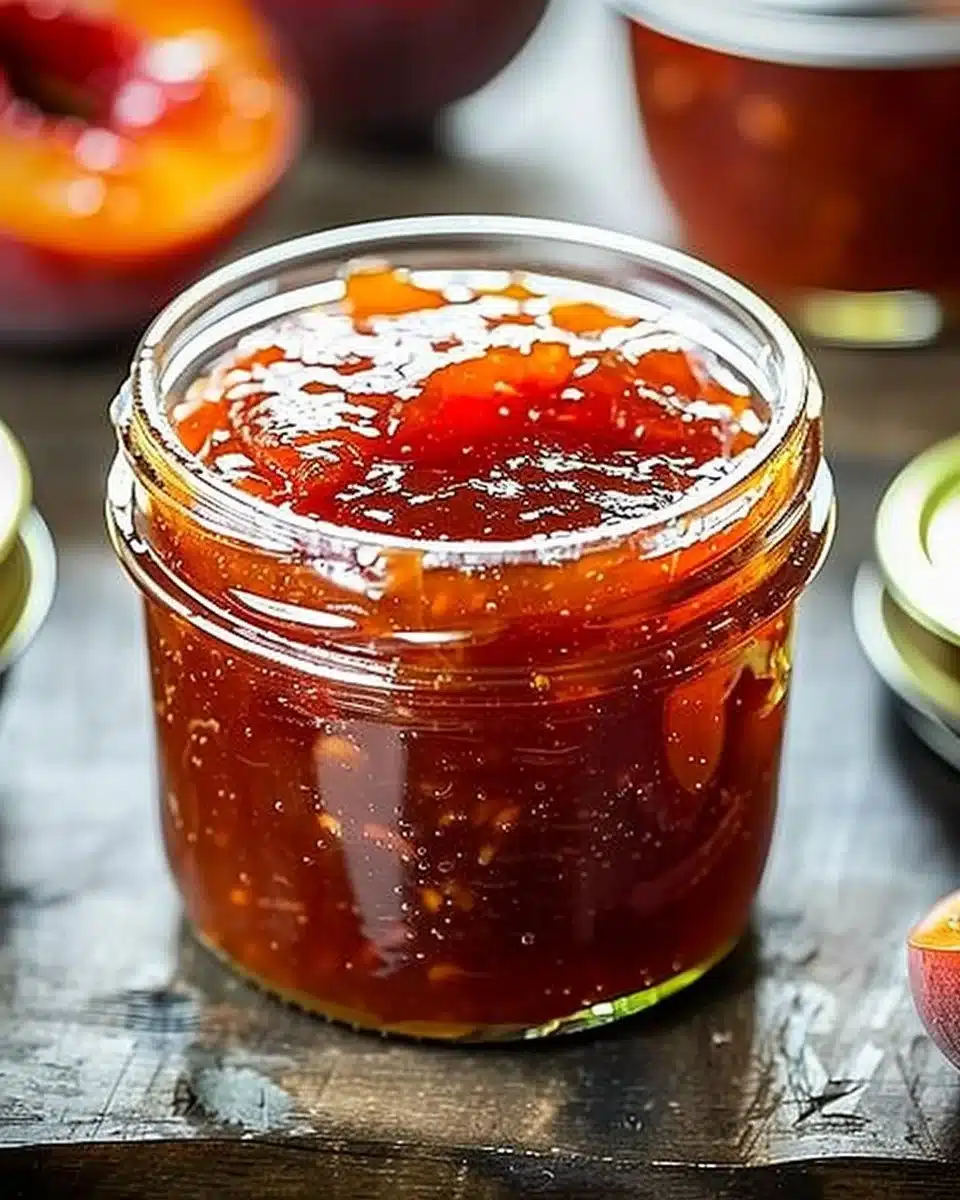

Ingredients :
- 6 ripe nectarines, pitted and diced
- 1 cup granulated sugar
- 1 tablespoon lemon juice
- 1/4 teaspoon ground cinnamon (optional)
- 1 packet pectin
Ingredient notes and substitutions:
- Nectarines: Choose ripe, fragrant fruit for the best flavor. Slightly underripe nectarines will be tarter and may need a bit more sugar; overripe fruit is sweeter but breaks down more quickly.
- Sugar: Granulated sugar helps both taste and texture. If you prefer lower sugar, use a low-sugar pectin and reduce the sugar quantity following the pectin manufacturer’s guidance. Alternatively, use a natural sweetener like honey (note: honey will darken flavor and slightly change pectin performance).
- Lemon juice: This provides acidity to help the pectin set and brightens the flavor. You can substitute bottled lemon juice if needed, but fresh is best.
- Pectin: The packet pectin listed is standard. If you don’t have commercial pectin, consider using chia seeds as a natural thickener (they create a different texture and make the jam more like a preserve) or cook longer to reduce water content. If using fruit pectin or low-sugar pectin, follow that product’s instructions.
- Cinnamon: Optional. For spicy notes, try fresh ginger instead. Avoid adding alcohol-based extracts in large quantities; if a recipe calls for liqueur, use extra lemon juice or a splash of apple cider vinegar as a family-friendly substitute.
Directions :
- In a large pot, combine the diced nectarines, sugar, lemon juice, and cinnamon. Stir well and let it sit for about 30 minutes to macerate.
- After 30 minutes, place the pot over medium heat and bring the mixture to a boil, stirring frequently.
- Add the pectin and continue to boil for another 10 minutes while stirring constantly.
- Once the mixture has thickened, remove it from heat and let it cool for a few minutes.
- Pour the jam into sterilized jars and seal tightly.
- Let the jars cool completely at room temperature, then store them in the refrigerator or process them in a water bath for longer shelf life.
Practical notes for these directions:
- Maceration is not optional; it helps the sugar dissolve into the fruit so you don’t get grainy sugar crystals in the final jam.
- When boiling, watch for hot splatters and stir with a long-handled spoon. A heavy-bottomed pot reduces the chance of burning.
- Adding pectin: Sprinkle it in slowly while stirring to prevent lumps. Once the jam returns to a rolling boil, set a timer for the full 10 minutes; undercooking may prevent proper gelling.
- Don’t skip the cooling step before sealing if your lids are not designed for hot-fill canning. For safety and extended shelf life, process the filled jars in a boiling water bath for the recommended time based on jar size and your altitude.
- Safety first: Use clean, sterilized jars and new lids or checked lids in good condition. If a jar doesn’t seal after cooling, refrigerate and use the jam within a few weeks.
Pro Tips for Success Homemade Nectarine Jam Delight
- Use ripe but firm nectarines. Riper fruit is sweeter but can create a thinner jam because it releases more juice. Balanced ripeness gives you better texture and bright flavor.
- Test the set on a chilled plate. Slide a little jam onto a cold plate, tilt it, and see how it wrinkles; if it changes shape slowly and doesn’t run, it’s set. This gives a more reliable indication than time alone.
- Skim foam for a clear finish. If foam forms on the top while boiling, skim it off with a spoon for a clearer, more attractive jarred surface.
- Stir constantly during the final boil. Jam can scorch quickly when it gets thick, so keep the pot moving to avoid burned flavor.
- Cool jars undisturbed. After filling and sealing, place jars on a towel and leave them alone until they reach room temperature to avoid sealing issues.
- Label and date your jars. Write the canning date and contents on each jar so you can manage your pantry rotation and know exactly when to use them.
Flavor Variations Homemade Nectarine Jam Delight
- Honey-Lemon Nectarine Jam: Replace half the sugar with honey and add an extra teaspoon of lemon juice. Honey lends floral complexity and a smoother mouthfeel; be mindful that it will darken the jam slightly.
- Ginger & Lime Twist: Replace cinnamon with 1 teaspoon fresh grated ginger and swap lemon juice for lime juice. The gingery heat with zesty lime brightens the nectarine’s sweetness for a lively spread.
- Vanilla-Cardamom Nectarine Preserve: Add a split vanilla bean or 1 teaspoon pure vanilla extract (or use a non-alcohol vanilla powder) and a pinch of ground cardamom. This variation is warm, aromatic, and pairs beautifully with mild cheeses.
- Berry-Nectarine Blend: Stir in a cup of crushed strawberries or raspberries during the maceration for color and added tartness. Berries add pectin naturally and deepen the flavor profile.
- Herb-Infused Jam: Steep a sprig of rosemary or thyme in the fruit-sugar mixture as it heats, then remove the sprig before pouring into jars. Herbs add savory nuance and pair well with roast pork substitutes or cheese plates.
Serving Suggestions Homemade Nectarine Jam Delight
Homemade Nectarine Jam Delight is versatile—think beyond toast. Spread it on warm buttered scones, swirl it into plain yogurt or ricotta for a quick dessert, or use it as a glaze for roasted fruit or poultry substitutes like roasted chicken or tofu. Pair it with creamy cheeses: a smear on brie or goat cheese with crackers makes an elegant appetizer. Spoon a dollop into a bowl of oatmeal, or layer it between cake layers as a bright filling.
For an unexpected pairing, try combining small spoonfuls of the jam with crisp cucumber slices and a tangy protein like grilled chicken substitute or marinated tempeh for a sweet-and-savory bite. It can also be stirred into a vinaigrette for fruit-forward salad dressings or used to sweeten plain cocktails and mocktails—just reduce the sugar a bit if using as a mixer.
If you enjoy mixing flavors from different cuisines, the jam’s sweet fruitiness balances spicy and savory items well, much like how sweet condiments complement bold dishes; for example, combining fruity preserves with a heat-forward salad can create a beautiful contrast reminiscent of dishes such as Delightful Spicy Keto Korean Beef Cucumber Salad where sweet and spicy elements play off one another.
Storage and Freezing Instructions Homemade Nectarine Jam Delight
Refrigerator storage:
- For short-term use, store sealed jars in the refrigerator. Properly refrigerated, homemade jam will last about 3 to 4 weeks once opened. Unopened jars that were hot-filled and refrigerated immediately are also safe for about the same time.
Shelf-stable canning (water bath):
- If you processed the filled jars in a boiling water bath following recommended times and altitude adjustments, your jars can be stored in a cool, dark pantry for up to one year. Always check seals before use: presses on the center of the lid should not pop up and down.
Freezing:
- Jam freezes very well. To freeze, leave at least 1/2 inch headspace in freezer-safe containers or jars (use wide-mouth jars to avoid breakage), label with the date, and freeze for up to 12 months. Thaw overnight in the refrigerator before using. Note: freezing may slightly alter texture (it can become a touch looser), but the flavor will remain bright.
Signs of spoilage:
- Discard any jar that shows mold, an off smell, or bubbling despite being sealed—these indicate fermentation or contamination. When in doubt, throw it out.
Nutrition Facts (Per Serving)
Serving size: 1 tablespoon (about 20 g)
- Calories: 25 kcal
- Protein: 0.1 g
- Carbohydrates: 6.3 g
- Fat: 0 g
- Fiber: 0.4 g
- Sodium: 1 mg
Nutrition notes:
- These values are estimates. Most of the calories come from the added sugar and the natural fruit sugars in nectarines. If you reduce sugar or use a sugar substitute designed for preserves, the carbohydrate and calorie counts will decrease accordingly.
- Homemade jams are low in protein and fat but can add fruit-based vitamins and flavor to your meals.
FAQ About Homemade Nectarine Jam Delight
What if my jam doesn’t set after boiling?
A jam can fail to set for several reasons: insufficient pectin, not enough acid, or undercooking. First, check that you added the correct amount of pectin and that it was fresh—old pectin can lose its setting power. You can salvage a thin jam by returning it to the pot, adding a small amount of additional pectin (follow the package directions) or allowing it to reduce further by simmering until it reaches the desired set. Remember to cool a spoonful on a chilled plate to test rather than relying on time alone.
Can I use frozen nectarines for this jam?
Yes, frozen nectarines work well, especially when fresh fruit is out of season. Thaw them in the refrigerator and drain any excess liquid before proceeding, or use the juice in the recipe and reduce the added water/juice elsewhere. Frozen fruit often breaks down more during cooking, so you may need slightly less cook time to get the texture you like.
Is pectin necessary for making nectarine jam?
Pectin speeds the setting process and helps produce a firmer jam, especially with low-pectin fruits like nectarines. If you prefer not to use commercial pectin, you can make “freezer jam” with less sugar and more fruit or use natural thickeners like chia seeds. Alternatively, cook the jam longer to concentrate the fruit’s natural pectin, but this alters flavor and texture. If reducing or omitting pectin, follow alternate recipes designed for low-pectin fruit to avoid disappointment.
How should I sterilize jars and lids safely?
Wash jars and lids in hot, soapy water and rinse well. For sterilization, place clean jars in a large pot of simmering water for 10 minutes, or run them through a hot dishwasher cycle and keep them hot until filling. Lids should be warmed in hot (not boiling) water to soften the seal, following the lid manufacturer’s guidance. Fill hot jars with hot jam and process promptly if you plan to store jars pantry-style.
Can I reduce the sugar in this recipe?
Yes, but proceed with caution. Sugar contributes to preservation, mouthfeel, and setting in traditional recipes. If you want a less sweet jam, use a low-sugar pectin designed for reduced-sugar preserves and follow its instructions closely. Another option is to reduce sugar modestly (for example, by a quarter) and balance with a bit more lemon juice for acidity. Remember that lowering sugar without adjusting pectin or processing method can lead to a looser set and shorter shelf life.
How long will jars last on the pantry shelf if water-bath processed?
When correctly processed in a boiling water bath and stored in a cool, dark place, properly sealed jars of jam can last up to one year. For best flavor and color, use within six to nine months. Always check seals and the jam’s appearance before using; discard any jar that shows mold, off odors, or signs of fermentation.
What causes jam to crystalize or have a grainy texture?
A grainy texture or crystalized sugar can result from incomplete dissolving of sugar during maceration or early in the cooking process. Stir thoroughly to dissolve sugar before boiling and ensure the fruit-sugar mixture has macerated long enough. Alternatively, if the jam has been stored too cold or exposed to fluctuating temperatures, sugars can recrystallize. Reheating gently and stirring may help dissolve crystals, but if texture or flavor has notably deteriorated, discard.
Is there a quick peppery or spicy way to use this jam?
Absolutely. For a quick spicy-sweet condiment, stir in a pinch of crushed red pepper flakes or a small amount of freshly grated ginger to a jar of jam and let it sit for a day to infuse. This creates a lively spread that pairs well with savory cheeses or as a glaze on roasted vegetables and proteins. If you want a more balanced savory profile, briefly warm the jam with a splash of balsamic vinegar to reduce sweetness and add depth.
Final Thoughts
Homemade Nectarine Jam Delight is an accessible, rewarding project that makes the most of ripe stone fruit. With a little patience during maceration and a careful boil when adding pectin, you’ll end up with jars of bright, fragrant jam that elevate breakfasts, snacks, and even savory dishes. Experiment with the flavor variations and storage methods to find what you enjoy most, and always label your jars so you can track batches. Whether you spread it on toast or use it as a glaze, this jam brings a touch of homemade sunshine to ordinary meals.
Print
Homemade Nectarine Jam Delight
- Total Time: 50 minutes
- Yield: 6 servings 1x
- Diet: Vegetarian
Description
A sun-kissed spread that captures the warm sweetness of summer fruit, balancing juicy nectarines, lemon, and a hint of cinnamon for a versatile jam.
Ingredients
- 6 ripe nectarines, pitted and diced
- 1 cup granulated sugar
- 1 tablespoon lemon juice
- 1/4 teaspoon ground cinnamon (optional)
- 1 packet pectin
Instructions
- Combine the diced nectarines, sugar, lemon juice, and cinnamon in a large pot. Stir well and let it sit for about 30 minutes to macerate.
- Place the pot over medium heat and bring the mixture to a boil, stirring frequently.
- Add the pectin and continue to boil for another 10 minutes while stirring constantly.
- Remove the mixture from heat and let it cool for a few minutes.
- Pour the jam into sterilized jars and seal tightly.
- Let the jars cool completely at room temperature, then store them in the refrigerator or process them in a water bath for longer shelf life.
Notes
Use ripe but firm nectarines for best results. To extend shelf life, process jars in a boiling water bath.
- Prep Time: 30 minutes
- Cook Time: 20 minutes
- Category: Preserves
- Method: Canning
- Cuisine: American
Nutrition
- Serving Size: 1 tablespoon
- Calories: 25
- Sugar: 6g
- Sodium: 1mg
- Fat: 0g
- Saturated Fat: 0g
- Unsaturated Fat: 0g
- Trans Fat: 0g
- Carbohydrates: 6.3g
- Fiber: 0.4g
- Protein: 0.1g
- Cholesterol: 0mg