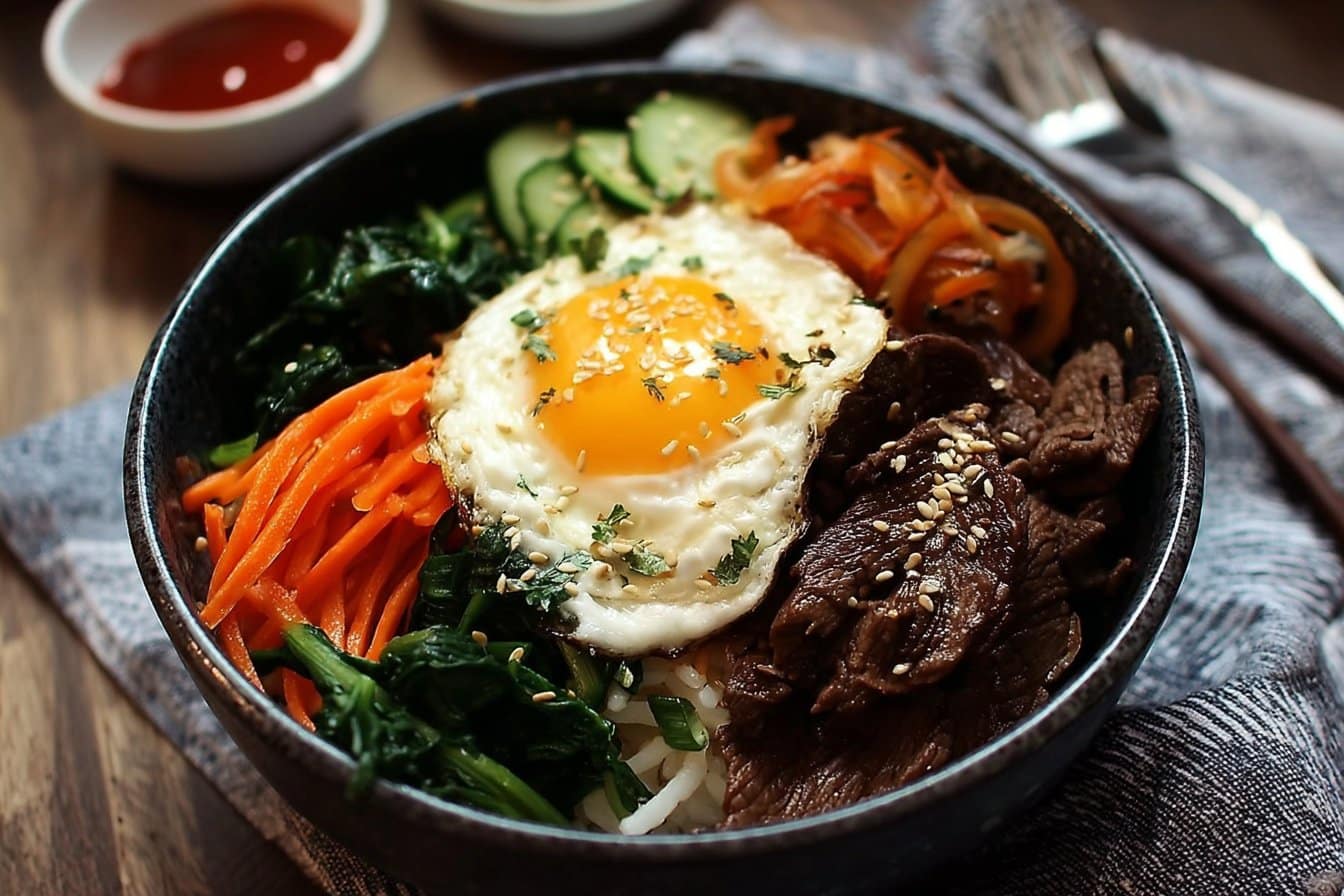
Korean Beef Bibimbap Bowl is a delightful and colorful dish that beautifully blends flavors and textures. This traditional Korean meal features a vibrant mix of seasoned vegetables, savory ground beef, and a perfectly fried egg, all served over a bed of fluffy short-grain rice. Each bite is a harmonious explosion of taste and provides a satisfying, nourishing experience.
Why Make This Recipe
Creating a Korean Beef Bibimbap Bowl at home is not only rewarding but also a fantastic way to explore Korean cuisine. This dish is highly customizable, allowing you to include your favorite vegetables and adjust the spice level. It’s a great meal option for families and friends, providing a fun and interactive dining experience. Plus, you can prepare it in about 30 minutes, making it an excellent choice for busy weekdays or a weekend gathering.
How to Make Korean Beef Bibimbap Bowl
Making a Korean Beef Bibimbap Bowl is simpler than it might seem. With a few fresh ingredients, and a little preparation, you will have a stunning dish that will wow your taste buds.
Ingredients:
- 1 lb lean ground beef
- 2 cups short-grain white rice (cooked)
- 1 cup carrots (julienned)
- 1 cup spinach (fresh)
- 1 cup zucchini (sliced)
- 1 cup bean sprouts
- 3 tbsp gochujang sauce (adjust for spice level)
- 1 tbsp sesame oil
- 2 tbsp low-sodium soy sauce
- 4 eggs
Directions:
- Cook the rice according to package instructions; set aside.
- In a skillet, brown ground beef over medium-high heat for about 5-7 minutes, draining excess fat.
- Stir in gochujang, soy sauce, and sesame oil; let it simmer on low for 5 minutes.
- Sauté the vegetables in sesame oil over medium heat until tender-crisp, which takes about 7 minutes.
- Fry the eggs sunny-side up until the whites are set but the yolks are runny, about 3 minutes.
- Assemble bowls by layering the rice, beef mixture, sautéed vegetables, and topping with a fried egg. Drizzle with additional gochujang if desired.
Pro Tips for Success with Korean Beef Bibimbap Bowl
- Use Short-Grain Rice: For authentic bibimbap, opt for short-grain rice, which has the right sticky texture to hold the ingredients together.
- Adjust the Spice: Customize your bibimbap by adjusting the amount of gochujang. Start with a smaller amount for a milder flavor, and add more to suit your taste.
- Pre-Cook Vegetables: If you want to save time, consider prepping your vegetables ahead of time or using frozen mixes.
- Perfectly Fried Eggs: To achieve the perfect fried egg, be sure not to overcrowd the pan. Cook on medium-low heat to ensure the yolks remain runny.
- Presentation Matters: Bibimbap is as much about looks as it is about flavor. Layering the ingredients in an aesthetically pleasing manner creates a more inviting dish.
- Add Sesame Seeds: For an extra crunch and flavor, sprinkle toasted sesame seeds on top before serving.
Flavor Variations for Korean Beef Bibimbap Bowl
- Protein Swaps: Instead of ground beef, try using ground turkey, chicken, or plant-based options like tofu or tempeh for a vegetarian version.
- Vegetable Additions: Feel free to add other vegetables like mushrooms, bell peppers, or sweet potatoes to change up the flavors and textures.
- Fruity Twist: For a hint of sweetness, consider adding some sliced avocado or fresh fruit like mango on top.
- Herb Infusion: Incorporate fresh herbs like cilantro or green onions for additional freshness and brightness in your bibimbap bowl.
- Spicy Kick: For those who crave heat, consider adding sliced jalapeños or drizzle with a spicy chili oil.
Serving Suggestions for Korean Beef Bibimbap Bowl
Korean Beef Bibimbap Bowl is a versatile dish that can be served on its own as a satisfying meal. Here are some ideas to elevate your dining experience:
- Pair with kimchi, a traditional fermented side dish that adds a tangy bite.
- Serve alongside Korean fried chicken for a more indulgent spread.
- Include a light cucumber salad to balance out the heat and enhance the freshness of the meal.
Storage and Freezing Instructions for Korean Beef Bibimbap Bowl
Leftovers can be stored in an airtight container in the refrigerator for up to 3 days. When reheating, be mindful of the fried egg—consider making fresh eggs for each serving.
For longer storage, you can freeze the beef mixture and the cooked rice separately. Both can be stored in freezer-safe bags for up to 3 months. Thaw in the refrigerator overnight and reheat on the stovetop or in the microwave.
Nutrition Facts (Per Serving)
| Nutrient | Amount |
|——————|————|
| Calories | 540 |
| Protein | 32g |
| Carbohydrates | 56g |
| Fat | 22g |
| Fiber | 4g |
| Sodium | 680mg |
FAQ About Korean Beef Bibimbap Bowl
What is bibimbap?
Bibimbap is a classic Korean dish that translates to “mixed rice.” It typically consists of a bowl of rice topped with an assortment of vegetables, meat (often beef), a fried egg, and gochujang sauce. The ingredients are meant to be mixed together before eating, creating a symphony of flavors and textures.
Can I make bibimbap vegetarian?
Absolutely! Bibimbap is highly customizable, and you can replace the beef with tofu, lentils, or simply stick to a variety of vegetables. The dish remains just as vibrant and delicious without meat.
What is gochujang?
Gochujang is a Korean red chili paste made from fermented soybeans, glutinous rice, powdered fermented soybeans, and red chili pepper flakes. It adds depth of flavor and a touch of sweetness to dishes, making it a staple in Korean cooking.
Can I prepare components of bibimbap ahead of time?
Yes! Many components of bibimbap can be made in advance. You can cook the rice, sauté the vegetables, and prepare the beef, allowing you to assemble your bibimbap quickly during mealtime. Just store everything in separate airtight containers in the fridge until you’re ready to enjoy.
Is bibimbap healthy?
Bibimbap can be a healthy dish as it incorporates a variety of vegetables and lean protein. You can control the portion sizes and ingredients to fit your dietary preferences, making it a nutritious choice.
Final Thoughts
Korean Beef Bibimbap Bowl is a vibrant and celebratory dish that encapsulates the essence of Korean cuisine. By offering a delightful mix of flavors, textures, and colors, it elevates a simple meal into something special. Whether you’re making it for yourself or hosting friends, this recipe is sure to impress and satisfy. Enjoy every delicious bite!
Print
Korean Beef Bibimbap Bowl
- Total Time: 45 minutes
- Yield: 4 servings 1x
- Diet: None
Description
A delightful and colorful dish blending seasoned vegetables, savory ground beef, and a perfectly fried egg over fluffy short-grain rice.
Ingredients
- 1 lb lean ground beef
- 2 cups short-grain white rice (cooked)
- 1 cup carrots (julienned)
- 1 cup spinach (fresh)
- 1 cup zucchini (sliced)
- 1 cup bean sprouts
- 3 tbsp gochujang sauce (adjust for spice level)
- 1 tbsp sesame oil
- 2 tbsp low-sodium soy sauce
- 4 eggs
Instructions
- Cook the rice according to package instructions; set aside.
- In a skillet, brown ground beef over medium-high heat for about 5-7 minutes, draining excess fat.
- Stir in gochujang, soy sauce, and sesame oil; let it simmer on low for 5 minutes.
- Sauté the vegetables in sesame oil over medium heat until tender-crisp, which takes about 7 minutes.
- Fry the eggs sunny-side up until the whites are set but the yolks are runny, about 3 minutes.
- Assemble bowls by layering the rice, beef mixture, sautéed vegetables, and topping with a fried egg. Drizzle with additional gochujang if desired.
Notes
Customize your bibimbap by adjusting the spice level and using different vegetables.
- Prep Time: 15 minutes
- Cook Time: 30 minutes
- Category: Main Course
- Method: Stovetop
- Cuisine: Korean
Nutrition
- Serving Size: 1 serving
- Calories: 540
- Sugar: 7g
- Sodium: 680mg
- Fat: 22g
- Saturated Fat: 5g
- Unsaturated Fat: 15g
- Trans Fat: 0g
- Carbohydrates: 56g
- Fiber: 4g
- Protein: 32g
- Cholesterol: 370mg