Nigerian Chicken Stew Recipe is a comforting, tomato-forward dish that brings bold West African flavors to your table with simple ingredients and an easy technique. If you love rich, saucy chicken dinners that pair perfectly with rice or plantains, you might also enjoy a hearty chicken Parmesan recipe for a different take on saucy, oven-ready chicken classics. This Nigerian chicken stew balances smoky, savory, and spicy notes while staying approachable for home cooks at any skill level.
Why make this Nigerian Chicken Stew Recipe
Nigerian chicken stew is a weekday hero that doubles as weekend show-and-tell. It’s fast to prepare, stores well, and scales up easily for a crowd. The stew relies on pantry-friendly spices—paprika, curry powder, thyme—and fresh produce like tomatoes and peppers, which makes it inexpensive without skimping on flavor.
Beyond convenience, the stew is versatile. Serve it over steamed white rice for a family-friendly meal, spoon it onto mashed potatoes for comfort-food vibes, or ladle it beside roasted vegetables for a lighter plate. It also freezes and reheats beautifully, so you can make a big batch and enjoy home-cooked Nigerian comfort for days.
How to make Nigerian Chicken Stew Recipe
This version keeps the classic steps straightforward: marinate, sear, blend the tomato base, and simmer until the chicken is tender and the sauce is thick. The method highlights the fresh tomato-and-pepper sauce typical of many Nigerian stews, paired with a short spice mix that gives depth without complexity.
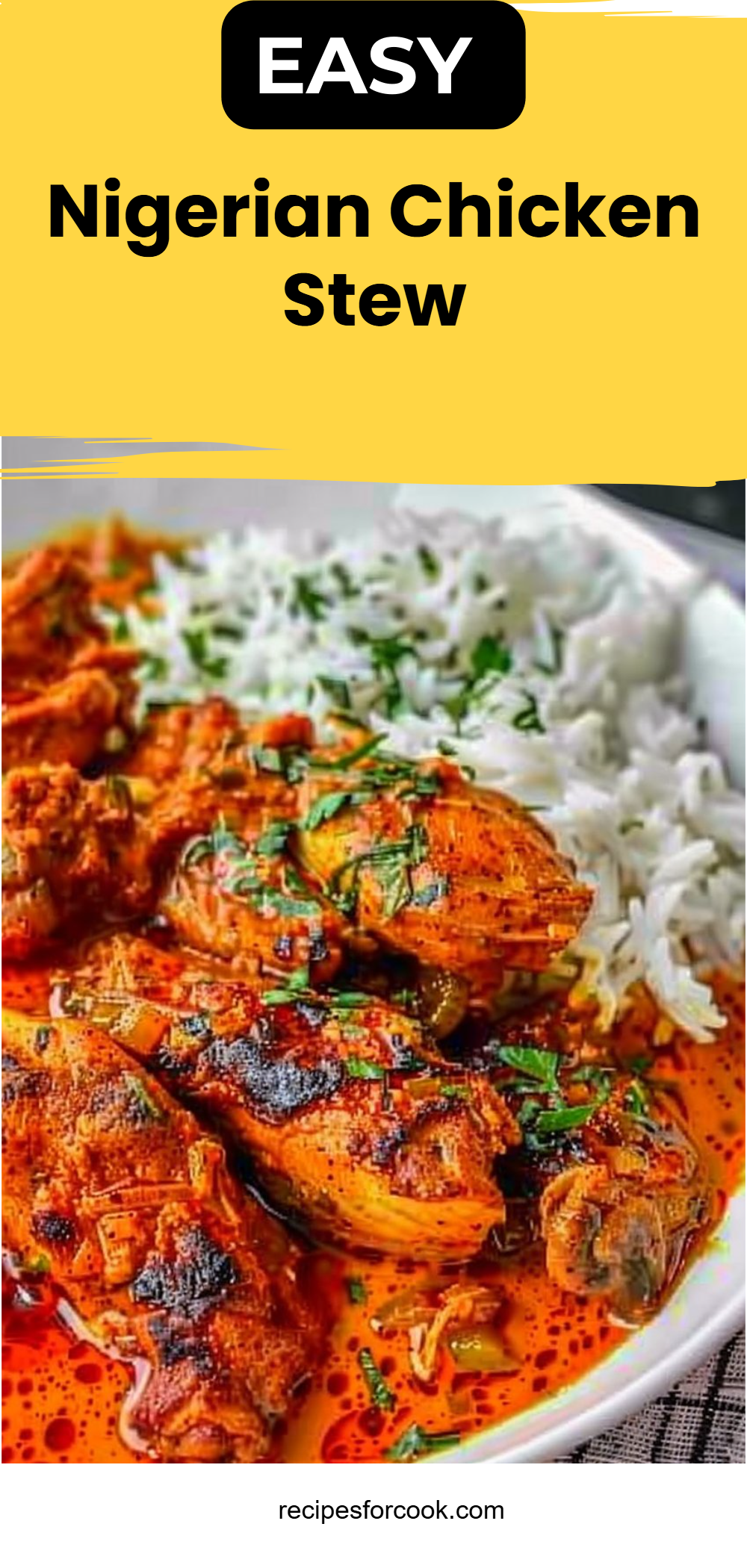
Ingredients :
2.5 lbs bone-in chicken (thighs or drumsticks), cleaned, 1 teaspoon salt, 1/2 teaspoon black pepper, 1 teaspoon paprika, 1 teaspoon curry powder, 1 teaspoon thyme, 1 onion, chopped, 1/4 cup vegetable oil, 4 large Roma tomatoes, 1 large red bell pepper, 1 small red onion, 2 scotch bonnet peppers (or 1 for less heat), 2 tablespoons tomato paste, 1 teaspoon garlic powder, 1 teaspoon ginger powder, 1 bouillon cube, Salt to taste
Ingredient notes and substitutions:
- Bone-in chicken: Thighs or drumsticks are traditional and stay moist during simmering. If you prefer boneless pieces, reduce simmer time slightly to avoid overcooking.
- Scotch bonnet peppers: These bring authentic heat and floral, fruity heat. Use 1 pepper, deseeded, for moderate heat, or replace with a jalapeño or serrano if you want milder spice. Always handle hot peppers carefully and wash hands after touching.
- Bouillon cube: This boosts umami and salt; substitute with 1 cup low-sodium chicken broth if you prefer a less concentrated base.
- Vegetable oil: Neutral oils like canola, sunflower, or peanut work well. For a slightly different aroma, use light olive oil, but avoid extra-virgin olive oil at high heat.
- Tomato options: Roma tomatoes are recommended for their concentrated flavor, but canned crushed tomatoes (about 2 cups) can be used in a pinch.
- Spices: Paprika, curry powder, and thyme are the backbone of the stew. If you’re missing any, a pinch of smoked paprika can add depth if you skip regular paprika.
Directions :
- Season the chicken with salt, black pepper, paprika, curry powder, thyme, and chopped onion. Let marinate for 30 minutes.
- In a large skillet, heat oil over medium-high heat and sear chicken pieces until browned on both sides. Set aside.
- Blend tomatoes, bell pepper, onion, and scotch bonnets into a smooth mixture.
- In the same skillet, fry tomato paste for 2 minutes. Add the blended sauce, reduce heat to medium, and cook for 10 minutes.
- Add garlic powder, ginger powder, bouillon cube, and salt. Stir to combine.
- Return chicken to the pot and simmer on low for 25–30 minutes, or until chicken is tender and the stew thickens.
- Taste and adjust salt or bouillon as needed before serving.
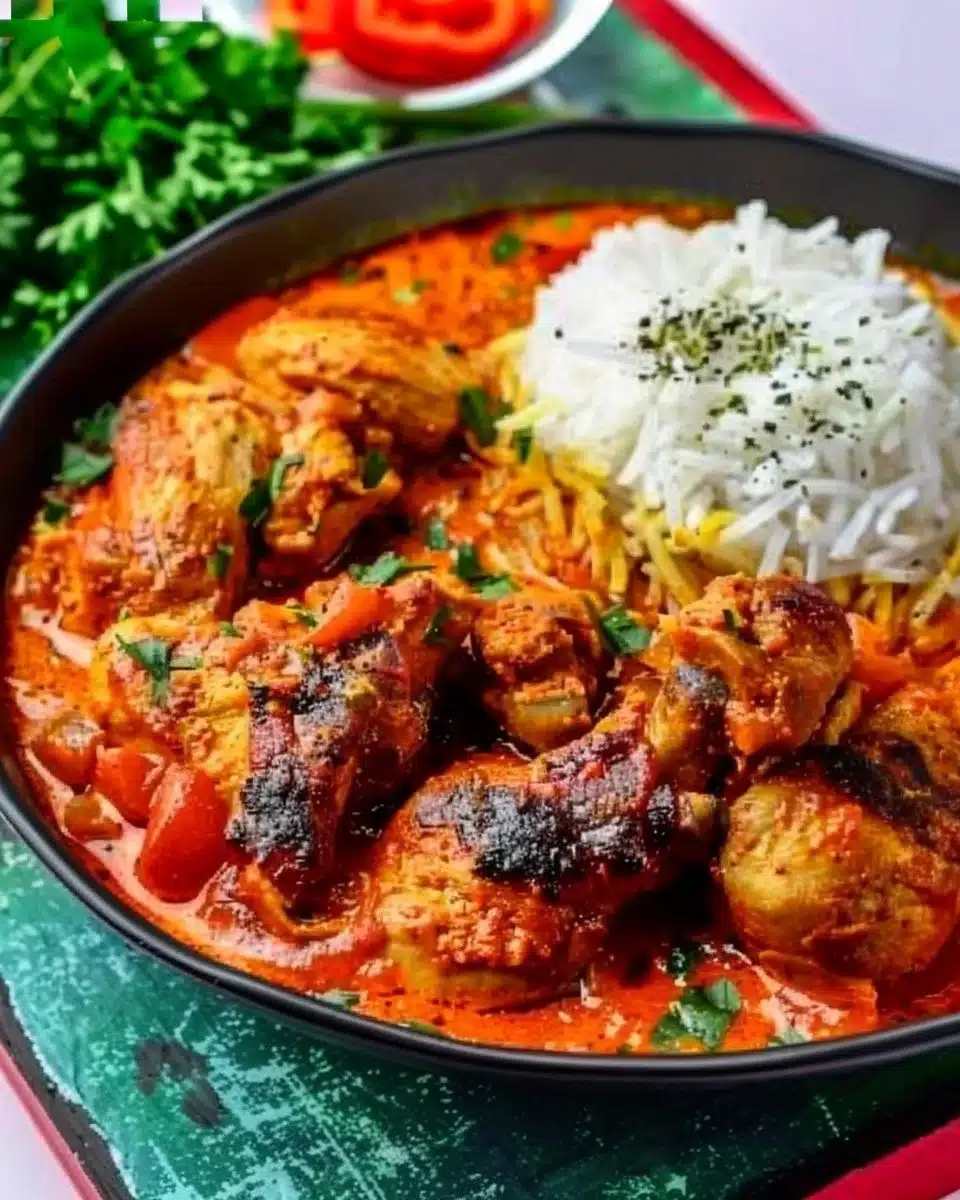
Pro Tips for Success Nigerian Chicken Stew Recipe
- Brown in batches: Don’t overcrowd the pan when searing chicken. Browning in batches ensures a good color and develops flavor. Overcrowding causes steaming instead of browning.
- Deglaze the pan: After searing the chicken, you can splash a little water or broth into the skillet while scraping up browned bits before adding the tomato paste. Those browned bits are flavor gold and will deepen the stew.
- Reduce water in the blended sauce: If your blended tomatoes release a lot of liquid, simmer the sauce a bit longer before returning the chicken. A thicker base will cling to the chicken and intensify flavor.
- Taste and adjust at the end: The bouillon cube adds salt and umami, so add it in stages and taste before adding more salt. Individual bouillon brands vary in saltiness.
- Use a snug-fitting lid: Simmer with a snug lid for even cooking, but leave it slightly ajar toward the end if you want the sauce to reduce and thicken.
- Rest before serving: Let the stew sit off heat for 5–10 minutes before serving. Flavors meld and the sauce will thicken slightly as it cools.
Flavor Variations Nigerian Chicken Stew Recipe
- Smoky stew: Stir in 1–2 teaspoons smoked paprika and a small piece of smoked chicken or smoked turkey (as a pork alternative) for a deeply smoky profile.
- Coconut tomato twist: Replace 1/2 cup water/broth with light coconut milk for a creamy, slightly sweet variation that pairs beautifully with rice.
- Spicy-sweet: Add 1 tablespoon brown sugar or honey and an extra scotch bonnet for a sweet-heat balance that contrasts the tomatoes.
- Herb-forward: Finish with a handful of chopped fresh basil or parsley for a bright, herbal lift if you prefer a fresher finish.
Serving Suggestions Nigerian Chicken Stew Recipe
- Classic pairing: Serve over hot white rice (long-grain or jasmine) to soak up the rich sauce; slightly buttery rice complements the spicy tomato sauce.
- Plantain side: Fried ripe plantains (dodo) add sweet contrast and are a classic West African accompaniment.
- Lighter option: Spoon stew over cauliflower rice or roasted vegetables for a lower-carb plate.
- Bread for sopping: Chunky, crusty bread or warm dinner rolls make excellent tools for mopping up every last drop of sauce.
- Family style: Offer toppings like sliced green onions, chopped cilantro, or a squeeze of fresh lemon to add brightness at the table.
Storage and Freezing Instructions Nigerian Chicken Stew Recipe
- Refrigerator: Cool the stew to room temperature (no more than 2 hours at room temp), then store in an airtight container for up to 3–4 days. Reheat gently over low heat or microwave in short bursts until steaming.
- Freezer: Portion into freezer-safe containers or heavy-duty freezer bags and freeze for up to 3 months. Leave a small headspace in containers for expansion. Thaw overnight in the refrigerator before reheating.
- Reheating tips: Reheat on the stove over low-medium heat and add a splash of water or broth if the sauce seems too thick after chilling. Avoid high heat to prevent the chicken from drying out.
- Best practice: If you plan to freeze, slightly undercook the chicken (reduce simmer time by 5–7 minutes) before freezing. Finish cooking when reheating to keep the chicken moist.
Nutrition Facts (Per Serving) — approximate
- Servings: 6
- Calories: 420 kcal
- Protein: 36 g
- Carbohydrates: 10 g
- Fat: 24 g
- Fiber: 2 g
- Sodium: 780 mg
Note: These values are estimates and will vary based on exact chicken cut, whether skin is left on, the brand of bouillon, and portion size. Removing chicken skin and using lower-sodium bouillon will reduce calories and sodium.
FAQ About Nigerian Chicken Stew Recipe
Is this Nigerian Chicken Stew very spicy?
Spiciness depends mostly on how many scotch bonnet peppers you use and whether you include their seeds. Scotch bonnets are quite hot; using one pepper (de-seeded) will provide a gentle heat, whereas two peppers or leaving seeds will intensify the heat significantly. If you prefer a milder stew, substitute one scotch bonnet with a milder pepper like a jalapeño, or remove the membranes and seeds before blending.
Can I make this stew with boneless chicken?
Yes — boneless skin-on thighs or breast pieces can be used. Reduce simmer time slightly, especially for boneless breast, to avoid drying it out. Boneless thighs are forgiving and keep a lot of moisture, so they make a convenient swap if you don’t want to deal with bones.
What can I use instead of a bouillon cube?
If you don’t have a bouillon cube, use 1 cup of low-sodium chicken broth, or dissolve 1 teaspoon of bouillon powder in a small amount of hot water. You can also boost flavor with a splash of soy sauce or a teaspoon of miso paste dissolved in warm water, though these will alter the flavor profile slightly.
How do I thicken the stew if it’s too watery?
Simmer the sauce uncovered for an additional 8–10 minutes to reduce liquid and concentrate flavors. You can also mash a small portion of the cooked tomato mixture against the side of the pan to release pectin and naturally thicken the sauce. If you need a quicker fix, stir in a slurry of 1 teaspoon cornstarch mixed with 2 tablespoons cold water, then simmer until the sauce thickens.
Can I make this stew in a slow cooker or Instant Pot?
Yes. For a slow cooker, brown the chicken first, then transfer to the slow cooker with the blended sauce and spices, and cook on low for 4–5 hours or high for 2–3 hours. For an Instant Pot, brown the chicken using the sauté function, add the sauce and spices, seal, and cook on manual/high pressure for 8–10 minutes, followed by a quick or natural release depending on your time and texture preference.
What side dishes go best with Nigerian chicken stew?
Classic sides include steamed white rice, fried plantains (dodo), yam, or boiled potatoes. For lighter options, serve alongside roasted or steamed vegetables and a simple green salad. Bread, such as crusty rolls or cornbread, is also great for mopping up the saucy stew.
Final Thoughts
Nigerian Chicken Stew Recipe is a flexible, flavorful dish that works for busy weeknights and cozy weekend dinners alike. With minimal ingredients and a straightforward method, it’s an accessible introduction to West African-style tomato stews. The combination of searing, simmering, and a bold tomato base ensures deep flavor and a satisfying meal that stores and reheats well. Try the variations to find your favorite spin, and don’t be afraid to make the recipe your own—stews are meant to be adapted. Enjoy making this rich, homey stew and sharing it with friends and family.
Print
Nigerian Chicken Stew
- Total Time: 70 minutes
- Yield: 6 servings 1x
- Diet: Paleo
Description
A comforting, tomato-forward dish that brings bold West African flavors with simple ingredients.
Ingredients
- 2.5 lbs bone-in chicken (thighs or drumsticks), cleaned
- 1 teaspoon salt
- 1/2 teaspoon black pepper
- 1 teaspoon paprika
- 1 teaspoon curry powder
- 1 teaspoon thyme
- 1 onion, chopped
- 1/4 cup vegetable oil
- 4 large Roma tomatoes
- 1 large red bell pepper
- 1 small red onion
- 2 scotch bonnet peppers (or 1 for less heat)
- 2 tablespoons tomato paste
- 1 teaspoon garlic powder
- 1 teaspoon ginger powder
- 1 bouillon cube
- Salt to taste
Instructions
- Season the chicken with salt, black pepper, paprika, curry powder, thyme, and chopped onion. Let marinate for 30 minutes.
- In a large skillet, heat oil over medium-high heat and sear chicken pieces until browned on both sides. Set aside.
- Blend tomatoes, bell pepper, onion, and scotch bonnets into a smooth mixture.
- In the same skillet, fry tomato paste for 2 minutes. Add the blended sauce, reduce heat to medium, and cook for 10 minutes.
- Add garlic powder, ginger powder, bouillon cube, and salt. Stir to combine.
- Return chicken to the pot and simmer on low for 25–30 minutes, or until chicken is tender and the stew thickens.
- Taste and adjust salt or bouillon as needed before serving.
Notes
Use neutral oils for frying and adjust spice levels as desired. This stew freezes well and reheats beautifully. Serve over rice, potatoes, or roasted vegetables.
- Prep Time: 30 minutes
- Cook Time: 40 minutes
- Category: Main Course
- Method: Stovetop
- Cuisine: Nigerian
Nutrition
- Serving Size: 1 serving
- Calories: 420
- Sugar: 8g
- Sodium: 780mg
- Fat: 24g
- Saturated Fat: 4g
- Unsaturated Fat: 16g
- Trans Fat: 0g
- Carbohydrates: 10g
- Fiber: 2g
- Protein: 36g
- Cholesterol: 100mg