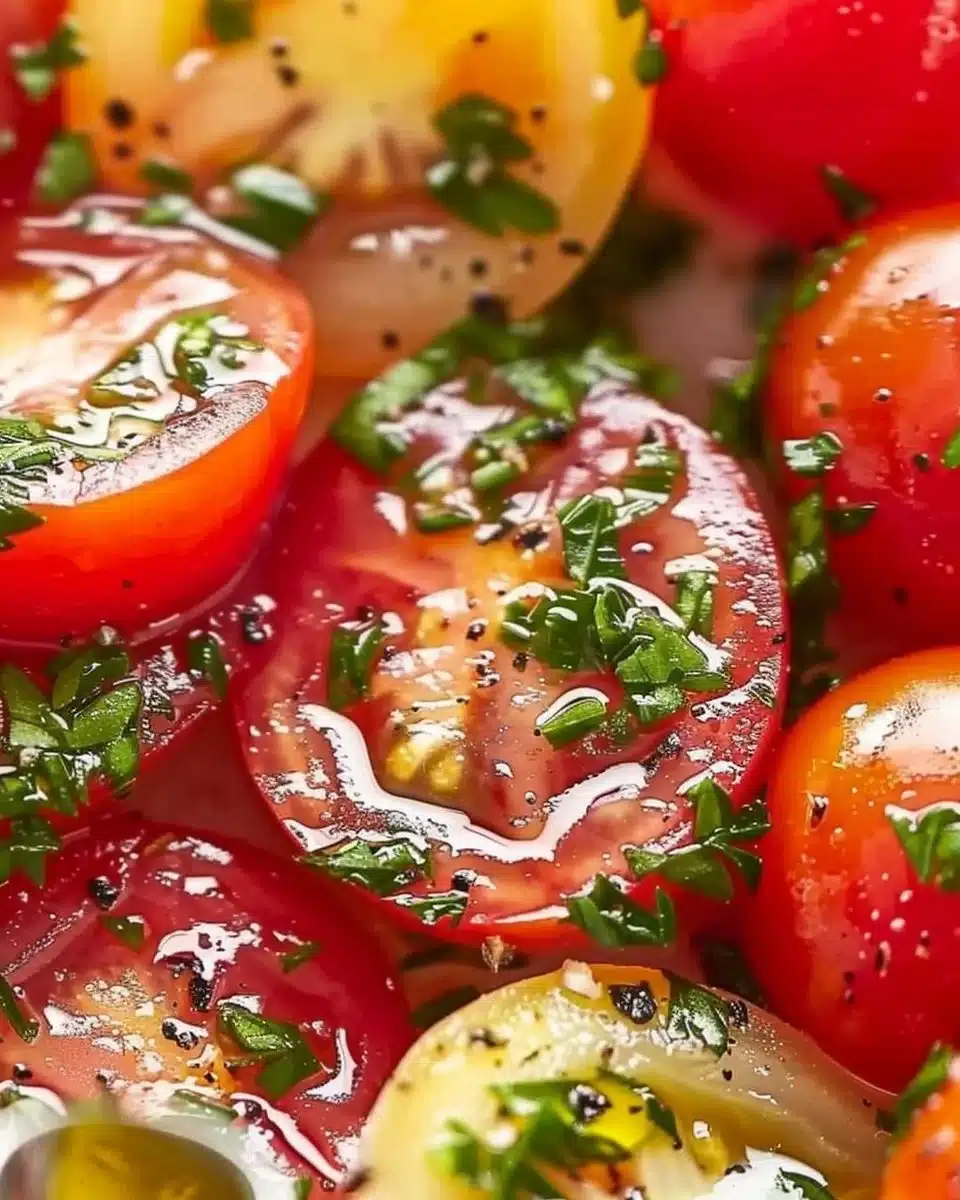
Marinated Tomatoes are a bright, simple way to make fresh tomatoes sing with flavor from the first bite.
Marinated Tomatoes capture summer’s acidity and herb aromas in an easy prep that’s ready in minutes and gets better as it sits. If you love Mediterranean-style sides, you might also enjoy the tangy, oven-baked combination in this baked feta and tomato recipe, which shares many of the same flavor notes and makes for a lovely brunch pairing.
why make this recipe
Marinated Tomatoes are quick, adaptable, and wildly rewarding. They turn ordinary tomatoes into a versatile condiment that brightens salads, sandwiches, grilled meats, and breakfast dishes. With just a handful of pantry staples—olive oil, vinegar, garlic, and herbs—you create layers of flavor without fuss. This recipe is perfect for when tomatoes are at peak ripeness, letting their natural sweetness and acidity shine while the dressing adds depth and balance.
Beyond taste, marinated tomatoes are a great way to use an abundance of garden tomatoes or to give supermarket tomatoes a gourmet lift. They’re vegetarian, gluten-free, and naturally low in calories, so they fit many dietary needs. The prep is forgiving: slightly underripe or slightly overripe tomatoes both work, and you can adjust seasonings to match your taste.
how to make Marinated Tomatoes
Follow a straightforward sequence: slice, whisk, dress, and let rest. The goal is to coat the tomatoes evenly and allow time for the elements to mingle. Here’s the method laid out clearly for home cooks of any experience level.
- Slice the ripe tomatoes into wedges or halves and place them in a bowl. Use a mix of sizes for texture and visual appeal.
- In a separate small bowl, whisk together olive oil, balsamic vinegar, minced garlic, salt, pepper, and chopped fresh herbs. Taste and tweak—if your tomatoes are very sweet, add a touch more vinegar for balance.
- Pour the dressing over the tomatoes and gently toss to combine, coating each piece without crushing them.
- Let marinate for at least 30 minutes before serving, allowing the flavors to meld. For best results, marinate in the refrigerator for up to 2–4 hours; bring to room temperature for serving if chilled.
Ingredients
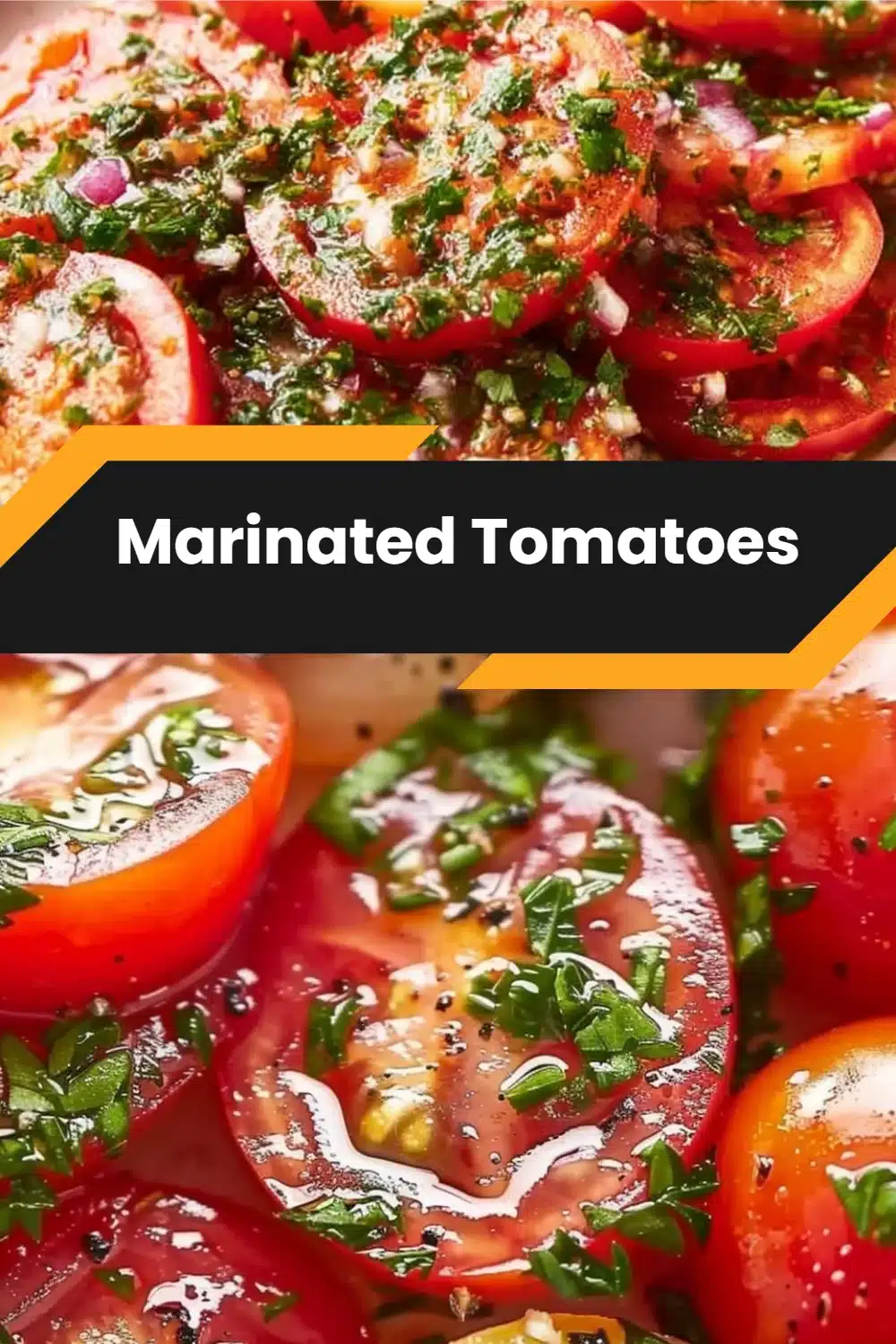
- Fresh tomatoes (use a mix of plum, heirloom, or cherry tomatoes for color and texture)
- Olive oil
- Balsamic vinegar
- Garlic
- Salt
- Pepper
- Fresh herbs (basil, parsley, or oregano)
Ingredient notes and substitutions:
- Tomatoes: If garden-ripe tomatoes aren’t available, use a mix of vine-ripened and cherry tomatoes to ensure both juiciness and firmness. If you have very acidic tomatoes, add a touch of honey or a pinch of sugar to the dressing.
- Olive oil: Extra-virgin olive oil gives the best flavor, but light olive oil works if you prefer a milder taste.
- Balsamic vinegar: If you don’t have balsamic, use red wine vinegar or a squeeze of lemon juice for brightness—these swaps keep the overall profile balanced. For a less sweet finish, try sherry vinegar.
- Garlic: If raw garlic is too pungent, mince it finely and let it sit a few minutes in the oil to mellow, or substitute a small amount of roasted garlic for a softer, sweeter note.
- Herbs: Basil is classic, but parsley or oregano work beautifully. Dried herbs can be used in a pinch (use about one-third the amount of dried herbs as fresh).
- Salt: If you must limit sodium, reduce the added salt and use a small splash of caper brine or lemon zest for an umami lift instead.
Directions
- Slice the tomatoes into wedges or halves and place them in a bowl.
- In a separate small bowl, whisk together olive oil, balsamic vinegar, minced garlic, salt, pepper, and chopped fresh herbs.
- Pour the dressing over the tomatoes and gently toss to combine.
- Let marinate for at least 30 minutes before serving, allowing the flavors to meld.
Pro Tips for Success Marinated Tomatoes
- Choose firm-ripe tomatoes: They should be fragrant and slightly yielding, not mushy. Firmer tomatoes hold their shape after marinating.
- Cut uniformly: Aim for consistent-size wedges or halves so they marinate evenly and present nicely on the plate.
- Season gradually: Start with a conservative amount of salt and vinegar, toss, then taste and adjust. Tomatoes vary in sweetness and acidity, so small tweaks make a big difference.
- Let time work for you: While 30 minutes is fine, 1–4 hours yields deeper flavor as the acid softens the tomatoes slightly and the garlic and herbs infuse the oil.
- Serve at room temperature: If you marinate in the fridge, remove the dish 20–30 minutes before serving so the flavors bloom and the olive oil isn’t congealed.
- Use the juices: Don’t discard leftover marinating liquid—its concentrated flavor is great spooned over grilled fish, stirred into pasta, or used as a dressing for greens.
Flavor Variations Marinated Tomatoes
- Mediterranean: Add thinly sliced red onion, kalamata olives, and a sprinkle of crumbled feta. The salty brine of the olives and the creaminess of feta complement the tomatoes beautifully.
- Citrus-Herb: Replace half the balsamic with fresh lemon juice, and add a touch of lemon zest and chopped mint for a bright, summery finish.
- Spicy Garlic: Stir in a pinch of red pepper flakes and a touch of smoked paprika for depth and heat. This version pairs well with grilled meats.
- Umami Boost: Stir a teaspoon of soy sauce or tamari into the dressing and add a few torn sun-dried tomatoes to intensify savory notes.
- Sweet-Sour: Mix equal parts balsamic and a splash of aged balsamic reduction or a teaspoon of honey for a glaze-like finish that’s especially nice on roasted tomato blends.
Serving Suggestions Marinated Tomatoes
Marinated Tomatoes are a great multi-tasker at the table. They can act as a side dish, salad component, garnish, or topping. Here are ideas to showcase them:
- On crusty bread: Pile marinated tomatoes on toasted sourdough or a grilled baguette, drizzle some of the marinade, and top with torn basil or slices of fresh mozzarella for an easy bruschetta.
- With protein: Spoon over grilled chicken, pan-seared fish, or roasted tofu for a bright finishing sauce.
- In salads: Add to greens, whole grains, or bean salads for extra acidity and sweetness.
- Breakfast boost: Scatter atop scrambled eggs, an omelet, or poached eggs for a fresh, acidic counterpoint to rich yolks.
- Warm bowls: Toss gently with cooked pasta, quinoa, or bulgur and finish with a generous grind of black pepper for a quick lunch.
For a warm, baked application that shares many flavors with marinated tomatoes, consider pairing them with feta and spinach; this complementary style is explored in a baked feta and tomato dish that makes for a lovely weekend brunch or dinner side.
Storage and Freezing Instructions Marinated Tomatoes
Short-term storage:
- Refrigerate marinated tomatoes in an airtight container for up to 3–4 days. Keep the tomatoes submerged in their dressing to preserve texture and flavor.
- Because the dressing softens the tomatoes over time, expect a gradual loss of firmness; they remain delicious, but they’re best within the first 48 hours for presentation.
Freezing:
- Freezing fresh marinated tomatoes is not recommended if you want to preserve texture. Tomatoes lose structure when frozen and thawed and become mushy.
- If you plan to freeze, consider freezing the tomatoes separately before marinating. Use them later in cooked dishes like sauces or stews where texture is less important—thawed tomatoes work well baked or simmered.
- You can freeze the tomato-infused dressing (without solids) in an ice cube tray to use later in cooked recipes; transfer cubes to a freezer bag and store up to 3 months.
Reviving chilled marinated tomatoes:
- Bring refrigerated marinated tomatoes to room temperature for 20–30 minutes before serving to allow olive oil to loosen and aromas to bloom.
- If they’ve lost a bit of vibrancy, taste and add a splash more vinegar or a pinch of salt and pepper to refresh the flavor.
Nutrition Facts (Per Serving)
Estimate per serving (about 1 cup marinated tomatoes with dressing):
- Calories: 120 kcal
- Protein: 2 g
- Carbohydrates: 6 g
- Fat: 10 g
- Fiber: 2 g
- Sodium: 220 mg
Notes on nutrition:
- The majority of calories come from olive oil; reducing the oil will lower calories and fat.
- Using less salt or low-sodium alternatives will reduce the sodium content.
- Fresh tomatoes contribute vitamins A and C, potassium, and antioxidants like lycopene, which have healthful benefits even in modest amounts.
FAQ About Marinated Tomatoes
How long can I marinate tomatoes without them getting soggy?
Marinating for 30 minutes to 4 hours is ideal for most tomatoes. Within this window you get flavor infusion without major texture breakdown. Firmer tomatoes tolerate longer marinating times—up to 24 hours in the fridge—while very ripe, soft tomatoes may become mushy after more than a few hours.
Can I make marinated tomatoes ahead of time for a party?
Yes. Make them 1–4 hours ahead and keep refrigerated until 20–30 minutes before serving. This allows the flavors to meld and makes for easy party prep. If you need to prep longer than a day, note that the tomatoes will soften and their appearance will change; they’ll still taste good but may look less crisp.
Are marinated tomatoes safe to eat raw with garlic left in the dressing?
Yes, when handled properly. Mince garlic finely and refrigerate the marinated tomatoes; consume within 3–4 days to minimize microbial risk. For those concerned about raw garlic or very young children, use roasted garlic instead for a milder flavor and lower risk profile.
How do I adjust marinated tomatoes for less acidity or more sweetness?
If the dressing tastes too acidic, add a small pinch of sugar or a drizzle of honey and a little more olive oil to balance. If you want more acidity, add a splash more balsamic or a squeeze of lemon. Always adjust gradually and taste as you go since tomatoes’ natural sweetness varies.
Can I use dried herbs instead of fresh in marinated tomatoes?
You can, but fresh herbs provide a brighter, fresher flavor. Use about one-third the amount of dried herbs as you would fresh. If using dried, let the tomatoes marinate a bit longer to allow the dried herbs to hydrate and release their flavors.
What are the best tomato varieties for marinating?
Medium-firm varieties like Roma/plum tomatoes, vine-ripened tomatoes, and firm heirlooms are excellent. Cherry tomatoes also work well and are especially good halved for bite-sized portions. Avoid overly soft or mealy tomatoes if you want attractive wedges that hold their shape.
Final Thoughts
Marinated Tomatoes are a small, elegant solution to a big flavor problem: how to make fresh tomatoes taste exciting all year round. They’re flexible, quick, and serve as a vibrant centerpiece or supporting player on any table. With a few thoughtful tweaks—choosing the right tomatoes, balancing acid and oil, and experimenting with herbs—you can tailor this recipe to your weeknight meals, weekend gatherings, or meal-prep stash. Keep the dressing proportionate, let time work for you, and don’t be afraid to use the leftover juices to boost other dishes.
Enjoy experimenting and serving Marinated Tomatoes in ways that make your meals brighter, simpler, and more delicious.
Print
Marinated Tomatoes
- Total Time: 30 minutes
- Yield: 4 servings
- Diet: Vegetarian, Gluten-Free
Description
A bright, simple way to enhance fresh tomatoes with flavors from olive oil, vinegar, garlic, and fresh herbs.
Ingredients
- Fresh tomatoes (plum, heirloom, or cherry)
- Olive oil
- Balsamic vinegar
- Garlic, minced
- Salt
- Pepper
- Fresh herbs (basil, parsley, or oregano)
Instructions
- Slice the tomatoes into wedges or halves and place them in a bowl.
- Whisk together olive oil, balsamic vinegar, minced garlic, salt, pepper, and herbs in a separate bowl.
- Pour the dressing over the tomatoes and gently toss to combine.
- Let marinate for at least 30 minutes before serving.
Notes
Best when served at room temperature after marinating, and can use the leftover marinating liquid for other dishes.
- Prep Time: 10 minutes
- Cook Time: 0 minutes
- Category: Side Dish
- Method: No Cooking Required
- Cuisine: Mediterranean
Nutrition
- Serving Size: 1 cup
- Calories: 120
- Sugar: 4g
- Sodium: 220mg
- Fat: 10g
- Saturated Fat: 1g
- Unsaturated Fat: 9g
- Trans Fat: 0g
- Carbohydrates: 6g
- Fiber: 2g
- Protein: 2g
- Cholesterol: 0mg