Glazed Apricot Chicken is a sweet and savory weeknight winner that brightens the dinner table with glossy apricot flavor and tender, juicy chicken. If you like easy, comforting meals that come together quickly, you might also love a creamy pasta option like this creamy pasta with broccoli and rotisserie chicken for another simple weeknight idea.
why make this recipe
Glazed Apricot Chicken is one of those dishes that feels special without being fussy. The apricot glaze adds a fruity, lightly tangy layer that contrasts beautifully with the savory, caramelized edges of pan-seared chicken. It’s fast enough for a weeknight but pretty enough for serving guests. The ingredients are pantry-friendly: apricot preserves, mustard, a splash of soy (or low-sodium alternative), garlic, and a little broth. With minimal prep and one pan for the sauce and finishing, this recipe is approachable for cooks of any skill level.
Beyond convenience, this dish balances flavors and textures well: a sticky glaze, tender meat, and the option to add crunch with toasted sesame or sliced almonds. If you’re feeding picky eaters, the sweet note helps win over the kids; if you’re feeding grown-ups, the balance of sweet, salty, and tangy keeps the dish interesting. Serving is flexible — pair it with rice, couscous, roasted vegetables, or a simple green salad for a complete meal.
how to make Glazed Apricot Chicken
This section explains the method in plain steps so you can follow along without surprises. The technique focuses on searing the chicken first to lock in juices and develop color, then making a glossy apricot glaze in the same pan to finish and coat the chicken. You’ll learn a simple cornstarch trick to thicken the sauce to the perfect clingy consistency, and how to finish the dish so the glaze is caramelized but not burned.
Start by preparing ingredients and mise en place: measure preserves, mix the glaze, and pat chicken dry. Searing at medium-high heat develops flavor; don’t crowd the skillet. Once the glaze is added, reduce to a gentle simmer to let the sauce thicken and the flavors meld. A short finish under the broiler or a quick basted simmer gives the chicken a beautiful sticky sheen. The total time from stove to table is typically under 40 minutes.

Ingredients :
- 1 1/2 pounds boneless, skinless chicken breasts or thighs (about 3–4 pieces)
- Salt and black pepper, to taste
- 1 tablespoon olive oil (or vegetable oil)
- 2 tablespoons butter (optional, for richer glaze)
- 3/4 cup apricot preserves (preferably chunky for texture)
- 2 tablespoons Dijon mustard (or yellow mustard if preferred)
- 2 tablespoons low-sodium soy sauce (or tamari for gluten-free)
- 2 cloves garlic, minced
- 1 teaspoon grated fresh ginger (optional, adds warmth)
- 1/4 cup low-sodium chicken broth (replace alcohol with broth per safety rules)
- 1 tablespoon lemon juice (brightens the glaze; replaces any wine)
- 1 teaspoon cornstarch mixed with 1 tablespoon water (slurry to thicken)
- 1–2 teaspoons sesame oil (optional, for finishing)
- Freshly chopped parsley or sliced green onions, for garnish
- Toasted sesame seeds or slivered almonds (optional crunch)
Ingredient notes:
- If you prefer dark meat, boneless, skinless chicken thighs work beautifully and stay juicier if the chicken will be reheated. If you need vegetarian options, firm tofu or tempeh can be used; press and sear like the chicken, and cook slightly longer in the glaze.
- The recipe uses chicken broth and lemon juice instead of alcohol. If you need to avoid pork-based ingredients, this recipe contains none; for flavor swaps, you can use low-sodium vegetable broth instead of chicken broth.
- For gluten-free diets, replace soy sauce with tamari and double-check apricot preserves for added ingredients.
Directions :
- Pat the chicken dry with paper towels and season both sides with salt and pepper. If the pieces are thick, slice them horizontally to create even thickness or pound them lightly so they cook evenly.
- Heat a large skillet over medium-high heat and add the olive oil. When the oil shimmers, add the chicken and sear for 4–5 minutes per side for breasts (slightly less for thighs) until golden-brown. You want a nice crust but not a fully cooked interior yet. Remove chicken to a plate and tent loosely with foil.
- Lower heat to medium and add the butter, if using. Add the minced garlic and grated ginger and sauté for 30 seconds until fragrant — don’t let the garlic burn.
- Stir in the apricot preserves, Dijon mustard, low-sodium soy sauce, chicken broth, and lemon juice. Scrape up any browned bits from the bottom of the pan with a wooden spoon; those bits carry flavor into the sauce.
- Bring the mixture to a low simmer, then whisk in the cornstarch slurry a little at a time until the sauce thickens to a glossy, spoon-coating consistency. This should take 1–2 minutes.
- Return the chicken to the skillet, spoon the glaze over each piece, and reduce the heat to low. Simmer gently for 4–6 minutes, turning the chicken once or twice so each side gets coated and heated through. The internal temperature should reach 165°F (74°C) for breasts, 170°F (77°C) for thighs.
- For a slightly caramelized finish, place the skillet under a preheated broiler for 1–2 minutes, watching carefully, until the glaze edges darken and bubble. Alternatively, increase the stovetop heat briefly to thicken and slightly caramelize the glaze.
- Remove from heat, drizzle with a tiny bit of sesame oil if using, and sprinkle with chopped parsley or sliced green onions and toasted sesame seeds or slivered almonds for crunch.
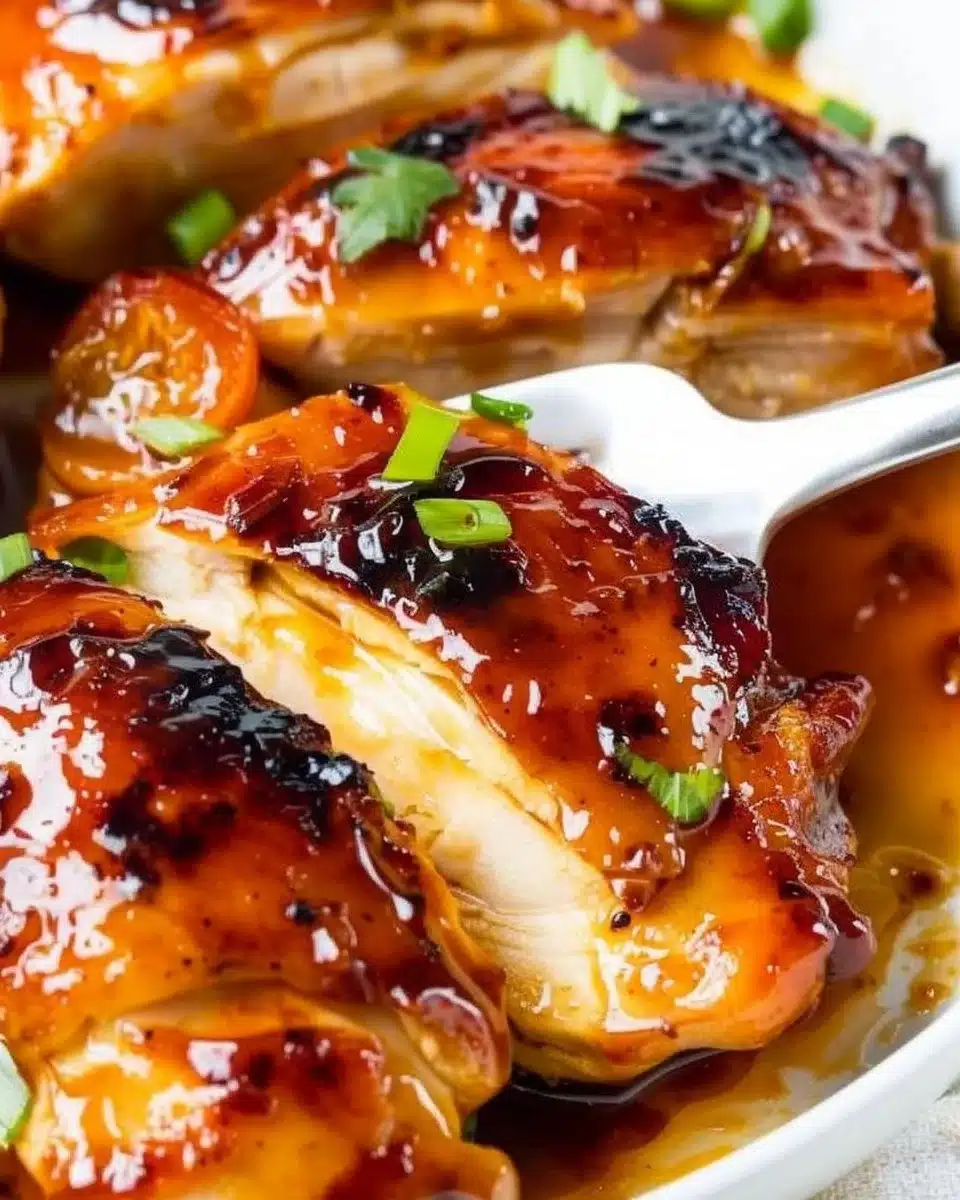
Pro Tips for Success Glazed Apricot Chicken
- Dry and season the chicken first: Patting the chicken dry ensures it sears properly and develops a flavorful crust rather than steaming in the pan.
- Use preserves with real fruit: Apricot preserves with chunks add texture and more authentic apricot flavor. Smooth jam works too, but chunky is nice for mouthfeel.
- Don’t skip scraping the pan: The browned bits left after searing (fond) dissolve into the glaze and give it a savory depth that balances the sweetness.
- Adjust thickness with cornstarch slowly: Add the cornstarch slurry a little at a time while simmering to avoid over-thickening. The sauce will thicken more as it cools.
- Mind the broiler: If you choose to broil to caramelize the glaze, watch closely — the sugar in preserves browns quickly and can burn.
- Taste and balance: If the glaze tastes too sweet, brighten it with an extra splash of lemon juice or a teaspoon of apple cider vinegar; if it’s too tangy, add a touch more preserves or honey.
Flavor Variations Glazed Apricot Chicken
- Spicy Apricot: Stir in 1/2–1 teaspoon of chili paste or sriracha into the glaze for heat. You can also add red pepper flakes while simmering to infuse the sauce with spice.
- Ginger-Sesame Twist: Double the fresh ginger to 2 teaspoons and finish with a tablespoon of toasted sesame oil for an Asian-inspired profile. Serve with scallions and sesame seeds over jasmine rice.
- Herb & Citrus Brightness: Add a tablespoon of orange marmalade along with the apricot preserves and fold in a tablespoon of finely chopped fresh rosemary or thyme to brighten with citrus-herb notes.
- Smoky Apricot: Add a pinch of smoked paprika and a teaspoon of liquid smoke (or use smoked salt) for a subtle barbecue-like depth. This pairs well with grilled corn or roasted sweet potatoes.
- Maple-Apricot: Replace half the apricot preserves with pure maple syrup for earthier sweetness and a deeper caramel note; reduce the cornstarch slightly since maple thins the glaze.
Serving Suggestions Glazed Apricot Chicken
Glazed Apricot Chicken is versatile and pairs well with many sides. Classic combinations include:
- Fluffy white rice or jasmine rice to soak up the sweet glaze.
- Quinoa, couscous, or farro for a nuttier base and added fiber.
- Roasted or steamed vegetables such as asparagus, green beans, broccoli, or carrots balance the sweetness and add color and texture.
- A crisp green salad with a light vinaigrette cuts through the glaze and refreshes the palate.
- For a cozy, one-pan dinner, serve the chicken over mashed sweet potatoes or a purée of cauliflower.
If you’re planning a themed dinner or want alternative chicken dishes, consider trying a slow-cooker sweet and savory option like the crockpot sweet and sour chicken to keep dinner warm for a crowd. It’s a great companion recipe idea for meal rotation.
Storage and Freezing Instructions Glazed Apricot Chicken
Storing:
- Refrigerator: Place cooled chicken and sauce in an airtight container and refrigerate for up to 3–4 days. Keep sauce and chicken together; the glaze helps keep the chicken moist.
- Reheat gently on the stovetop over low heat, adding a tablespoon or two of water or broth if the sauce is too thick. Reheat until warmed through to an internal temperature of 165°F (74°C).
Freezing:
- Freezer meal: Allow chicken and glaze to cool completely, then transfer to a freezer-safe container or heavy-duty freezer bag. Seal tightly, removing excess air. Label with date and freeze for up to 2–3 months.
- Thawing: Thaw in the refrigerator overnight. Reheat in a skillet over low heat until warmed through, adding a splash of chicken broth to revive the sauce if it has thickened or become gelatinous in the freezer.
- Texture note: Cooked chicken can sometimes become a touch drier after freezing; using thighs or adding a little extra sauce before freezing can help preserve moistness.
Safety tips:
- Always cool cooked food before freezing to prevent condensation and ice crystals.
- Reheat only once for best quality and food safety.
Nutrition Facts (Per Serving) — Glazed Apricot Chicken
Estimated per serving (based on 4 servings using boneless, skinless chicken breasts and the listed ingredient amounts):
- Calories: 420 kcal
- Protein: 36 g
- Carbohydrates: 28 g
- Fat: 18 g
- Fiber: 1.5 g
- Sodium: 680 mg
Nutrition notes:
- These numbers are estimates and will vary based on exact ingredients and portion sizes. Using chicken thighs may increase fat and calorie values slightly.
- To reduce sodium, choose low-sodium soy sauce and low-sodium chicken broth, and adjust salt to taste.
- To lower calories and fat, omit the optional butter and reduce oil, or use a nonstick pan to sear the chicken with less added fat.
FAQ About Glazed Apricot Chicken
How do I prevent the glaze from becoming too sweet?
Balancing is the key: taste as you go and add acidity to cut the sweetness. Lemon juice or a small splash of apple cider vinegar brightens the flavor. If the glaze is already too sweet, stir in more Dijon mustard or a small pinch of salt to increase savory notes. Simmering the sauce will also concentrate flavors, so adjust after it has reduced.
Can I make this recipe with bone-in chicken?
Yes. Bone-in pieces add flavor but will require longer cooking time. After searing, you’ll need to simmer the chicken in the glaze for longer, typically 20–30 minutes on low heat, until the internal temperature reaches the proper safe level and the meat pulls away from the bone. Be careful to keep the heat gentle so the glaze doesn’t burn while the chicken finishes cooking.
Is this recipe good for meal prep?
Absolutely. Glazed Apricot Chicken stores well in the refrigerator and reheats nicely, making it a solid meal-prep choice. Divide into individual portions with a grain and roasted veggies for easy lunches or dinners. Freeze portions for longer storage; thaw overnight in the fridge before reheating.
How do I thicken the sauce if it’s too thin?
Make a cornstarch slurry with equal parts cornstarch and cold water (start with 1 teaspoon of cornstarch mixed with 1 teaspoon water) and whisk it into the simmering glaze. Allow the sauce to cook for a minute or two to activate the starch and thicken. Add the slurry slowly; the sauce will thicken quickly and can become too stiff if you overdo it.
Can I use fresh apricots instead of preserves?
Yes, you can use fresh apricots, though preserves provide sweetness and body that are convenient and consistent. To use fresh fruit, pit and chop 8–10 ripe apricots and simmer them with a tablespoon or two of honey or sugar and a splash of lemon juice until they break down. Then proceed with the rest of the glaze ingredients and strain if you prefer a smoother texture.
What sides pair best with this sweet-savory chicken for guests?
Choose sides that add contrast: a citrusy salad or peppery arugula helps cut the glaze’s sweetness, while steamed green beans or roasted Brussels sprouts provide texture and balance. For a heartier plate, serve over rice pilaf, wild rice, or garlic mashed potatoes. For themed dinners, pair with Asian-style sides (stir-fried greens and sesame noodles) if you’ve flavored the glaze with ginger and sesame oil.
Final Thoughts
Glazed Apricot Chicken brings warm, approachable flavors to the dinner table with minimal fuss. Its glossy, fruity sauce and seared chicken make weeknight dinners feel a bit more special and give you flexibility with sides and variations. Whether you stick to the basic recipe or try a spicy or herb-forward twist, this dish is a reliable choice for busy cooks and entertaining hosts alike.
Print
Glazed Apricot Chicken
- Total Time: 40 minutes
- Yield: 4 servings 1x
- Diet: Poultry
Description
A sweet and savory dish featuring tender chicken coated in a glossy apricot glaze, perfect for weeknight dinners or impressing guests.
Ingredients
- 1 1/2 pounds boneless, skinless chicken breasts or thighs (about 3–4 pieces)
- Salt and black pepper, to taste
- 1 tablespoon olive oil (or vegetable oil)
- 2 tablespoons butter (optional, for richer glaze)
- 3/4 cup apricot preserves (preferably chunky for texture)
- 2 tablespoons Dijon mustard (or yellow mustard if preferred)
- 2 tablespoons low-sodium soy sauce (or tamari for gluten-free)
- 2 cloves garlic, minced
- 1 teaspoon grated fresh ginger (optional)
- 1/4 cup low-sodium chicken broth
- 1 tablespoon lemon juice
- 1 teaspoon cornstarch mixed with 1 tablespoon water (slurry to thicken)
- 1–2 teaspoons sesame oil (optional, for finishing)
- Freshly chopped parsley or sliced green onions, for garnish
- Toasted sesame seeds or slivered almonds (optional crunch)
Instructions
- Pat the chicken dry with paper towels and season both sides with salt and pepper. If the pieces are thick, slice them horizontally or pound lightly to ensure even cooking.
- Heat a large skillet over medium-high heat and add the olive oil. When the oil shimmers, add the chicken and sear for 4–5 minutes per side until golden-brown.
- Remove chicken to a plate and tent loosely with foil.
- Lower the heat to medium and add the butter. Add the minced garlic and grated ginger and sauté for 30 seconds until fragrant.
- Stir in the apricot preserves, Dijon mustard, soy sauce, chicken broth, and lemon juice. Scrape up any browned bits from the bottom of the pan.
- Bring the mixture to a low simmer, then whisk in the cornstarch slurry until the sauce thickens to a glossy consistency.
- Return the chicken to the skillet, spoon glaze over each piece, and simmer gently for 4–6 minutes until heated through.
- Finish under the broiler for 1–2 minutes for a caramelized glaze, or increase stovetop heat briefly.
- Remove from heat, drizzle with sesame oil if using, and sprinkle with parsley or green onions and optional crunch toppings.
Notes
Pair with rice, couscous, roasted vegetables, or a simple green salad for a complete meal. Use low-sodium ingredients for a healthier option.
- Prep Time: 10 minutes
- Cook Time: 30 minutes
- Category: Main Course
- Method: Searing and Baking
- Cuisine: American
Nutrition
- Serving Size: 1 serving
- Calories: 420
- Sugar: 25g
- Sodium: 680mg
- Fat: 18g
- Saturated Fat: 6g
- Unsaturated Fat: 10g
- Trans Fat: 0g
- Carbohydrates: 28g
- Fiber: 1.5g
- Protein: 36g
- Cholesterol: 120mg